

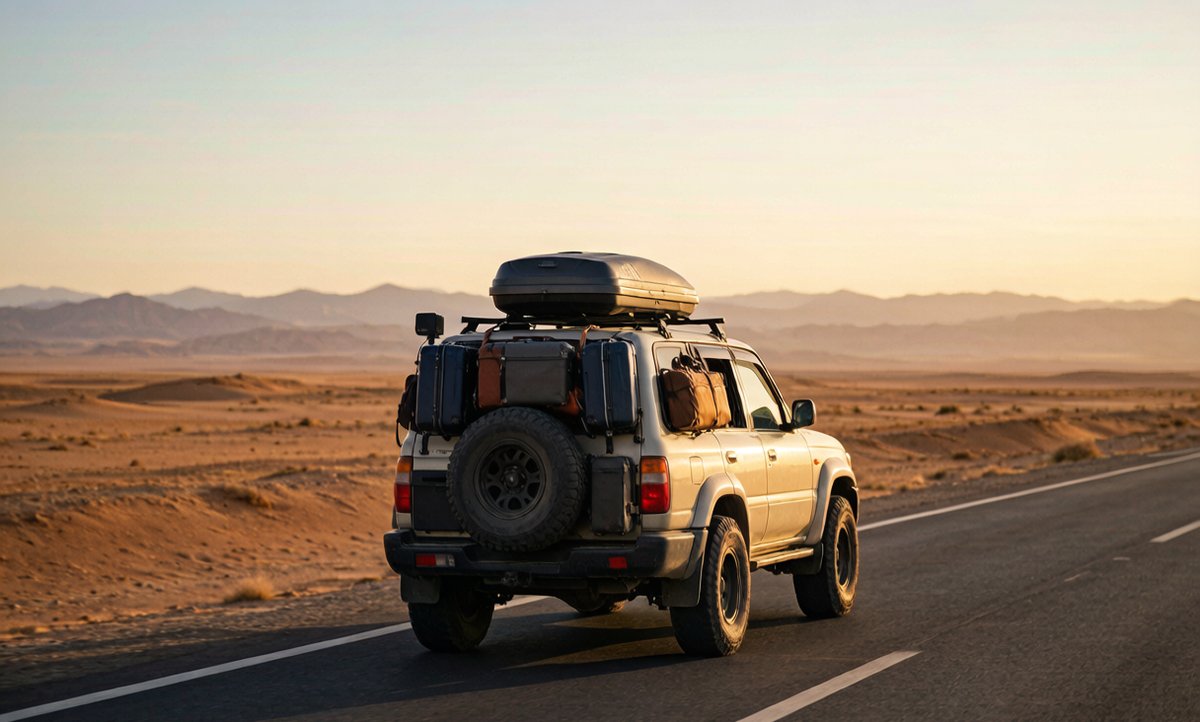
On a gravel pull-off near the Karakul Lake my rental’s tyre met a sharp rock, and the only reason I did not spend the afternoon arguing was that I had read the excess clause the night before and knew exactly what the deductible was.
Renting a car is the freedom engine of any Xinjiang trip, but the insurance fine print is where trips go sideways. Coverage varies wildly between agencies, deductibles can swallow a budget, and some mountain roads sit in a grey zone that can void a claim. This guide explains the standard components of a Xinjiang rental policy, what the deductible and excess-waiver actually mean, and the one clause about unpaved roads that every self-driver should read before signing.
The four parts of a standard policy
A typical Xinjiang rental includes third-party liability (第三者责任险), which is mandatory and covers damage you cause to others. On top of that agencies sell collision damage waiver (车损险, the local CDW) for the vehicle itself, theft cover (盗抢险), and sometimes passenger accident cover (车上人员险). Third-party is the non-negotiable one; the rest are optional but strongly advised on a long highland and desert loop. When you compare two quotes, do not just look at the daily rate, look at what is bundled, because a cheap car with only third-party can cost you thousands if a rock chips the windscreen on the G218. I ask for the full bundle in writing before I pay.
- Third-party liability is mandatory
- CDW covers the car body
- Theft and passenger cover are add-ons
Deductible and the excess waiver
Even with CDW, most policies carry a deductible, often called 免赔额, commonly 1,000 to 2,000 RMB, meaning you pay the first chunk of any claim. For an extra daily fee you can buy an excess waiver (不计免赔) that drops your responsibility toward zero for covered events. On a two-week loop the waiver might add 20 to 40 RMB a day but can save you a 2,000 RMB hit from a single parking-scrape. Read whether the waiver covers tyres and glass, because those are the most common desert and gravel casualties and are sometimes excluded. I take the full waiver on any trip longer than a few days; the maths favours peace of mind.
- Deductible usually 1,000 to 2,000 RMB
- Excess waiver (不计免赔) adds ~20 to 40 RMB/day
- Check if tyres and glass are excluded
The unpaved-road clause that matters
This is the clause that catches self-drivers: many policies state cover is void if the car is driven on unpaved or ‘off-road’ roads. The Duku Highway (G217) and many scenic spur roads are paved, but pull-offs, the last few km to a lake, or a shortcut across a dry riverbed may be gravel. If you scratch the underbody there, the agency may refuse the claim. The safe move is to stay on paved public roads, photograph the car at pickup and drop-off, and ask in writing whether a specific gravel spur is covered. I once skipped a tempting dirt shortcut precisely because the contract excluded unpaved roads, and the paved alternative was only 20 minutes longer.
- Cover can void on unpaved roads
- Duku and main spurs are paved
- Photograph car at pickup and return
Licence and who is insured
Insurance is only valid if the driver is legally licensed. Foreigners need either a Chinese driving licence or a notarised translation of a recognised licence accepted locally; an unlicensed driver behind the wheel voids the policy entirely, leaving you fully liable. The rental contract names the authorised drivers, and adding a second driver usually costs a small fee but keeps the cover valid if you share the wheel on a long desert day. Carry the licence, passport and the rental agreement together in the car, because a routine checkpoint may ask for all three. I keep a paper copy even though the app has it, because signal at a mountain checkpoint can drop.
- Valid licence required for cover to apply
- Add second drivers so cover stays valid
- Carry licence, passport, agreement together
Claims, deposits and paperwork
Agencies usually hold a deposit of 2,000 to 5,000 RMB on your card at pickup, released after a clean return. If damage occurs, report it immediately and get a written assessment rather than agreeing to a verbal figure; for windscreen or tyre claims the excess waiver should cover most of it. Take timestamped photos at both ends and keep the fuel and mileage records. Minor scratches are common and often within a tolerance, but a damaged rim from a pothole is exactly the kind of claim the deductible is designed to catch. I photograph each panel on a bright phone torch at pickup so there is no dispute about pre-existing marks.
- Deposit 2,000 to 5,000 RMB held at pickup
- Report damage in writing, not verbally
- Photograph every panel at pickup
| Component | What it covers | Watch-out |
|---|---|---|
| Third-party | Damage to others | Mandatory, non-negotiable |
| CDW | Car body | Has a deductible |
| Excess waiver | Drops your share | May exclude tyres and glass |
| Licence validity | Makes cover real | Void if unlicensed driver |
Practical takeaways
- Take the full bundle in writing before paying.
- Buy the excess waiver for trips over a few days.
- Stay on paved roads to keep cover valid.
- Photograph the car at pickup and return.
Frequently Asked Questions
- Is car rental insurance mandatory in Xinjiang?
- Third-party liability is mandatory and included, but collision and theft cover are optional add-ons you should take for a long self-drive.
- What is a typical deductible?
- Commonly 1,000 to 2,000 RMB, reducible to near zero with a daily excess-waiver fee of about 20 to 40 RMB.
- Does insurance cover gravel and mountain spur roads?
- Often not, if the policy excludes unpaved roads, so stay on paved public roads and confirm any gravel spur in writing.
- Will my foreign licence keep the insurance valid?
- Only if you hold a recognised, properly translated licence; an unlicensed driver voids the policy and you pay fully.