

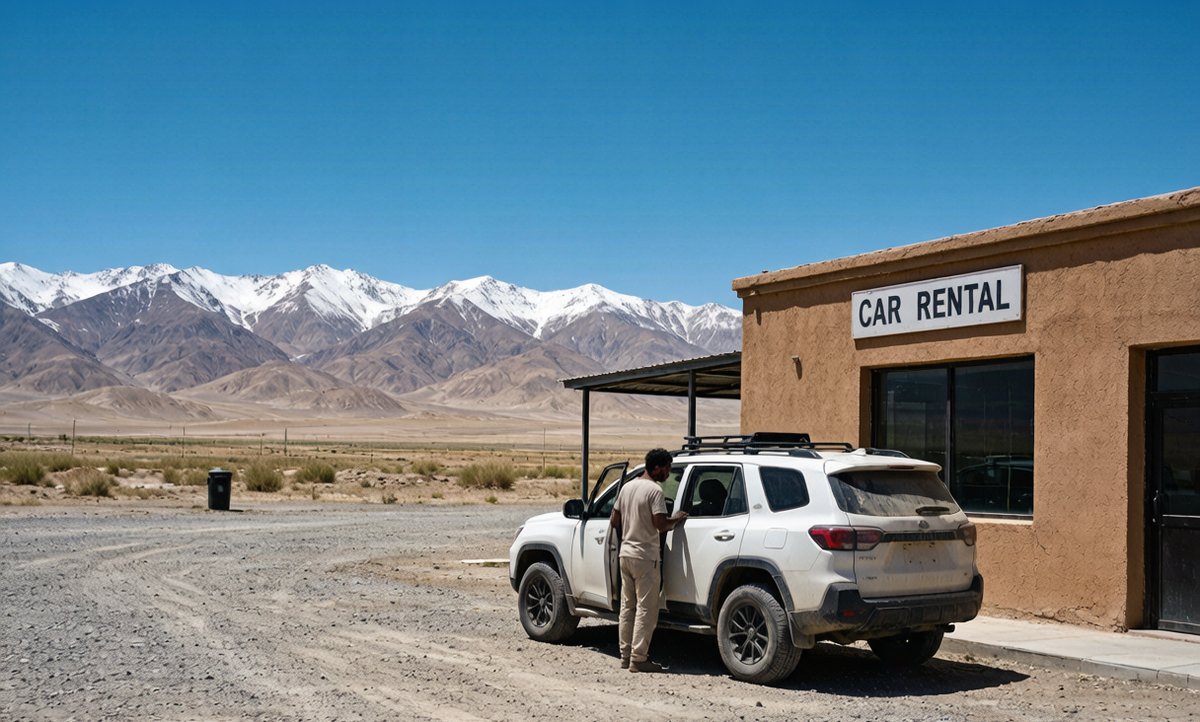
In Kashgar’s old town my SUV had to stay at the perimeter because cars are banned in the lanes, so I rented a shared e-bike for 3 RMB and wove to the tea houses in five minutes, something no car could have done.
Between the long highway legs, the cities of Xinjiang are best explored on two wheels. Shared bikes and e-bikes fill the last-mile gap that a rental car cannot, especially in pedestrian old towns, along river parks and between a hotel and a night market. This guide covers what is available, how the apps work for a visitor, the rules and speed limits, and where an e-bike beats a car or a taxi during a road-trip stopover.
What you can rent
The big shared systems are Hellobike (哈啰) and Qingju (青桔), which offer both pedal bikes and electric bikes in Urumqi, Shihezi and the larger cities; you unlock with their app and pay by the minute or by a day pass. Dedicated e-scooter and e-bike rental shops cluster near tourist zones, Kashgar’s old town gates, and the Sayram Lake shore, often renting by the hour or day with a helmet included. Pedal bikes suit flat city centres and riverside paths, while e-bikes cover more ground and handle the gentle hills of places like Urumqi’s outskirts. For a self-driver, the pattern is to park the car at the hotel and switch to wheels for the evening wander.
- Hellobike and Qingju shared bikes and e-bikes
- Shops near old towns rent scooters by hour or day
- Use the car for highways, bikes for the evening
How the apps work for visitors
The shared apps need a Chinese phone number and real-name verification, which means you usually cannot use them until you have a local SIM; once set up, you scan the QR on the bike and ride. Scooter shops, by contrast, often just take a passport copy and a deposit and hand you a key, which is more visitor-friendly on a short stop. Day passes for shared bikes run a few RMB and remove the per-trip maths. I keep the rental shop’s WeChat so I can extend a day rental by message. If you only have an international number, plan on the shops rather than the apps for spontaneous rides.
- Apps need a Chinese phone and real-name
- Shops take passport copy plus deposit
- Day passes are a few RMB on shared systems
Rules, limits and safety
Shared e-bikes are speed-limited to about 25 km/h by design, and while helmets are not always enforced for slow city riding, I wear one on any faster stretch. Ride in the bike lane, not the car lane, and dismount on crowded pedestrian streets in old towns where bikes are restricted. Most cities forbid e-bikes on the main expressway ring, so they are a city tool, not a highway substitute. At night use the lights and avoid the unlit sections of river paths. A 20 to 40 km range on a full charge easily covers a day of city exploring before you need to dock or recharge.
- E-bikes capped near 25 km/h
- Use bike lanes, not car lanes
- Range 20 to 40 km per charge
Where an e-bike beats car or taxi
Inside Kashgar’s old town cars are banned, so an e-bike or bike is the only way to roam the lanes between the Id Kah Mosque and the courtyard tea houses. Along Urumqi’s river park and the Beijing Road greenways, a bike is faster than a taxi in evening traffic and free to park. At Sayram Lake the shore path is perfect for a rented e-bike to reach photo spots a car cannot access. For a solo traveller a bike also removes the awkwardness of a short taxi ride that costs more than the ride is worth. I treat the e-bike as the city mode and the SUV as the between-cities mode, and the trip flows better for it.
- Old towns ban cars, bikes roam freely
- River parks faster by bike than taxi
- Lake shores reach spots cars cannot
Charging, parking and etiquette
Shared bikes dock at marked points or, with some systems, lock anywhere within a service zone; scooter-shop rentals come charged and you return them to the shop. Do not abandon a shared bike outside its zone or you may be charged a relocation fee. Yield to pedestrians in old-town lanes and keep speed low where children play. If you rent a scooter for a day, ask the shop to show the brake and lights before you leave, and agree the return time so there is no dispute. A little etiquette keeps these services available for the next traveller and avoids fines.
- Dock in zone or return to the shop
- Don’t leave shared bikes outside service area
- Check brakes and lights before leaving
| Option | Best for | Cost | Visitor ease |
|---|---|---|---|
| Shared bike | Flat centres, parks | Few RMB/day pass | Needs CN phone |
| Shared e-bike | Longer city hops | Per minute | Needs CN phone |
| Shop scooter | Old towns, lakes | Hour or day | Passport + deposit |
Practical takeaways
- Park the car, ride the bike for evening wanders.
- Get a CN SIM first if you want the apps.
- Wear a helmet on any faster stretch.
- Return shared bikes inside the service zone.
Frequently Asked Questions
- Can tourists use shared e-bikes in Xinjiang?
- Only with a Chinese phone number and real-name verification in the app; without one, use a rental shop that takes a passport and deposit instead.
- Are helmets required?
- Not always enforced at low speeds, but wearing one on faster stretches is sensible, and shop rentals usually include one.
- Where are e-bikes better than a car?
- In pedestrian old towns like Kashgar where cars are banned, and along city river parks and lake shores.
- How far can a shared e-bike go?
- Typically 20 to 40 km per charge, enough for a full day of city exploring before recharging or docking.