

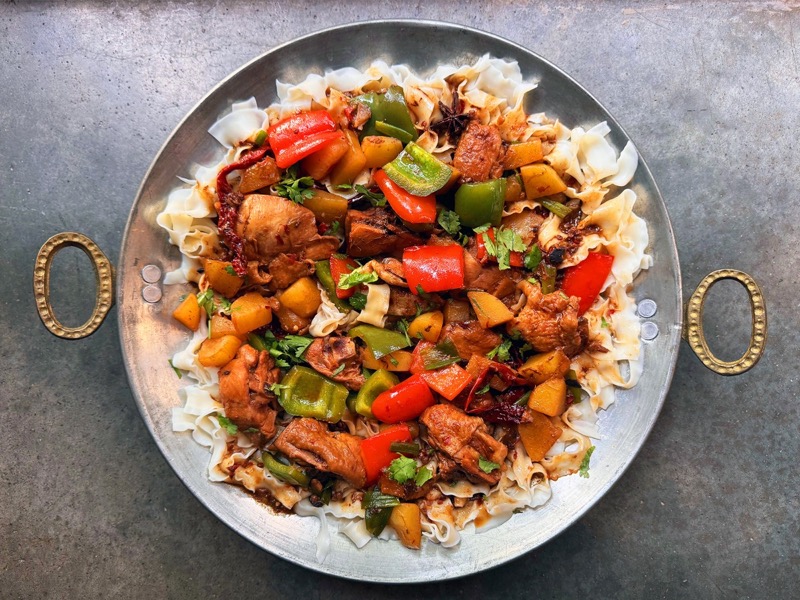
At minus 25 C near Sayram Lake I once ate a bowl of hand-pulled laghman that steamed the window fog away. Winter driving in Xinjiang is as much about hot food as warm tyres.
Winter, November through March, turns Xinjiang into a freezer, and your body burns fuel just staying warm. The right hot meals keep a driver alert across long, icy stretches and lift morale when the landscape is white and empty. Here are the warming dishes worth chasing, where to find them, and how to eat well when half the restaurants close.
The winter staples worth knowing
Hand-pulled noodles, laghman, are the everyday hero: a big bowl of chewy wheat noodles under a slick of lamb, tomato and capsicum, eaten steaming. Dapanji, big-plate chicken, is chunks of chicken braised with potato and wide belt noodles in a chilli gravy, restorative after a cold pass. Samsa, the tandoor-baked meat pastry, stays hot longer than anything else. Milk tea, sutu chai, is salty, milky and warming by the litre. These are not fancy, they are fuel, and on a winter road they are exactly what you need.
- Laghman: hand-pulled noodles, lamb, tomato
- Dapanji: chicken, potato, belt noodles
- Samsa pastry and salty milk tea keep you warm
Why food matters more in winter
Cold drains you. A hot meal raises core temperature and sharpens reaction time on a road where winter driving already demands everything you have. I plan a hot lunch as a hard stop, not a drive-through. In the basins temperatures swing from minus 20 at dawn to plus 5 at noon, and a warm belly is the difference between a clear head and a drowsy one on the G30. Treat eating as part of the safety routine, same as checking tyres.
- Cold saps reaction time; hot food restores it
- Plan a hot lunch as a real stop
- Part of winter safety, like tyre checks
Where to find hot food in deep winter
City centres stay open: Urumqi, Yining, Korla and Kashgar Old Town keep restaurants running through the cold, though kitchens close earlier, often by 21:30. Small county towns and pass-side villages can go quiet by 20:00, so eat before you climb. Highway service areas sell instant noodles and lukewarm tea but little else; do not rely on them for a real meal. In a genuine freeze I aim to be off the road and at a table by early evening, which also means driving in daylight only.
- Big cities open; kitchens close by 21:30
- County towns quiet by 20:00, eat before climbing
- Service areas are instant-noodle only
A thermos changes everything
Buy a vacuum flask and fill it at every hot-tea stop; a sip of milk tea at a frozen viewpoint is worth more than it sounds. Add a flask to your packing list alongside the power bank and the ice scraper. I keep one full of sweet milk tea from a morning bazaar stall and another of plain hot water for the thermos-of-soup trick: buy a takeaway laghman, decant into the flask, and eat it two hours later at a snowy overlook still warm. It turns a parked viewpoint into a picnic.
- Fill a flask at every tea stall
- Add flask to your packing list
- Decant takeaway laghman to eat warm later
Dishes to actually order
Point at shorpa, the meat-and-bone soup, for pure warmth; ask for laghman with extra broth in cold weather; order samsa by the piece and eat it straight from the tandoor. Mantou, plain steamed buns, soak up gravy and cost almost nothing. If you want vegetables, request a side of stir-fried cabbage, winter greens are scarce but present in cities. Learn the handful of words, or just gesture at what the next table is eating, it works everywhere.
- Shorpa bone soup for pure warmth
- Laghman extra broth; samsa from the tandoor
- Mantou buns soak gravy; cheap
What is closed, and what is not
Roadside summer stalls vanish; the night markets thin to a few kebab stands. Mountain scenic areas shut their restaurants entirely, so pack food before entering. The best time to visit for food variety is actually the shoulder months, but if you come in deep winter, lean on city centres and your own thermos. The trade for the cold is empty roads and snow on the Tianshan, which is its own reward if you are fed and warm.
- Summer stalls gone; night markets thin
- Scenic-area restaurants fully shut
- Lean on cities and your own thermos
| Dish | Warmth | Where easy | Price |
|---|---|---|---|
| Shorpa bone soup | High | Cities | 20-35 RMB |
| Laghman | High | Everywhere | 25-40 RMB |
| Dapanji | Very high | Cities | 45-70 RMB |
| Samsa | Medium | Bakeries, bazaars | 5-10 RMB |
Practical takeaways
- Plan a hot lunch as a hard, warming stop.
- Carry a flask; fill it at every tea stall.
- Eat in cities before climbing a pass.
- Pack food before entering shut scenic areas.
Frequently Asked Questions
- Is it hard to find hot food in winter?
- In cities, no; restaurants run though they close earlier. In small towns and passes, yes, so eat before you climb and carry a thermos.
- What is the single best cold-weather dish?
- Shorpa, the meat-and-bone soup, for pure warmth, or dapanji for a full belly before a cold night.
- Can I eat well as a vegetarian in winter?
- Harder; mantou, plain noodles and cabbage exist, but most warming dishes are meat-based. Carry your own supplies.
- Is winter a bad time to visit for food?
- If you stay in cities, no. If you roam remote passes, pack food, the scenic areas close their kitchens.