

The first thing that hits you at Ebinur Lake is the wind. It never seems to stop. I arrived on a grey afternoon near the Kazakhstan border, and the lake — a vast, shallow mirror of saline water stretching to a horizon that shimmered with salt — felt less like a tourist spot and more like the edge of a continent. The ebinur lake xinjiang experience is not about comfort or facilities. It’s about standing at one of the harshest, most fragile wetlands in Central Asia and watching flamingos lift off a shore that, a few decades ago, was considerably wider.
Ebinur (艾比湖) is the largest saltwater lake in Xinjiang’s northwest, sitting in the Bortala Mongol Autonomous Prefecture near Alashankou, the busy rail port to Kazakhstan. It’s remote, windy, and quietly extraordinary — and it’s shrinking, which is exactly why you should see it with respect.
 }
}
What Ebinur actually is
Ebinur is an endorheic lake — it has no outlet. Rivers like the Bortala, Jing, and Kuitun flow in, and the only thing that leaves is evaporation, which is fierce in this rain-starved, wind-scoured basin. The result is hypersaline water and an encrustation of salt around the shore. In spring and early summer the lake swells with snowmelt; by late autumn it can retreat dramatically, exposing cracked salt flats.
For birdlife this is gold. The lake and its surrounding wetland sit on the Central Asian flyway, and huge numbers of migratory birds use it as a stopover: flamingos (greater flamingo and the occasional lesser), geese, ducks, swans, and rare species like the Siberian crane and the relic gull. On a good day in late spring, the shallows turn pink with thousands of flamingos feeding.
The birdlife in detail
If birds are your reason to come, time it for the migration. The greater flamingo is the headline — flocks of hundreds wade the shallows, filtering brine shrimp with their upside-down bills, and lift off in pink clouds when a raptor passes. Beyond flamingos, the wetland holds:
- Swans and geese — whooper and mute swans on the open water, with greylag and bean geese in spring.
- Rare cranes — the Siberian crane and demoiselle crane pass through on the flyway; sightings are uncommon but possible in May.
- Shorebirds and gulls — including the relic gull, a species once thought extinct and rediscovered at these saline lakes.
- Raptors — eagles and harriers wheel over the reed beds, especially at dawn.
Bring binoculars or a long lens; the birds are wary and the distances across the flats are large.
Birdwatching practicalities
Ebinur rewards patience over pace. The shore is vast and flat, so birds are rarely close; a spotting scope or a 300mm+ lens makes the difference between “pink dots” and real sightings. Go at first light, when birds feed in the shallow margins and the wind is often at its calmest. Move slowly and stay low — the open shore gives you no cover, and a careless approach sends a flock kilometers out onto the water. Spring mornings in May, with the lake near its snowmelt high, are the single best window; by July the water has dropped and the flocks have largely moved on.
Reaching the lake
Ebinur is not on the main tourist trail, and that’s the point. The practical approach:
– Base: Bole (Bortala city, 博乐市) is the usual jumping-off point, about 50–70 km east of the lake, 1–1.5 hours’ drive.
– From the G30 / Alashankou: the lake lies north of the expressway; side roads and a wetland reserve access lead toward the shore. Some areas are protected reserve — stay on permitted routes.
– From Yining / Ili: roughly 150–200 km east via the G30, about 2.5–3 hours, which pairs naturally with the Ili valley lavender Yining region if you’re looping the north.
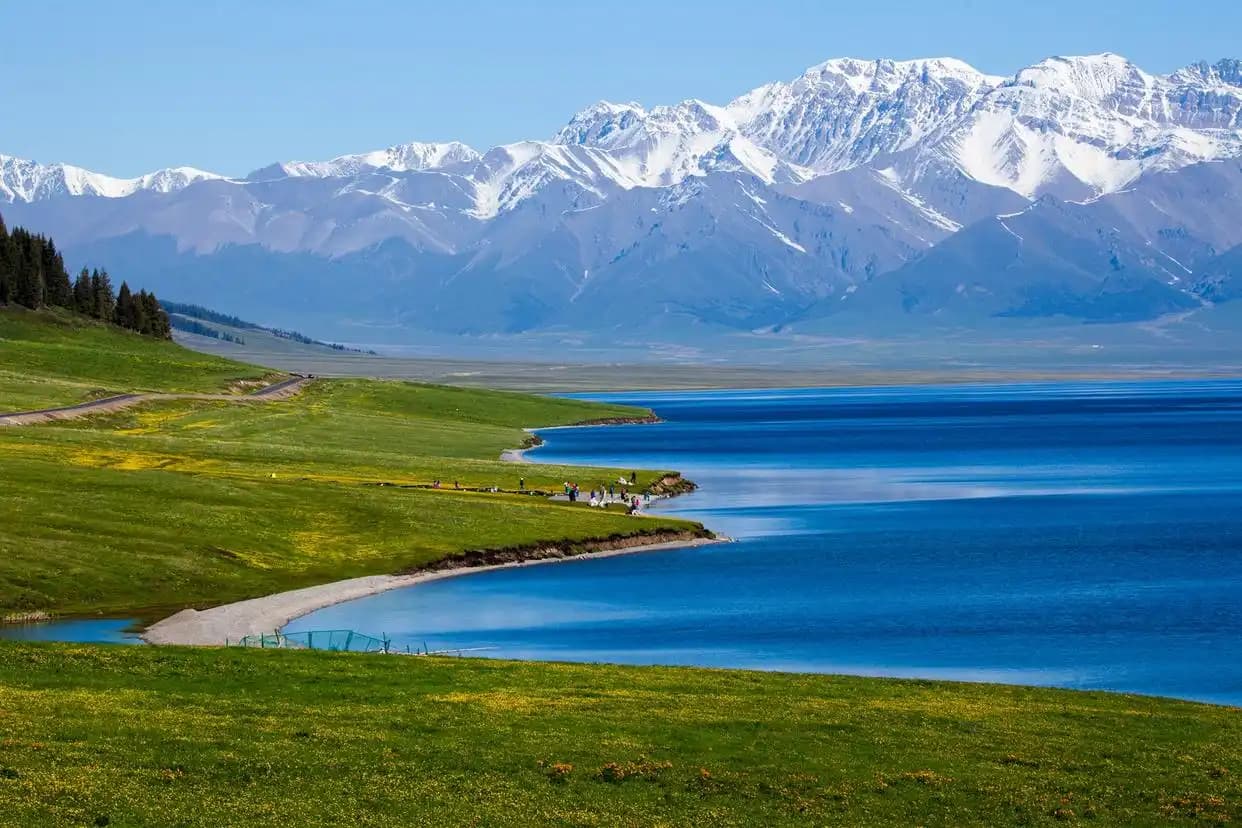
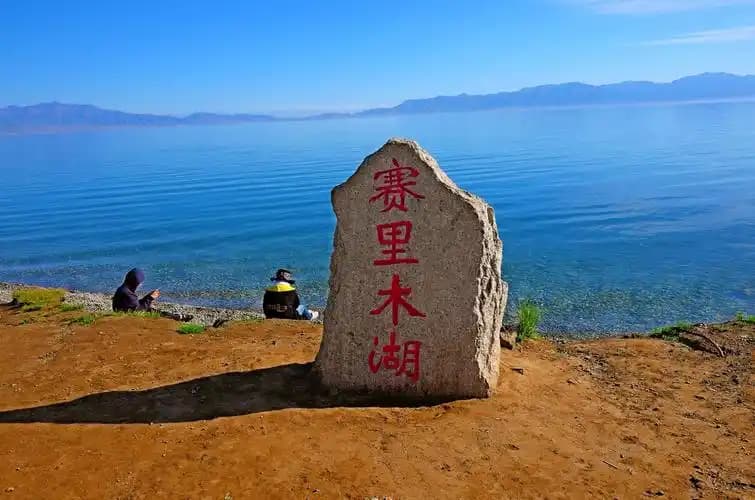
There is no major ticketed “Ebinur Lake Scenic Area” with the polish of Sayram Lake guide — Sayram is the famous alpine-blue sibling to the south, easy and developed; Ebinur is its wild, saline cousin. Manage expectations accordingly.
Practical facts
- Location: Bortala Prefecture, near Alashankou, ~100 km west of Sayram Lake as the crow flies but a longer drive by road.
- Tickets/facilities: minimal to none at the open shore; a wetland reserve may have limited access and ranger presence. Confirm locally.
- Time needed: 2–4 hours including the drive out and back from Bole.
- Fuel and water: fill up in Bole — there is nothing out at the lake.
- Connectivity: patchy. Download offline maps.
The salt and the storms
The lake’s harshness is also its signature. As water evaporates, salt crystallizes into a crust that crunches underfoot near the margin, and the shoreline can be blinding white in strong sun — bring sunglasses. When the lake retreats and the exposed bed dries, fine salt and mineral dust become airborne; on bad windy days this feeds the regional “salt storms” that can carry as far as the G30 corridor and even Urumqi. It’s a stark reminder that Ebinur is not just a pretty wetland but a working part of the basin’s climate — and why driving onto the crust is both destructive and dangerous.
Best time to visit
This is the part that decides whether the trip is magical or a wasted drive:
– Late April–June: the birding peak. Snowmelt fills the lake, flamingos and migratory flocks are present, and the shore is alive. This aligns with the broader best time for a Xinjiang road trip, though Ebinur’s window is specifically spring.
– July–August: hot, windy, and the lake begins to shrink; birds thin out but the salt flats and stark light are photogenic.
– September–October: low water, expansive salt crust, few birds — atmospheric but quieter for wildlife.
– Winter: frozen, isolated, and not recommended without local guidance.
Bring layers. The wind cuts cold even in May, and there is zero shelter.
What to bring
Ebinur offers no comforts, so come prepared:
– Warm, windproof layers even in late spring — the shore is brutal.
– At least 2 liters of water per person; no services at the lake.
– Binoculars or a 200mm+ lens for the birds.
– A full fuel tank, filled in Bole.
– Offline maps; mobile coverage is unreliable.
– Sunglasses for the glare off the white salt.
The ecological reality — why it matters
I’d be dishonest if I called Ebinur simply “beautiful.” It’s also a warning. Like many closed-basin lakes in arid regions, Ebinur has shrunk dramatically over recent decades due to upstream water diversion for agriculture and canals that intercept the feeder rivers. As the lake retreats, the exposed lakebed becomes a source of windblown salt and dust — contributing to the famous “salt storms” that can reach as far as the G30 corridor.
Conservation work is ongoing: wetland restoration, reserve status, and efforts to keep more water in the system. Visitors can help simply by staying on permitted routes, not disturbing bird colonies, and not driving onto the fragile salt crust (a car can break through and become permanently stuck). Treat this as a privilege, not a playground.
Combining Ebinur with a northern loop
Ebinur sits logically at the western end of a northern Xinjiang circuit:
– Pair it with Sayram Lake (drive south via Bole and the G30, ~1.5–2 hours) for a “two lakes” day — the tame alpine blue and the wild saline grey.
– Add Yining and the Ili lavender fields to the east if you’re traveling in summer.
– It also works as a northern detour if you’re heading toward the Duku or looping back to Urumqi via the G30.
Just don’t expect signage or services at Ebinur itself. Plan it as a self-sufficient half-day from Bole, and you’ll be rewarded with one of the most genuinely offbeat sights in the region.
FAQ
Where is Ebinur Lake and how do I get there? In Bortala Prefecture near Alashankou, northwest Xinjiang. Base yourself in Bole (~50–70 km away) and drive north; download offline maps and fill fuel there.
When can I see flamingos? The best chance is late April through June, during the spring migration and snowmelt high-water period.
Is there a ticket or visitor center? Not in the developed sense. Shore access is minimal and part of the area is reserve land — check locally and stay on permitted routes.
Is Ebinur safe to visit? The lake itself is safe to view from the shore, but there are no facilities, strong wind, and fragile salt crust you must not drive onto. Self-sufficiency is essential.
How is it different from Sayram Lake? Sayram is a famous, developed alpine freshwater lake; Ebinur is a remote, shrinking saltwater wetland with few services but rich birdlife.
Why is the lake shrinking? Upstream diversion for agriculture and reduced inflow from feeder rivers have lowered the level; conservation and wetland restoration are active but ongoing.
Final word
Ebinur isn’t an easy pretty stop — it’s a windy, fading, fiercely alive wetland at the edge of the map. Go in spring, go self-sufficient, and go knowing you’re seeing something the region is fighting to keep.
Written by Karl Huang, a Xinjiang-based travel writer. Ebinur’s access, reserve rules and water levels change with the season and with local policy — confirm the current situation with Bortala tourism authorities before you travel.