

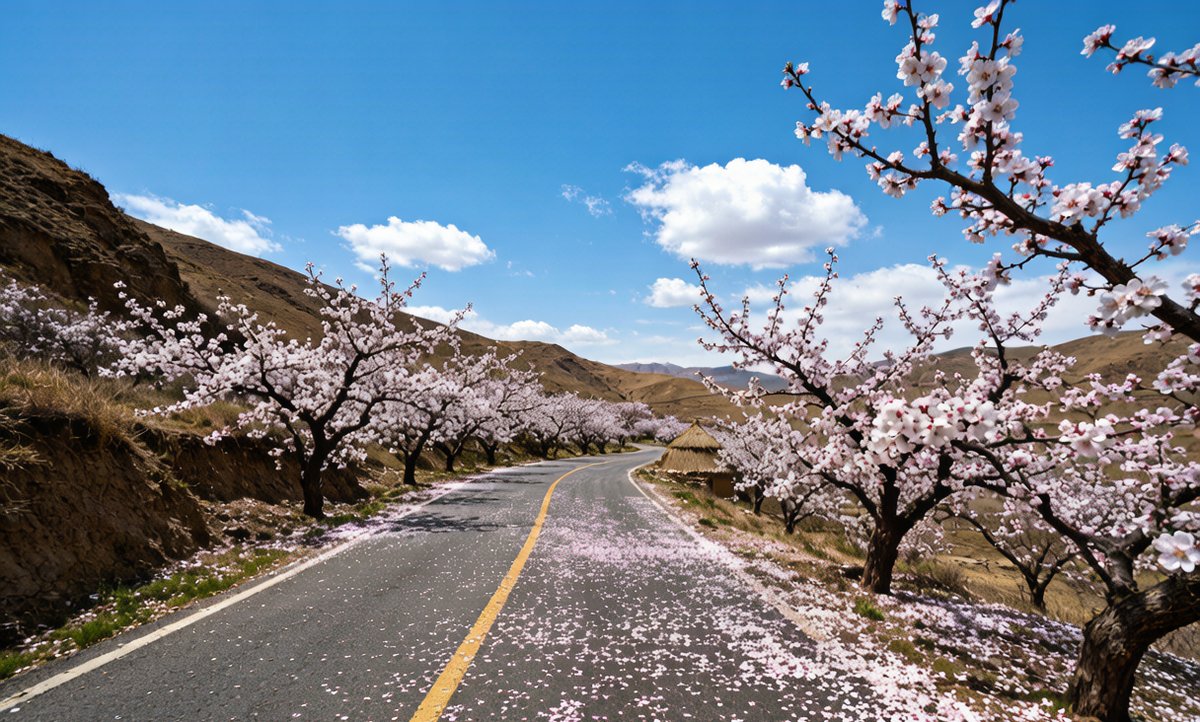
I chased the Zhaosu apricot blossom on a tip from a Yining B&B owner and arrived the morning after the valley turned pink — it was the single prettiest hour of any trip.
Most people picture Xinjiang as summer green or autumn gold, but the quiet prize is spring, when apricot and peach orchards along the southern foothills explode in pink-white blossom for a few short weeks. The headline spot is the Zhaosu apricot blossom valley in the Ili Valley, with earlier blooms around Turpan and Kumul and later lavender in June. Spring is also the cheapest and least crowded time to drive the north — hotels are roughly half the summer price and the roads are clear of the July-August tour buses that jam the passes. This guide gives the bloom windows, a spring driving route through Yili, and how to combine blossoms with Heavenly Lake and Sayram without fighting the summer crowds, plus the cold-weather notes that catch first-time spring drivers off guard.
When the blossoms actually happen
Bloom runs bottom-up by altitude. The earliest are Turpan and Kumul (late March), then the Ili Valley and Zhaosu apricot valley (mid-to-late April), and finally higher meadows into May. A warm spring pushes everything a week earlier; a late frost can flatten a valley overnight, so keep a backup stop in mind when you plan. Local tourism accounts post bloom status, but the most reliable signal is a call to your Yining or Zhaosu guesthouse a few days before you go — they see the valleys daily and will tell you honestly if it is past.
Zhaosu apricot blossom valley
About two hours from Yining, this valley fills with old apricot trees in full bloom against snow-dusted Tianshan. Go on a weekday morning; by midday the light is harsh and the car parks fill. Combine it with the Yili grasslands just turning green for a complete spring day, and bring a thermos — there is nowhere warm to sit, and the wind off the mountains is cold even when the sun is out. The blossoms last only about a week at peak, so timing matters more than any other stop on this route.
A Yili spring route
Base in Yining, loop to Zhaosu for blossoms, then to the Narat or Tangbula grasslands as they green, and up to Sayram Lake (still cold but striking). This is the least-crowded, most-photogenic week of the year in the north, and hotels are half the summer price. Allow two nights in Yining so you can chase the blossom on the day it peaks rather than locking yourself to a fixed date. The Ili Valley in spring is also when the rivers run high and the whole valley smells of wet earth and fruit trees.
Add Turpan and Heavenly Lake
If you start from Urumqi, do Heavenly Lake (Tianchi) while it is still cool, then a Turpan loop for the early apricot and the Flaming Mountains before the summer heat arrives. Lavender around Huocheng follows in June if you stay long enough to catch it, and the poppy and wildflower meadows higher up bloom into July. This front-loads the trip with blossom and ends it with the first green of summer, which is a gentler arc than the reverse.
Practical spring notes
Nights are cold — below freezing at altitude — so pack real layers even if days are sunny. Some mountain passes (the Duku, for example) are still closed until June, so route around them. B&Bs in Zhaosu fill on weekends; book ahead if you are going Friday-Sunday, and confirm heating works because spring shoulder-season heating is patchy. Roads are generally clear by April but the high grasslands can still be muddy, so a normal car is fine but don’t expect dry campsites.
Photography and etiquette
The blossom valleys are working orchards, not parks — ask before walking into a private grove, and do not break branches for a photo. Weekday dawn gives the best light and the fewest people; a polarising filter cuts the glare on snow. Drones are restricted near the border areas of Ili, so check locally before flying. The single best shot is the apricot pink against the leftover snow on the Tianshan behind — frame wide and wait for the wind to still the branches.
Other valleys worth the detour
Zhaosu is the headline but not the only bloom. The wider Zhaosu county (the Tokkuztara side) has smaller apricot groves with far fewer tourists and the same Tianshan backdrop, and they flower a few days off the main valley’s peak, which can save a mistimed trip. Around Kuqa in the south, the Subash apricot orchards open a little later and pair neatly with a spring south-loop drive. Near Turpan, the peach and apricot blossom along the Flaming Mountains comes earliest and is the warm-up act before the Ili peak. If you have a flexible week, string Turpan (late March) to Ili and Zhaosu (mid-late April) and on to the higher meadows (May) into one rolling blossom chase, adjusting each year to the actual frost timing rather than a fixed calendar date.
| Spot | Bloom | Altitude |
|---|---|---|
| Turpan / Kumul apricot | Late March | Low |
| Ili / Zhaosu apricot valley | Mid-late April | Mid |
| Yili grasslands greening | May | Higher |
| Huocheng lavender | June | Follows blossom |
Practical takeaways
- Go to Zhaosu on a weekday morning for light and space.
- Have a backup valley in case of a late frost.
- Pack warm layers; spring nights freeze at altitude.
- Route around closed high passes (open June).
Frequently Asked Questions
- When is the Zhaosu apricot blossom?
- Typically mid-to-late April; a warm spring brings it forward about a week.
- Is it crowded?
- Weekday mornings are quiet; weekends and midday are busy. Go early.
- Are passes open in spring?
- The Duku and high passes usually open in June; route around them in April-May.
- How cold at night?
- Below freezing at altitude — pack real layers even on sunny days.