

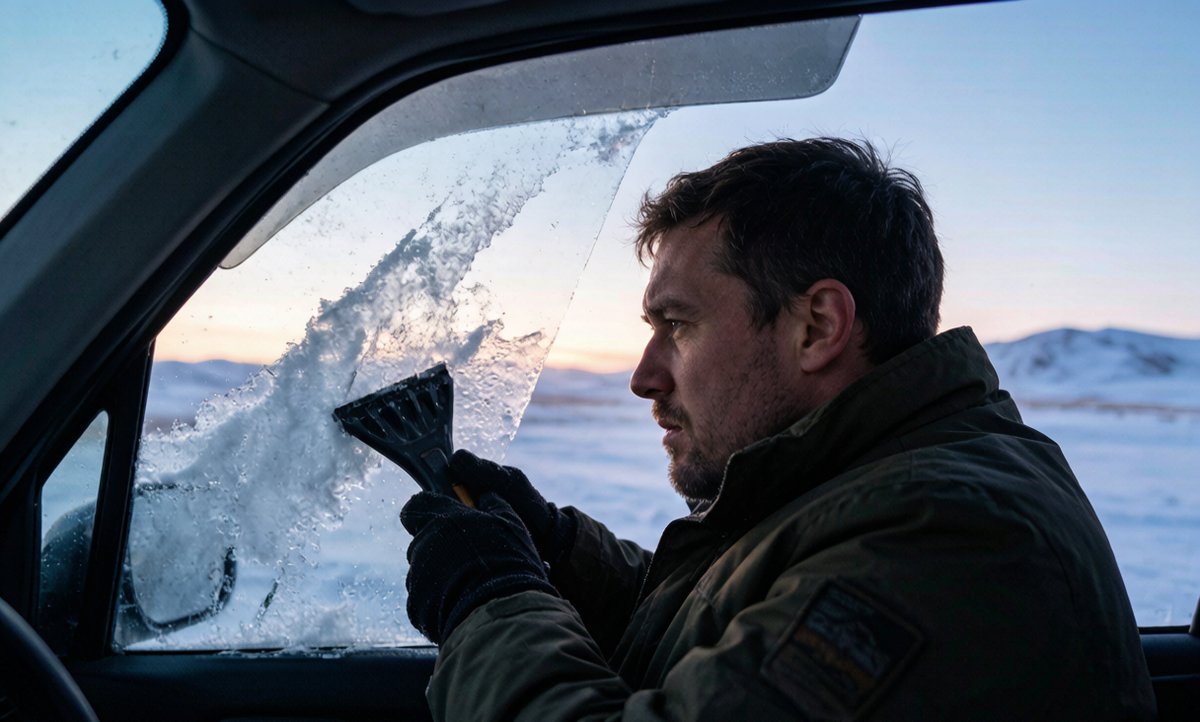
The first time I drove a Xinjiang pass in deep cold, the locals had studded tires and I had summer rubber, and the difference was not speed, it was whether I moved at all.
Winter turns the Xinjiang road from a challenge into a negotiation. Snow closes the high passes, ice hides on shaded corners, and a temperature swing of twenty degrees between valley and summit can defeat tires that were fine an hour earlier. For a self-drive trip between November and March, the question is not whether you need winter tires and chains, but how seriously you take them before the first flake. This guide covers what to fit, when to chain up, and how to keep a loaded car moving when the road turns white.
Winter tires are the baseline
In snow country a normal tire is a different machine. Winter rubber stays supple in the cold and bites where a summer tire slides, and the gap widens below about seven degrees Celsius. I fit a full set of winter tires before the first serious cold, not after the first skid, because swapping on a frozen roadside is miserable and slow. Studded tires are common on the northern ranges and legal in the season, and they add grip on packed ice that a studless winter tire only dreams of. The cost of a set is small next to a ditch or a missed pass, and the confidence they give is worth more than the rubber.
- Fit before first cold
- Studded common up north
- Grip beats false economy
When chains actually come out
Chains are not an everyday tool; they are the answer to fresh snow, a closed-grade ice sheet, or a pass the plows have not reached. I carry them even with winter tires, because there are corners where only metal bites. The trigger is simple: if the wheels spin on a pull, or the grade looks white and unbroken, I stop and chain the driven axle before the hill, not after I am stuck. Practising the fit at home once saves a frozen ten-minute struggle that becomes a thirty-minute ordeal at the pass. Chains are insurance you hope not to use and are glad to own.
- For fresh snow and ice grades
- Chain before the hill
- Practise the fit at home
Fitting without freezing
A roadside chain fit in minus fifteen is a test of preparation. I lay a mat, wear gloves I can still feel in, and follow the pattern the maker printed on the bag, because every chain is a little different. I snug them, drive a few metres, and re-tighten, since they loosen as they seat. I keep speed low and avoid hard braking, because chained tires grip and then suddenly do not on a bare patch. When the road clears I pull over and remove them, because running chains on dry tarmac chews the tire and the road. The whole routine is a few minutes if rehearsed and a small disaster if not.
- Gloves you can feel in
- Snug, drive, re-tighten
- Remove on clear tarmac
Reading the cold road
Winter driving is mostly reading: shaded corners that never see sun stay iced long after the straights clear, bridges freeze first, and a pass can be white while the town below is wet. I slow before every unknown corner and treat black ice as the default on any unplanted shade. The morning is often the worst, with refreeze after a melt, so I start late when I can and let the sun do the work. I watch local cars; if they chain up, I chain up, because they know this road in a way no forecast does. Humility on ice is the only safe posture.
- Shade and bridges freeze first
- Morning refreeze is worst
- Match the locals’ caution
The loaded car problem
A self-drive car is heavier and higher than a city runabout, and weight changes the ice equation: more grip going straight, less margin in a slide. I shift weight low and centred, keep the tank near full for ballast, and brake earlier than instinct says. A loaded roof box raises the centre and I remove it in heavy snow if I can. The danger is confidence; winter tires make you feel invincible until a corner proves otherwise, so I drive as if the grip is half what the tires promise. The car is a tool, and ice is the boss.
- Weight low and centred
- Brake earlier than instinct
- Confidence is the real hazard
A winter day that works
My clean winter driving days share a shape: winter tires on, chains in the boot, a late start after refreeze, and a speed that respects the unknown corner. I stop to chain before the white grade, crawl the pass, and celebrate with a warm room and a gated yard. The road that looked impossible at dawn is routine by noon once the sun and the rubber agree. I measure a good winter mile by arriving, not by arriving fast, and the tires and chains are simply why arriving was possible at all.
- Tires on, chains ready
- Late start beats refreeze
- Arrive, not arrive fast
| Condition | Gear | Action |
|---|---|---|
| Above 7C dry | Summer OK | Normal caution |
| Cold or snow | Winter set | Fit before trip |
| Fresh snow grade | Plus chains | Chain before hill |
| Clear tarmac | No chains | Remove promptly |
Practical takeaways
- Fit winter tires before cold.
- Always carry chains.
- Practise fitting at home.
- Slow before shaded corners.
Frequently Asked Questions
- Are winter tires enough in Xinjiang?
- For most cold roads yes, but carry chains for fresh snow and unplowed passes.
- When should I fit chains?
- Before the hill you cannot climb, not after you are stuck in it.
- Is studded legal?
- Typically in season on the northern ranges; check local rules as you go.
- How fast with chains?
- Slow; avoid hard braking and remove them on clear dry road.