

High in the Tianshan, where the air is thin and the grass runs to the horizon, sits Bayinbuluke — a vast alpine wetland famous for its swans and for the Kaidu River, which braids into nine graceful twists before your eyes. It’s one of the highest, largest wetlands in China, and a near-mandatory stop on the Duku Highway (it sits right on the northern crossing). If you want the “roof of Xinjiang” feeling — big sky, water, birds, and silence — this is it.
What it is
Bayinbuluke (巴音布鲁克) means “rich spring” in Mongolian, and the plateau lives up to it — a high (≈2,500 m) basin of marsh, meadow, and the winding Kaidu. It’s a nature reserve; the swans (whooper swans) nest here in summer, and the “nine-twist river” viewpoint is one of Xinjiang’s most beloved images.
When to go
- Summer (June–August): swans are present, meadows are green, access is easy.
- Late summer–early autumn: fewer crowds, golden light.
- Winter: cold and largely closed; snowbound.
- The best-time guide has the seasonal window; the Duku’s own opening (early June) gates access.
What to see and do
- The nine-twist river viewpoint — the iconic panorama; go late afternoon for the light and (if lucky) a double-sun reflection locals prize.
- Swan watching — the reserve protects whooper swans; bring binoculars, keep distance.
- The wetland boardwalks — easy walks with huge sky.
- Combine with the Duku — Bayinbuluke is the natural overnight between the Duku’s north and south.
Getting there
Bayinbuluke sits on the Duku corridor; most visitors arrive via the Duku Highway from either direction. It also links to the Yili grassland loop to the west. The winding access road in is part of the experience — and part of why it feels remote.
Why it’s special
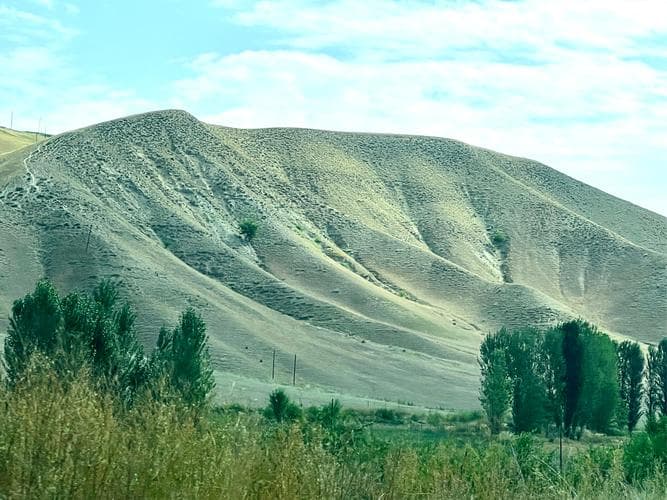
Unlike the manicured Nalati meadows, Bayinbuluke is wild wetland — bigger, higher, and quieter. The swans give it a grace the other grasslands lack, and the altitude gives it scale. It’s the Tianshan at its most open.
 Panlong Ancient Road” />
Practical notes
- Altitude: ~2,500 m — easy walking but take it slow; hydrate.
- Tickets/shuttles: the reserve uses a shuttle system; buy at the gate.
- Cold: even in summer, bring a layer — nights are chilly at altitude.
- Stay: the gateway town has guesthouses; book ahead in July–August.
Photography
- The nine-twist river from the viewpoint at golden hour — the signature shot.
- Swans in the marsh — patience and a long lens.
- Big-sky meadows — the openness is the subject.
FAQ
When are the swans there? Summer (roughly May–September), best June–August.
Is it on the Duku? Yes — it’s the key stop on the Duku’s northern half.
How long to visit? Half a day to a full day with the shuttle.
Altitude issues? Mild at 2,500 m; take it easy.
Final word
Bayinbuluke is the Tianshan’s high wetland — swans, a river that knots itself into nine bows, and sky without end. Drive the Duku, stop here, and let the roof of Xinjiang do what rooftops do: put everything else below you.
Written by Karl Huang, a Xinjiang-based travel writer. The reserve is seasonal and shuttle-based — confirm access and the Duku opening with local authorities.