

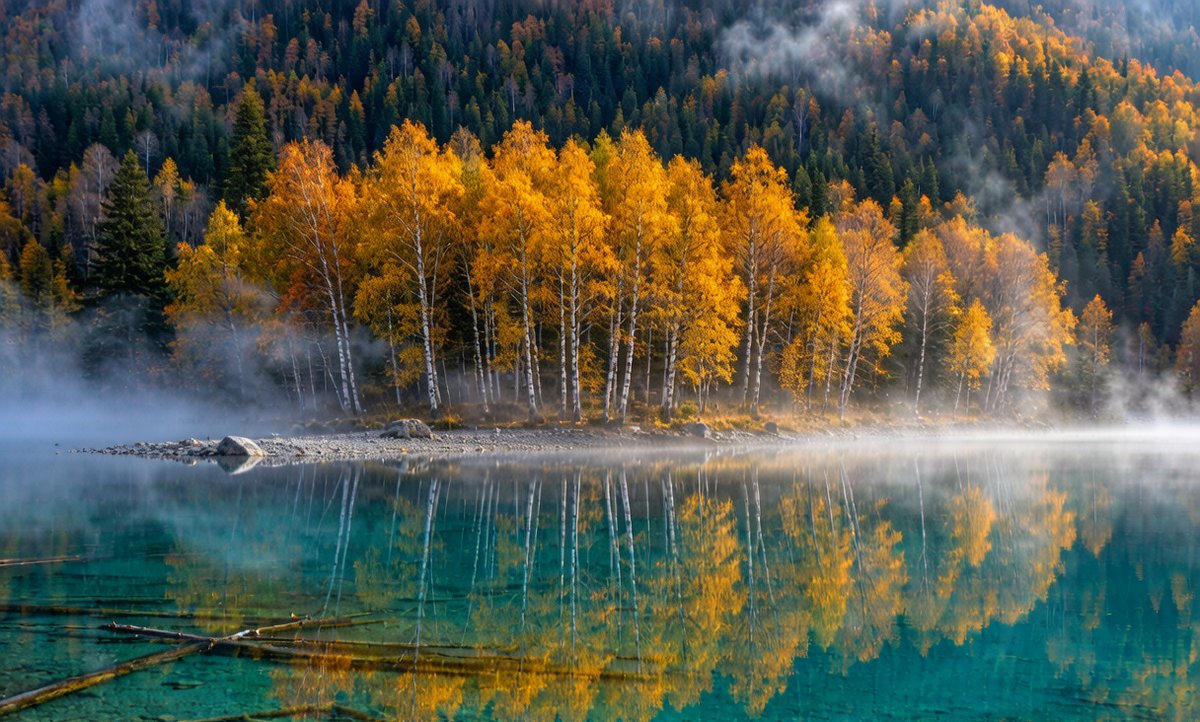
Autumn is the season that justifies every long drive in Xinjiang. The birch forests around Kanas turn gold, the poplars along the desert roads glow yellow, and the first snow dusts the high peaks while the valleys still hold warm afternoon light. But it is also the season of freezing mornings, closed roads, and the busiest domestic crowds. If you are planning a xinjiang autumn 2026 road trip, the timing matters as much as the route.
 }
}
Why autumn is special
Most of Xinjiang is green in summer and brown in winter. Autumn is the narrow window when color explodes. The effect is strongest in the Altai Mountains of the north, where larch and birch change color between late September and mid-October. The Tianshan range also turns gold and red, especially around the Ili Valley and Nalati. Even the southern Taklamakan edges get color from poplar forests and red desert plants.
The other advantage of autumn is the light. The days are shorter and the sun sits lower, giving longer golden hours and more dramatic shadows. For photography, it is the best season of the year.
Timing the color by region
Color timing depends heavily on elevation and the year’s first cold snap. Based on recent patterns, here is what to expect in 2026:
- Kanas and Hemu: Peak color usually falls between 25 September and 10 October. The higher slopes turn first; the valley floor holds color a few days longer.
- Altai lower elevations: Burqin and nearby river valleys are usually golden from early to mid-October.
- Ili Valley and Nalati: Grasslands turn straw-gold by late September; autumn color along the rivers lasts into mid-October.
- Duku Highway: Open until roughly mid-October, depending on snowfall. The high passes may already have snow while the lower canyons are still golden.
- Turpan and the south: No fall foliage to speak of, but temperatures become pleasant and crowds shrink.
The best time for a Xinjiang road trip generally overlaps with autumn for the north, but the window is short.
Weather and what to pack
Autumn in northern Xinjiang can feel like two seasons in one day. Daytime temperatures in Kanas might reach 15–18 °C, while nights drop below freezing. By mid-October, morning frost and light snow are common at altitude.
Pack in layers:
- A down jacket or insulated parka for early mornings and evenings.
- A fleece mid-layer and a windproof shell.
- Warm hat, gloves, and a scarf.
- Sturdy waterproof boots for muddy trails.
- Sunglasses and sunscreen — the UV at altitude is strong even in cold weather.
Carry snow chains if you are driving the Duku or crossing high passes in late October. Our Northern Xinjiang road trip loop guide covers the main route.
Road conditions and closures in 2026
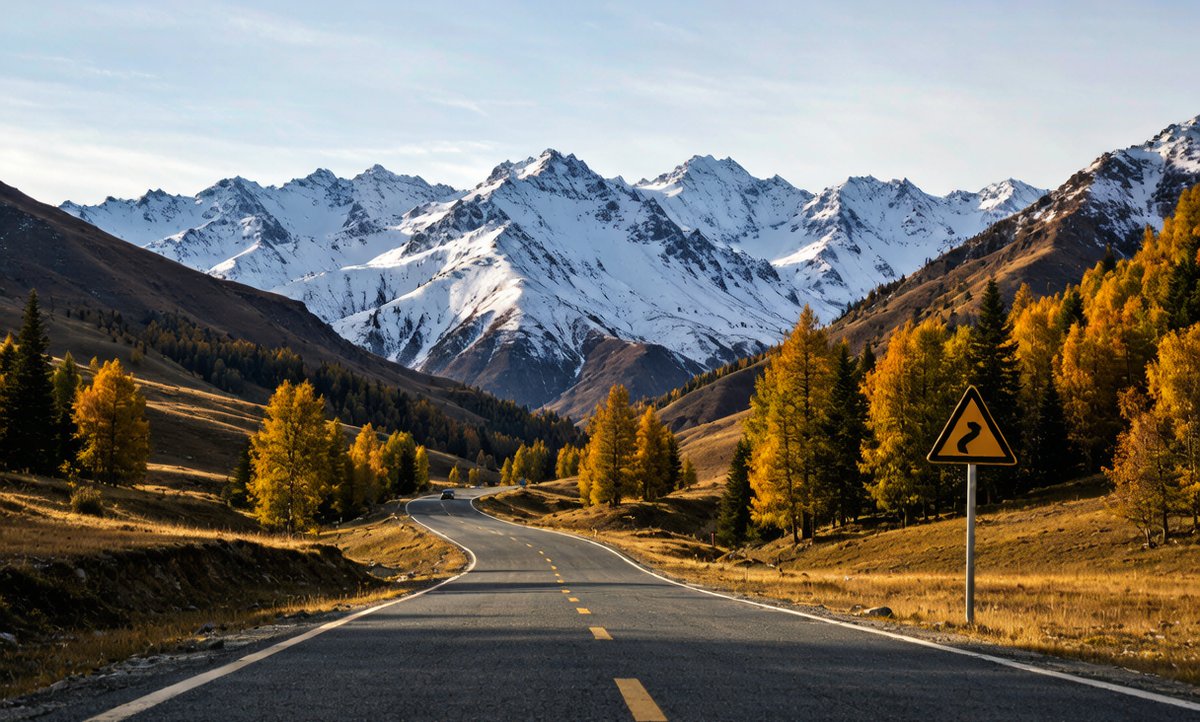
The biggest risk in autumn is an early snow closure. The Duku Highway, Ili mountain roads, and the Altai passes can all shut down after the first heavy snowfall. Typically:
- The Duku Highway closes from mid-October to early June.
- Some high-altitude sections of the Altai route close after mid-October.
- The southern desert routes stay open year-round.
Check road-status announcements before you travel. Local traffic police and park offices usually post updates, but the information is not always easy to find in English. Ask your hotel or car-rental company to confirm.
Crowds and booking
Golden-week crowds are not the only issue. The Kanas autumn peak is also busy with domestic photographers and tour groups. Prices for accommodation in Burqin, Kanas village, and Hemu can double or triple.
Book Kanas and Hemu at least two to four weeks ahead for late September to early October. Burqin has more options but also fills up. If you are flexible, the last two weeks of September often have better availability and slightly warmer nights than the first week of October.
Recommended autumn routes
Short Kanas loop (5–6 days) — Urumqi to Burqin, Kanas, Hemu, and back. This is the classic autumn route. The Kanas Lake guide has the details.
Northern grand loop (7–10 days) — Adds Sayram Lake, Nalati, and the Duku Highway. The full loop gives a wider range of autumn color and spreads the driving more evenly.
Duku south–north crossing (2–3 days) — If the road is still open, a late-September Duku crossing is spectacular. Pair it with a visit to Bayinbuluke for the grassland light.
Ili Valley (4–5 days) — Less crowded than Kanas, with excellent grassland color, good food, and easier driving. Ideal for travelers who want autumn without the chaos.
What to expect each week of October
- First week: Peak color at Kanas, highest crowds, freezing nights at altitude.
- Second week: Still good color but more variable; some leaves start to fall.
- Third week: Mostly brown in the north unless late season; snow risk increases.
- Late October: Many mountain roads closed, but the south and desert routes are comfortable.
Photography tips for autumn color
Autumn light changes fast. Use a polarizing filter to cut haze over the lakes and a tripod for the misty mornings at Kanas. Shoot the forest in soft overcast light to avoid harsh shadows, and use a telephoto lens to compress the layers of color on the hillsides. The best shots usually happen in the first and last hour of daylight.
FAQ
When is the absolute best time for Kanas autumn colors? Usually the last week of September to the first week of October. Exact timing depends on the first cold snap.
Is October a good time to visit the south? Yes. The desert heat is gone, the skies are clear, and the temperatures are pleasant during the day.
Do I need winter tires in October? Not usually in the first half of the month, but snow chains are wise if you are crossing high passes. By late October, winter preparation is essential.
Can I see autumn colors on the Duku Highway? Yes, but only if you travel before it closes. The timing is tight, usually mid-to-late September.
How far ahead should I book Kanas accommodation? At least two weeks for September, and ideally three to four weeks for the October peak.
Final word
Autumn in Xinjiang is the payoff season. The colors are real, the light is beautiful, and the driving feels like moving through a film. But it is also unforgiving: one early snow can close your route, and one missed booking can leave you sleeping in the car. Plan the dates tightly, book early, and have a backup route if the mountains close.
Written by Karl Huang, a Xinjiang-based travel writer. Road openings and autumn weather shift every year — confirm current conditions with local authorities before finalizing your 2026 trip.