

I’ve chased light across Xinjiang for years; this route is built around the three golden hours that actually pay off — mist, canyon and galaxy.
Xinjiang is a photographer’s overload. This 12-day route sequences the best light: Hemu‘s morning mist, Dushanzi’s red canyons at golden hour, Sayram’s reflective dawn and the Pamir’s star fields — the shots that justify the trip.
Days 1–3: Hemu and Kanas mist
Hemu’s sunrise mist over the wooden village is the icon — be on the viewing deck by 5:30 in autumn. Kanas Lake reflections follow. Stay in the new village to park and still reach the deck early. The mist is the headline: a cold, silver fog lifting off the river as first light hits the peaks — a 10-minute window around 6 am that you cannot fake. Kanas Lake after, with reflections if the wind is down. The new village (3 km from the old) lets you park at the door and still reach the deck by 5:30; the old village is prettier but the luggage haul costs you the dawn. I shoot Hemu two mornings if weather allows — mist is fickle. Days 1–3 are the ‘mist’ chapter; the alarm is 4:45.
- Hemu deck by 5:30 in autumn
- Kanas reflections after
- New village: park + reach deck early
Days 4–6: Duku and canyons
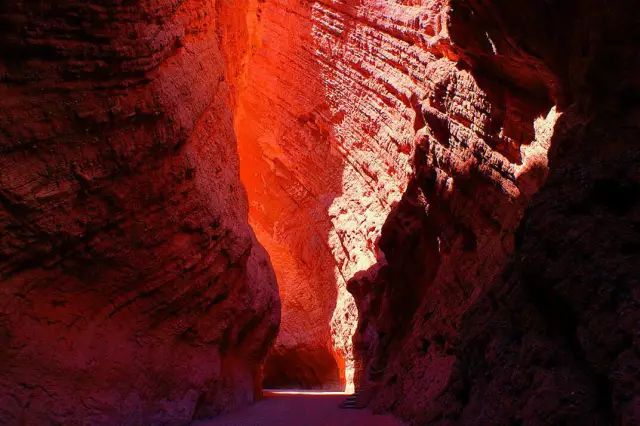
Dushanzi Grand Canyon‘s red strata glow at golden hour; the Duku snow line gives dramatic passes. Shoot early and late; midday is flat. The Dushanzi canyon at 6–7 pm is the red-wall shot — layered sediment glowing orange against a blue sky. The Duku snow line (summer) is the dramatic pass: snow beside the road, a tele-compressed drama. I shoot the canyon at golden hour, sleep in Bayinbuluke, and catch the Duku snow at first light the next morning. Midday is dead — flat light, harsh shadows — so I rest or drive then. Days 4–6 are the ‘canyon and pass’ chapter: red walls and white peaks, both at the edges of the day.
- Dushanzi canyon at golden hour
- Duku snow line at first light
- Rest midday; light is flat
Days 7–9: Sayram and the Pamir
Sayram Lake at dawn (still water, few people); then Kashgar and up to Karakul Lake for Muztagh Ata and a dark-sky session — the Pamir has minimal light pollution. Sayram at 6 am is glass — the ring road’s east shore reflects the mountains in windless calm. Then the G314 to Karakul (3,600 m) for Muztagh Ata and a night sky that’s among the darkest in China. The Pamir dark-sky session is the hidden gem: the Milky Way over a 7,500 m peak, no light for 100 km. I shoot Sayram dawn day seven, drive to Kashgar, up to Karakul day eight, stars that night. Days 7–9 are the ‘water and sky’ chapter: the reflective lake and the star field.
- Sayram dawn: glass-east shore
- Karakul + Muztagh dark-sky
- Pamir = minimal light pollution
Days 10–12: poplars and return
Time late October for the Tarim Poplar Forest’s gold, then fly out. Carry a wide, a tele and a sturdy tripod; drones need permits near borders. The poplar gold (last two weeks of Oct) is the autumn climax: ancient gold trunks against blue desert sky. I time the loop’s end for it — Luntai or Yuli, dawn and dusk for the raking light. Then fly out from Kashgar or Urumqi. The kit is the constant: a wide for scale, a tele for single trunks, a sturdy tripod (wind!), and drone permits checked locally near the Pamir. Days 10–12 close on gold; the loop is built around light, not mileage. The photographer’s Xinjiang is a sequence of golden hours.
- Tarim poplars, late Oct gold
- Wide + tele + sturdy tripod
- Drone permits near borders
Light logistics
Pre-scout positions the day before; keep batteries warm in cold; shoot RAW. Buffer days protect the golden hours from weather. The pre-scout is the pro habit: at Hemu, find the deck the afternoon before so you’re not fumbling at 5 am. Batteries die in the cold (Pamir, Sayram dawn) — keep them in an inner pocket, swap warm. RAW is non-negotiable for the dynamic range of a lit peak against a dark valley. Buffer days (two built in) absorb a cloudy mist morning or a windy Karakul night — you reshoot, not miss. The logistics are what turn ‘I was there’ into ‘I got the shot’. Light is the subject; the plan serves it. Photograph the loop around the hours, not the map.
- Pre-scout the afternoon before
- Warm batteries in cold; shoot RAW
- Two buffers for weather
| Window | Target |
|---|---|
| Autumn AM | Hemu mist |
| Golden PM | Dushanzi canyon |
| Dawn | Sayram glass |
| Night | Pamir stars |
| Late Oct | Tarim gold |
Practical takeaways
- Be on Hemu deck by 5:30 in autumn.
- Shoot canyons at golden hour.
- Pamir for dark-sky sessions.
- Pre-scout positions the afternoon before.
Frequently Asked Questions
- Best season to shoot?
- Sept–Oct for mist and poplars; summer for passes.
- Drones allowed?
- Near borders (Pamir) permits needed; check locally.
- Must-bring?
- Wide, tele, tripod, warm battery pouch.
- How many buffer days?
- Two — to reshoot a missed golden hour in bad weather.