

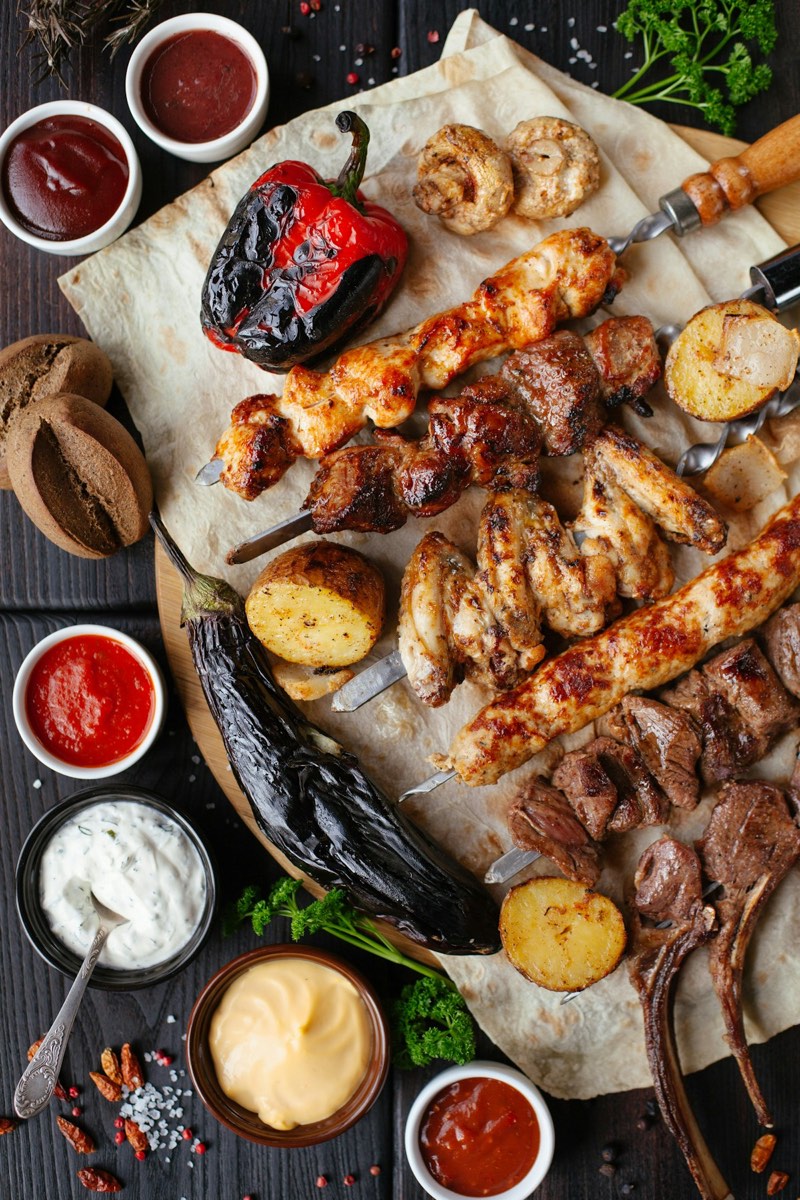
My first Xinjiang night market left me holding eight lamb skewers and no plan for the rest of dinner, because the grill master kept pointing at the next tray. Kebabs here are not a side dish; they are the centerpiece of the evening.
The lamb skewer (kawap in Uyghur, often called shashlik in the north) is the most democratic meal in Xinjiang: a roadside cart, a highway service area, or a rooftop in Kashgar all serve the same ritual. For a self-driver the kebab stop is also a safety tool, a chance to step out of the car, eat protein hot off the coals, and reset before the next stretch. Knowing what to order, what a fair price looks like, and how to eat it safely turns a random roadside stop into one of the best meals of the trip.
What you are actually eating
The standard skewer is cubed lamb (often leg or rib) threaded with fat, dusted with salt, cumin and chilli, and grilled over charcoal. In the south you will hear kawap; around Ili and the north the Russian-influenced shashlik name sticks, and you may get larger flat cuts. Mutton from the pastures around Kashgar, Aksu and the Ili valleys is mild and never gamey when fresh, which is why it needs little more than salt. The fat cap is not optional, it is the flavor. A few stalls add a brush of egg or a sprinkle of cumin at the end; the good ones do not mask the meat with sauce.
- Cubed lamb + fat, salt, cumin, chilli
- Kawap in the south, shashlik up north
- Pasture lamb is mild, needs little seasoning
- The fat cap carries the flavor
What it costs in 2025-2026
Street skewers run about 3-6 RMB each for the small standard size, with bigger ‘dapan’ or ‘big string’ cuts at 8-15 RMB. A filling meal is 10-15 skewers plus a round of nan bread, so budget 40-80 RMB a person at a stall versus 80-150 RMB in a sit-down kebab house with sides. Prices climb in July-August and around the Corban and National Day holidays, and drop in winter when you may negotiate a few extra sticks for free. Service-area grills inside toll plazas charge a small premium but save you a detour into town.
- Small skewer 3-6 RMB; big cut 8-15 RMB
- 10-15 sticks + nan = a full meal
- 40-80 RMB street, 80-150 RMB restaurant
- Peak summer and holidays cost more
Where to stop on a drive
The big night markets in Urumqi (Hongshan and Erdaoqiao), Kashgar’s Renmin West Road strip, and the evening rows outside Yining and Aksu are the obvious hits, but the best road-trip kebabs are the lone carts at highway pull-offs and county-town squares after sunset. Look for a crowd of locals and a fast turnover of meat, two signs the grill is both safe and good. In the Taklamakan edge towns and along the G3012, a kebab cart by the fuel station is a perfect 20-minute reset. I time long desert legs so a fuel stop lands near a dinner crowd rather than an empty lot.
- Urumqi Hongshan, Kashgar Renmin Rd, Yining, Aksu
- Best finds: lone carts at pull-offs at sunset
- Crowd of locals + fast turnover = safe and good
- Fuel-station carts on the G3012 are ideal resets
Eating it safely
Kebabs are one of the safer street foods because the meat is cooked through over high heat; still, pick a stall where the lamb is visibly fresh and the charcoal is hot, not smoldering. Avoid anything lukewarm or reheated. Pair with hot tea rather than iced drinks in the cold months, and use the nan to scrape the last cumin off the plate. If you are halal-only, every Uyghur and Hui stall is halal by default; just skip any vendor advertising mixed menus. Pregnant travellers and the immunocompromised should stick to well-done meat and skip the rare center some carts offer on request.
- High-heat cook-through makes it low-risk
- Choose hot charcoal, fresh visible lamb
- Hot tea over iced in winter
- All Uyghur/Hui stalls are halal by default
| Area | Style | Typical price/skewer | Best time | ||||
|---|---|---|---|---|---|---|---|
| Urumqi | Standard kawap | 3-5 RMB | After sunset | Kashgar | Fatty rib cuts | 4-6 RMB | Evening strip |
| Ili / north | Shashlik, larger cuts | 5-8 RMB | Riverside grills | ||||
| Highway G3012 | Quick fuel-stop carts | 4-6 RMB | Sunset reset |
Practical takeaways
- Follow the local crowd and the fast turnover of meat.
- Time desert legs so a fuel stop meets the dinner crowd.
- Use nan to scoop the cumin; do not waste it.
- Skip lukewarm or reheated skewers, even if cheap.
Frequently Asked Questions
- What is the difference between kawap and shashlik?
- Same idea, different name: kawap is the Uyghur term used across the south, shashlik is the Russian-influenced label up north, often with bigger flat cuts.
- How many skewers make a meal?
- About 10-15 small skewers plus a round of nan bread, which runs 40-80 RMB a person at a street stall.
- Is street kebab safe to eat?
- Yes if the charcoal is hot and the lamb fresh; the high-heat cook-through kills most risk. Avoid lukewarm or reheated meat.
- Are kebab stalls halal?
- Every Uyghur and Hui stall is halal by default; just avoid vendors advertising mixed meat menus.