

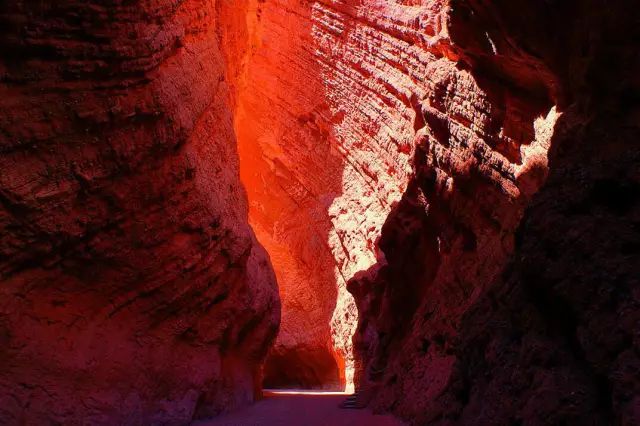
I planned Aksu as a mere fuel stop on the G3012 and stayed an extra day once I reached the red Tianshan gorge an hour north, where a river has cut a canyon deeper and stranger than anything I expected on a flat southern road. Aksu turned out to be the best unplanned stop of that trip.
Aksu is the western anchor of the northern Taklamakan edge, a real city of about half a million people on the G3012, and the gateway to two underrated sights: the Tianshan Grand Canyon (also called the Kezil Gorge) and the ancient Kizil cave complex near the old town of Kucha. Most drivers blow through on the Korla to Kashgar run, but a one-day or overnight stop here adds a red-rock canyon and the oldest Buddhist art in China to your loop without adding permits or long detours. This guide covers where Aksu sits, what to see, how to drive it, and why it earns a place on a Southern Xinjiang or Silk Road route.
Why Aksu is worth a stop
Aksu means white water in Turkic, a nod to the rivers that fall from the Tianshan, and the city is greener and cooler than the desert towns further south. It sits roughly halfway between Korla and Kashgar on the G3012, about 1,000 km from Urumqi, which makes it a natural overnight on a long southern crossing. The two headline sights are both within 70 km: the Tianshan Grand Canyon to the north, a national geopark of red sandstone spires cut by the Kezil River, and the Kizil caves to the west near Kucha. Aksu also has a calm, livable center with good hotels and a strong night market, so it works as a recovery night after the Pamir or before the long Kashgar push. I use it as the pivot where I swap a desert day for a mountain half-day.
- Aksu means white water; greener than desert towns
- Halfway Korla to Kashgar on the G3012
- Two sights within 70 km: canyon and caves
- Good hotels and night market for a rest night
- Pivot from desert to mountain here
The Tianshan Grand Canyon
The Tianshan Grand Canyon, or Kezil Gorge, is a red sandstone geopark about 70 km north of Aksu city, reached on a good sealed road that climbs into the front range. The main walk follows the Kezil River through towering red walls, with side trails to viewpoints and a small lake; allow three to four hours for the loop and the photos. Entry runs roughly 30 to 60 RMB and the site closes by late afternoon, so arrive before noon. The gorge is at 1,500 to 2,000 meters, so it is cool even in summer and cold in winter, and the light on the red rock is best in the morning. I pair it with a border permit check in Aksu only if heading further south, but the canyon itself needs no special pass. Wear sturdy shoes because the riverbed path is uneven.
- Red sandstone geopark 70 km north of Aksu
- Kezil River walk, 3 to 4 hours
- Entry 30 to 60 RMB, closes late afternoon
- 1,500 to 2,000 m, cool even in summer
- Sturdy shoes for the uneven riverbed
Kucha, Kizil caves and the old road
West of Aksu, the historic town of Kucha (now Kuqa) is the launch point for the Kizil Caves, the earliest major Buddhist cave complex in China, carved into a cliff above the Muzat River about 70 km west of the city. Around 235 caves were cut from the third to the eighth century, with vivid murals in the surviving ones, and the site is a UNESCO-tier treasure that most travelers miss. Kucha town itself keeps a faint old-city feel, a few mosques, and a relaxed bazaar. The route Aksu to Kucha to the caves is sealed and quick, about two hours round trip from Aksu, so both the canyon and the caves fit one long day if you start early. I treat Kucha as a half-day and save the canyon for the cooler morning.
- Kucha (Kuqa) launches the Kizil Caves
- Earliest major Buddhist caves in China, 3rd to 8th c.
- About 235 caves, vivid surviving murals
- Aksu to caves ~2 hours round trip
- Kucha half-day; canyon in the cool morning
Driving, season and logistics
The G3012 through Aksu is fast and sealed, and fuel, hotels and hospitals are all easy here, so it is a dependable resupply point on a long southern run. The best time to visit is April to June and September to October, avoiding the July and August heat that can top 38 C on the plain, though the canyon stays pleasant. Road safety on the northern spur to the canyon means watching for rockfall after rain and for herders with flocks on the access road. From Aksu you can continue south toward Hotan via the G3012 or west toward Kashgar, both straightforward sealed highways. I top up fuel and water in Aksu because the next stretch to Kashgar has fewer services than the map suggests.
- G3012 fast and sealed; easy resupply
- Best Apr to Jun and Sep to Oct; summer hot
- Watch rockfall and flocks on the canyon road
- Continue to Hotan south or Kashgar west
- Fuel up; Kashgar stretch is thinner than mapped
| Sight | Distance from Aksu | Time needed | Note |
|---|---|---|---|
| Tianshan Grand Canyon | 70 km north | Half day | Red rock, cool |
| Kizil Caves via Kucha | ~70 km west | Half day | Oldest Buddhist caves |
| Kucha old town | 60 km west | 2 hours | Bazaar and mosques |
| City night market | in town | Evening | Dinner stop |
Practical takeaways
- Use Aksu as the overnight pivot between Korla and Kashgar.
- Start early to pair the canyon morning with Kucha caves.
- Fuel and water up; the Kashgar stretch is thin.
- Wear sturdy shoes for the uneven canyon riverbed.
Frequently Asked Questions
- What is Aksu known for?
- The Tianshan Grand Canyon and the Kizil Caves near Kucha, plus its position as the western anchor of the northern Taklamakan edge on the G3012.
- How far is the canyon from Aksu city?
- About 70 km north on a sealed road, roughly a 90-minute drive each way with time for the walk.
- Do I need a border permit to visit Aksu?
- No, Aksu and Kucha are open; only the far Pamir and border zones need a permit, which you can arrange in Kashgar.
- When is the best time to visit Aksu?
- April to June and September to October, to avoid the plain heat that passes 38 C in mid-summer.