

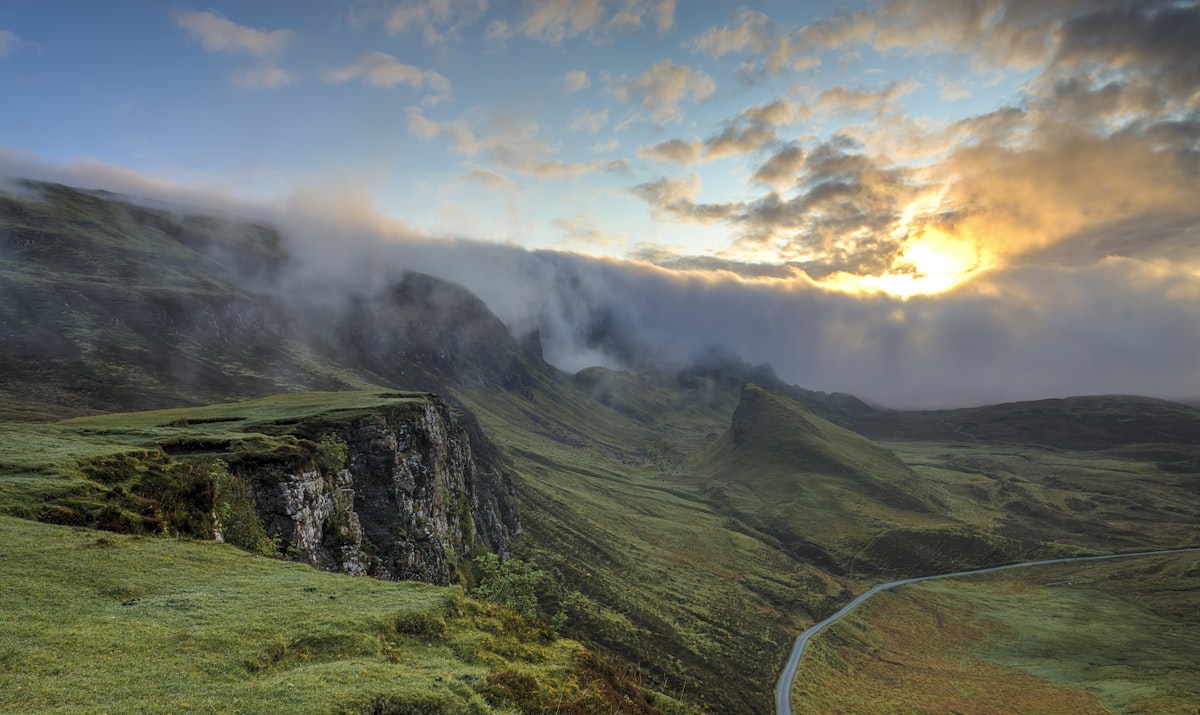
Anjihai is the canyon most drivers see from the Duku guardrail and never stop for – which is a pity, because the red walls up close are the best cheap view on the northern route.
The Anjihai Grand Canyon, often called the Anjihai Red Canyon or the Rainbow Canyon of the north, is a deep gash in the Tian Shan cut by the Anjihai River, near the Duku Highway south of the north junction. It is free, unofficial, and far less crowded than the ticketed canyons, which makes it a favourite quiet stop. This guide covers how to reach it, what to see, the safety rules, and how to pair it with the Duku drive.
Where Anjihai is
The canyon lies on the north section of the Duku Highway (G217), roughly between Dushanzi and the higher passes, where the road runs along the Tian Shan edge. It is not a gated park; it is a roadside viewpoint where you park and walk to the rim. The Tianshan Grand Canyon to the south is the ticketed sister, but Anjihai is the wild one. A Duku Highway run almost always passes it, so the stop costs nothing but a pull-off and a half hour. The river has cut red and grey strata into a canyon a few hundred metres deep, and the light on it changes by the hour.
- North Duku (G217), Dushanzi side.
- Roadside rim, not a gated park.
- Free, unofficial, quiet.
What you see
From the rim you look down into a red-and-grey canyon with the Anjihai River a thin line at the bottom. The strata are the draw – bands of colour that give it the Rainbow name – and the scale is the shock. There is no path to the bottom that is safe for a casual visitor, so the view is the point, not a descent. The Tianshan Grand Canyon nearby is deeper and ticketed; Anjihai is the honest, free version with fewer coaches. Give it 30 to 45 minutes around late morning, when the side light lifts the colour. A calm stop here resets the Duku day before the high passes.
- Red and grey strata, a few hundred metres deep.
- View from the rim; no safe descent.
- 30-45 minutes, late morning light.
Safety at the rim
The edge is loose earth with no rail in places, and the drop is real. Stay back from the lip, keep children close, and do not pose for a photo at the very edge – the ground gives way. Wind can be strong on the Tian Shan, so a hat and a firm stance matter. Road safety on the Duku includes this stop: park fully off the lane, because the highway is narrow and fast. The canyon is worth it, but it rewards caution, not bravado. A driver who treats the rim with respect gets the view and the story; one who does not risks the whole trip.
- Loose edge, no rail; stay well back.
- Keep children close; no edge poses.
- Park off the lane; highway is narrow.
When to visit
The Duku opens around June and closes with the first snow, often by early October, and Anjihai follows that window – the canyon is a snowbound ditch in winter. The best time to visit is July and August for green contrast against the red, or September for clear, cool light. Spring has meltwater and mud. Go early in the day, because afternoon wind on the Tian Shan kicks up dust that softens the colour. The stop is weather-dependent like the whole pass, so check the Duku status in Kashgar or Urumqi before you commit the day.
- Opens ~June, closes ~early Oct with snow.
- Jul-Aug green contrast; Sep clear light.
- Go early; afternoon wind dulls colour.
Pairing it with the Duku
Most drivers hit Anjihai on the way up or down the Duku, between Dushanzi and the high country. The driving distances are short – it is a pull-off, not a detour – so it fits any Duku day. Pair it with the Tianshan Grand Canyon if you want the ticketed deep version too, but do Anjihai first for the free view. A car rental from Urumqi makes the Duku a clean out-and-back with Anjihai as the warm-up. The canyon is the reminder that the Duku is not just a road but a line through some of the youngest mountains in the range, and the red wall proves it.
- Pull-off on the Duku, not a detour.
- Pair with Tianshan Grand Canyon.
- Duku out-and-back from Urumqi.
Practical notes
There is no shop, no toilet and no signal at the rim, so carry water and go before you leave the last town. The nearest fuel and food are back in Dushanzi or the next county, so top up first. The viewpoint is on the highway shoulder, so watch for trucks when you step out. A calm, early stop here is one of the best value pulls on the northern route, costing nothing but a half hour and a careful step back from the edge. The Duku gets the fame; Anjihai gets the quiet wow.
- No shop, toilet or signal at the rim.
- Water and fuel before you leave town.
- Watch trucks when you step out.
| Item | Anjihai | Tianshan Grand Canyon |
|---|---|---|
| Cost | Free | Ticketed |
| Crowd | Low | Higher |
| Access | Roadside rim | Park road |
| Best time | Early day | Morning |
Practical takeaways
- Stay well back from the loose, railing-free rim.
- Go early; afternoon wind dulls the colour.
- Carry water; no shop or toilet at the rim.
- Park fully off the narrow Duku lane.
Frequently Asked Questions
- Is Anjihai Canyon free?
- Yes. It is an unofficial roadside viewpoint on the Duku, not a gated park, so there is no ticket – just a careful pull-off and a walk to the rim.
- Can I climb down into it?
- Not safely. The rim is loose earth with no rail and the drop is real. The view from the top is the point; do not descend.
- When is it open?
- With the Duku: roughly June to early October. In winter it is a snowbound ditch, and the road to it is closed.
- How do I pair it with the Duku?
- It is a pull-off on the north Duku between Dushanzi and the high passes. Stop early in the day for the best light, and pair it with the ticketed Tianshan Grand Canyon if you want more.