

There’s a particular silence you only get above 2,000 meters in Xinjiang, after the last tour bus has gone and the wind has dropped — the kind of silence that makes you lower your voice without meaning to. That silence is why people don’t just drive Xinjiang, they camp it. A Xinjiang camping road trip turns a scenic drive into a night under more stars than you knew existed. This is the practical, honest guide to doing it — gear, legality, and the spots worth unfolding your tent for.
First, the legal and cultural reality
China doesn’t have a blanket “free wild camping” right, and Xinjiang is security-sensitive, so the rule is simple: camp where it’s allowed, and where it clearly isn’t, don’t. The good news is there are abundant legal options — designated campsites at the major lakes and grasslands, yurt compounds that welcome tenters, and the wide shoulders of remote paved roads where a respectful pull-off is usually tolerated. What you must avoid is camping near military zones, border areas, and the immediate perimeter of checkpoints. When in doubt, ask a ranger or herder. A smile and “keyi ma?” (is it okay?) goes a long way.
The gear that earns its weight
Xinjiang camping swings between extremes — warm desert nights and near-freezing passes — so your kit has to flex:
- A 3–4 season tent if you’ll be above 2,500 m or camping in shoulder season.
- A sleeping bag rated to at least −5°C even in summer; pass-top nights bite.
- An insulated pad — the ground gets cold fast at altitude.
- A stove and fuel — open fires are often banned near grasslands and forests. Carry out what you carry in.
- Power: a power bank or a small solar panel; campsites rarely have plugs.
- Water: lakes look drinkable and aren’t. Filter or carry in.
- Our packing list has the full overland kit.
The best wild-camp spots
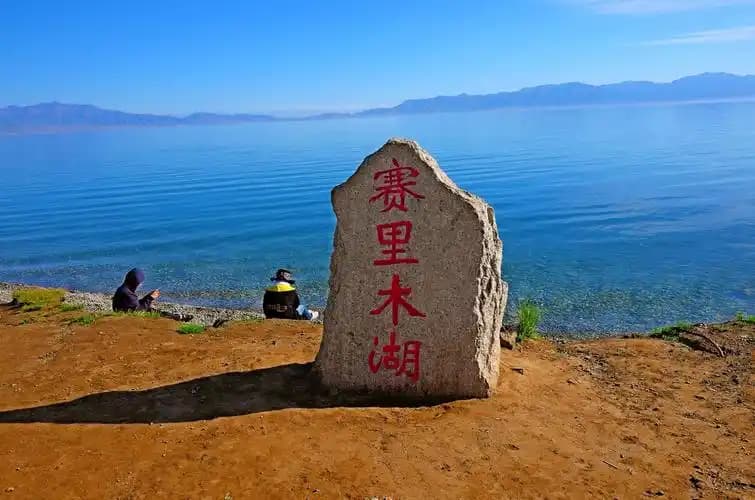
Sayram Lake shoreline. The Sayram Lake ring road has designated camping areas; waking to wind-off-the-Atlantic light on still water is the trip’s signature moment. Book the site ahead in summer.
Kanas and Hemu. The Kanas area has wooden-platform camps and guesthouse yards where tenting is welcome. The birch forest at Hemu at dawn is unreal.
Grassland margins (Nalati, Bayinbuluke). Stay on designated sites — the meadows are protected and off-limits to free camping, but the official camps put you right at the edge of the green.
Desert pull-offs (Taklamakan edge). Only with a trusted vehicle and a buddy car. The silence is total; so is the risk if you break down. Read the desert highway guide first.

Safety, the non-negotiables
- Never camp alone in remote areas without telling someone your plan and ETA.
- Wildlife: bears are rare but present in the north; store food away from the tent.
- Weather: afternoon storms build fast on the passes. Be tent-ready by early afternoon.
- Altitude: if you feel genuinely unwell above 3,000 m, descend — don’t sleep high.
- The safety guide covers checkpoints, breaking down, and emergency numbers.
A sample camping loop (7 days)
- Day 1: Urumqi → Sayram, camp lakeside.
- Day 2: Sayram → Yining (resupply) → Nalati, camp at the grassland site.
- Day 3: Nalati → Bayinbuluke, camp near the swan lake.
- Day 4: Duku Highway northbound, wild-camp at a designated pull-off.
- Day 5: Continue to Karamay, resupply, camp outskirts.
- Day 6: Karamay → Burqin, camp near Kanas/Hemu.
- Day 7: Kanas slow, then drive out or fly from nearby.
When to camp
June–September is the window. July–August is lush but busy at the famous sites; September is the overlander’s month — golden, quiet, and crisp. The best-time guide breaks it down. Winter camping is for experts only.
The feeling of it
You’ll remember the small things: the way the tent glows from inside at 9 p.m., the unexpected warmth of a thermos of milk tea, the utter dark that lets the Milky Way actually show up. Driving all day and then living in the landscape at night is the difference between seeing Xinjiang and knowing it.
FAQ
Do I need a 4×4 to camp? Not for the lakeside and grassland sites — they’re reachable on paved roads. A 4×4 helps only for remote desert pull-offs.
Can foreigners camp freely? Stick to designated sites and yurt compounds; avoid border zones. Ask locally when unsure.
Is it cold in summer? At altitude, yes — nights can hit single digits Celsius even in July. Pack accordingly.
Where do I resupply? Cities en route (Yining, Karamay, Kuqa, Aksu) have supermarkets and gas. Don’t count on anything between oases.
Final word
Camping is how Xinjiang stops being a checklist and becomes a place you inhabited. Pitch somewhere legal, leave no trace, and let the silence do the rest.
Written by Karl Huang, a Xinjiang-based travel writer and overlander. Always confirm camping rules with local rangers and authorities, as they change by season and region.