

You can see Xinjiang in a week and forget half of it. You cannot eat here for a week and forget a bite. The food of Xinjiang is the Silk Road made edible — a meeting of Chinese, Central Asian, and Persian kitchens where lamb, wheat, and fruit do most of the talking. This is the guide I wish every traveler had: the dishes, the regions, and the confidence to order like you’ve been here before. Come hungry. Seriously.
The foundations
Three things define the table: lamb (everywhere, and exceptional), wheat (noodles, bread, dumplings), and fruit (the melons and grapes are a separate religion). Cumin, chili, and onion do the spicing; cream and tomato show up in the north. It’s hearty, grilled, and unpretentious — and it will ruin bland food for you.
The dishes you must try
- Laghman (拉条子): hand-pulled noodles with stir-fried vegetables and meat. The default order; the chew is everything.
- Dapanji (大盘鸡): “big-plate chicken” — chicken, potato, and peppers in a savory sauce, often with belt-noodles added. A meal for two.
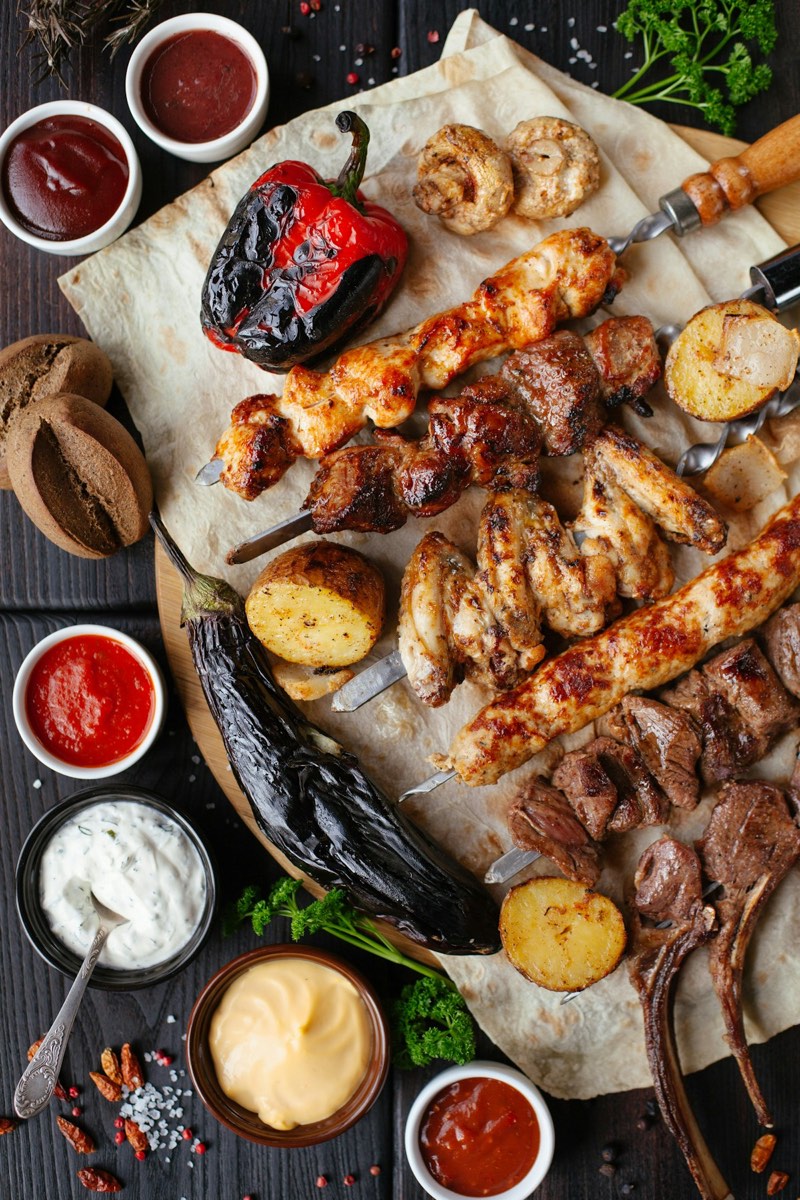
- Kawap / chuanr (烤肉): lamb skewers, charred over coals with cumin and chili. The street food of the province.
- Naan (馕): the round, sesame flatbread from the tandir oven. Eat it warm; it ruins supermarket bread.
- Polo (抓饭): rice with carrot, lamb, and sometimes raisin — cooked in a single pot, eaten with the right hand traditionally.
- Samsa (烤包子): baked meat pies, crisp outside, juicy inside — the perfect road snack.
- Whole lamb (烤全羊): a feast dish; order ahead, share with friends, and don’t skip the crisp fat.
- Mantou / manta: steamed or fried dumplings; the fried (煎) version is a roadside favorite.
Region by region
- Urumqi & the north: the most varied — Han, Uyghur, Kazakh, and Hui influences. Try laghman, dapanji, and the city’s night-market skewers.
- The Ili Valley: dairy-rich — horse milk (kymyz), lavender honey, and the best butter. Grassy, gentle food.
- Turpan: grapes and melons above all; pair with the Grape Valley visit. The heat makes the fruit sing.
- Kashgar & the south: the most “Central Asian” table — polo, samsa, and the Sunday bazaar snacks. Deeper spice, slower pace.
- Hami: the melon, obviously — Hami is the name on the fruit nationwide.
The fruit (don’t sleep on it)
Xinjiang fruit is a destination:
– Hami melon (summer–autumn) — the namesake sweetness.
– Turpan grapes (late summer) — eaten fresh or as raisins.
– Korla pears (autumn) — fragrant, juicy.
– Apples (Aksu) and pomegranates (Hotan) — autumn gluts.
– Apricots and walnuts (seasonal) — the south’s dry goods.
Buy from a roadside stall, eat in the shade, and understand why caravans risked the desert for this.
How to order (and not look lost)
- Point and smile works everywhere; menus are often bilingual in cities.
- “Yí fèn” = one portion; “liǎng fèn” = two.
- Tea (奶茶, milk tea) is the default drink — salty in the north, sweet in the south; both good.
- Cash helps at small stalls; cities take Alipay/WeChat.
- Share plates — portions are generous; ordering family-style gets you more variety.
Food safety (the honest bit)
Xinjiang street food is generally clean and busy (busy = fresh). Basic precautions: eat at places with turnover, peel your own fruit, and carry the usual meds (our packing list includes a kit). I’ve eaten from stalls across the province for years without trouble.

A memory
My first night in Kashgar, I ordered polo from a hole-in-the-wall and a old man motioned me to sit, pushed a bowl of tea across, and said nothing for ten minutes. When I finished, he nodded like I’d passed a test. That’s Xinjiang food — it feeds you first, asks questions later. The meals I remember aren’t the famous ones. They’re the stalls.
FAQ
Is it spicy? Moderate; ask for “bu la” (not spicy) if you prefer.
Vegetarian options? Limited but present — laghman without meat, naan, polo (ask for no meat), and lots of fruit/bread.
Is it safe to eat street food? Yes, at busy stalls; use normal caution.
What’s the one dish? Dapanji with belt-noodles, shared — it’s the province on a plate.
Final word
Xinjiang’s roads are the headline, but its food is the part you’ll crave home. Learn the five dishes, find a stall, and let the Silk Road feed you. The landscapes are why you came; the table is why you’ll stay.
Written by Karl Huang, a Xinjiang-based travel writer and enthusiastic eater. Dish names and availability vary by region and season — ask locally.