

There is a sound in Kashgar on Sunday morning that you don’t forget — a low, rolling roar of a thousand negotiations, the bleat of sheep, the clank of a teapot set down, a language you don’t speak but somehow understand. The Kashgar Sunday Bazaar is the largest market in Central Asia and quite possibly the most alive place in all of Xinjiang. It is not a performance for tourists. It is the real, breathing economy of the Silk Road, happening exactly as it has for centuries. If you come to Xinjiang and skip this, you missed the point.
Two markets, one Sunday
Kashgar actually has two linked markets worth knowing:
- The livestock market (动物巴扎): held on Sundays (and a smaller one on Wednesdays) a few km out of the center. This is the spectacle — thousands of sheep, cattle, camels, and horses, traded with a handshake, a slap, and a price whispered in your ear.
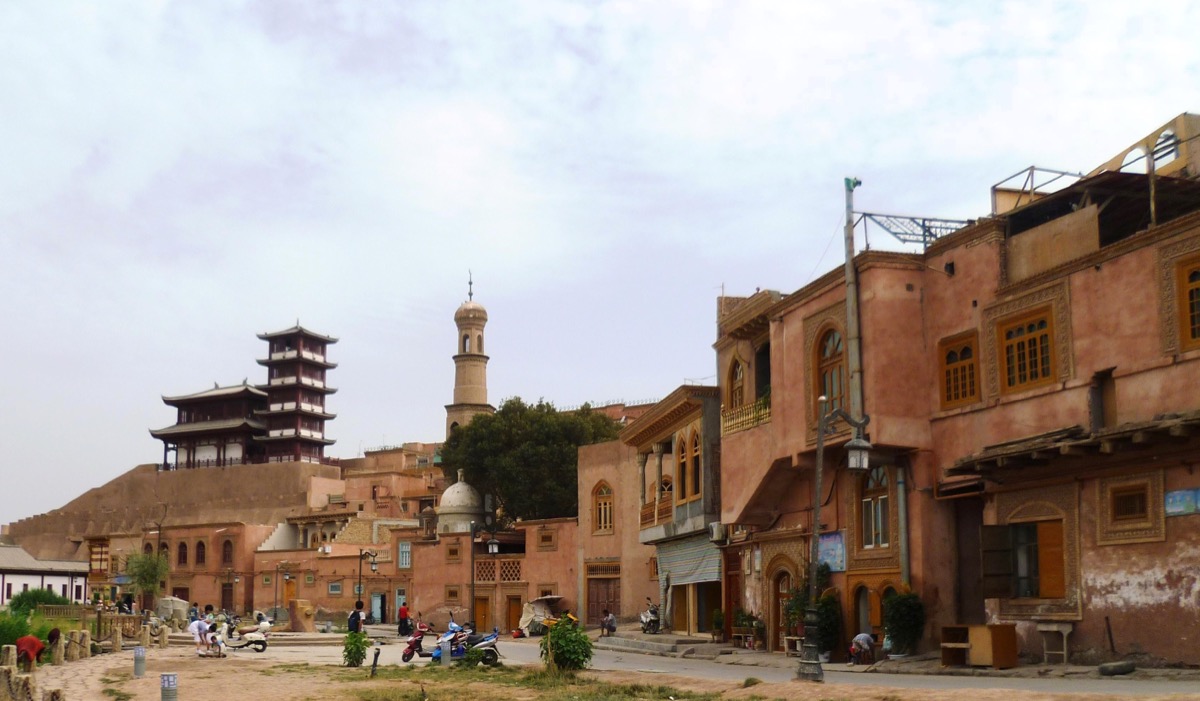
- The general bazaar (周日巴扎): sprawling stalls of spices, dried fruit, carpets, hats, hardware, and clothing, threaded through the city and around the Old City.
Time your visit for Sunday to catch both at full roar.
Getting there
From the Old City, the general bazaar is walkable or a short taxi. The livestock market is on the city’s edge — a taxi or your rental car (park at the lot) gets you there. Go early (markets peak 9–11 a.m.) to feel the energy and beat the heat.
What to see
- The livestock auction — watch, don’t just photograph. The choreography of a sale is its own art.
- The hat and cap section — the doppa (embroidered skullcap) is the region’s signature; a good one is a lifetime souvenir.
- Spices and dried fruit — piles of red pepper, cumin, apricots, and raisins that smell like the whole south.
- Carpets and textiles — atlas silk and wool rugs, handmade, negotiable.
- The food — the bazaar is a lunch destination; our food guide points you to the skewers and samsa.
What to buy (and how)
Bargaining is expected and friendly — start at roughly half the first price and meet in the middle with a smile. Good buys: doppa caps, dried fruit, spices, small handicrafts, and scarves. Skip anything that feels like a hard sell or “antique” you can’t verify. Carry cash; small stalls rarely take cards.
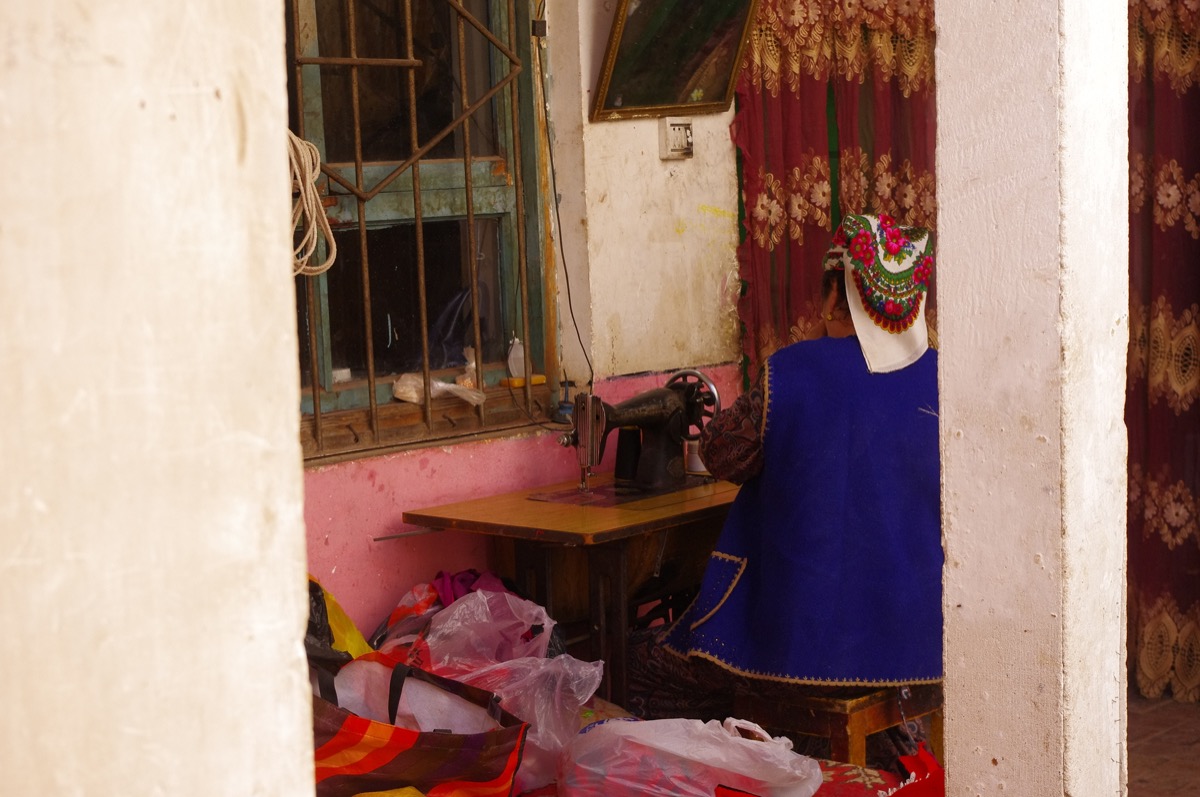
Respect and etiquette
The bazaar is a working market, not a stage:
- Ask before photographing people, especially in the livestock section. A raised camera without a word is rude; a greeting and a gesture gets you a laugh and a pose.
- Dress modestly — shoulders and knees covered.
- Don’t block the lanes — traders move animals and carts through.
- Learn two words: “rahmet” (thank you) and “bahasi?” (what’s the price?).
Why it matters
Markets like this are why the Silk Road was never just trade — it was a way of being, a weekly renewal of community across languages and faiths. Standing in the dust of the Kashgar bazaar, you’re in the same place as the caravans that connected China to the world. That continuity is the real attraction.
Pair it with your trip
The bazaar is the perfect bookend to a southern drive — arrive via the Hotan–Kashgar route, spend Sunday at the market, and wander the Old City afterward. Time your whole Xinjiang schedule so a Sunday lands in Kashgar.
FAQ
What day is the bazaar? Sunday is the big one; a smaller livestock market runs Wednesday.
Is it safe? Yes — it’s a busy, friendly working market. Keep an eye on your wallet in crowds.
Can I take photos? Yes, with courtesy — ask before photographing people.
How long to spend? Half a day comfortably; a full morning plus Old City afternoon.
Final word
The Kashgar Sunday Bazaar is the soul of the Silk Road — loud, dusty, generous, and utterly real. Go on a Sunday, buy a cap, eat a skewer, and let the roar of the market tell you where you are in the world.
Written by Karl Huang, a Xinjiang-based travel writer. Market days and locations can shift — confirm the current schedule locally before you go.