

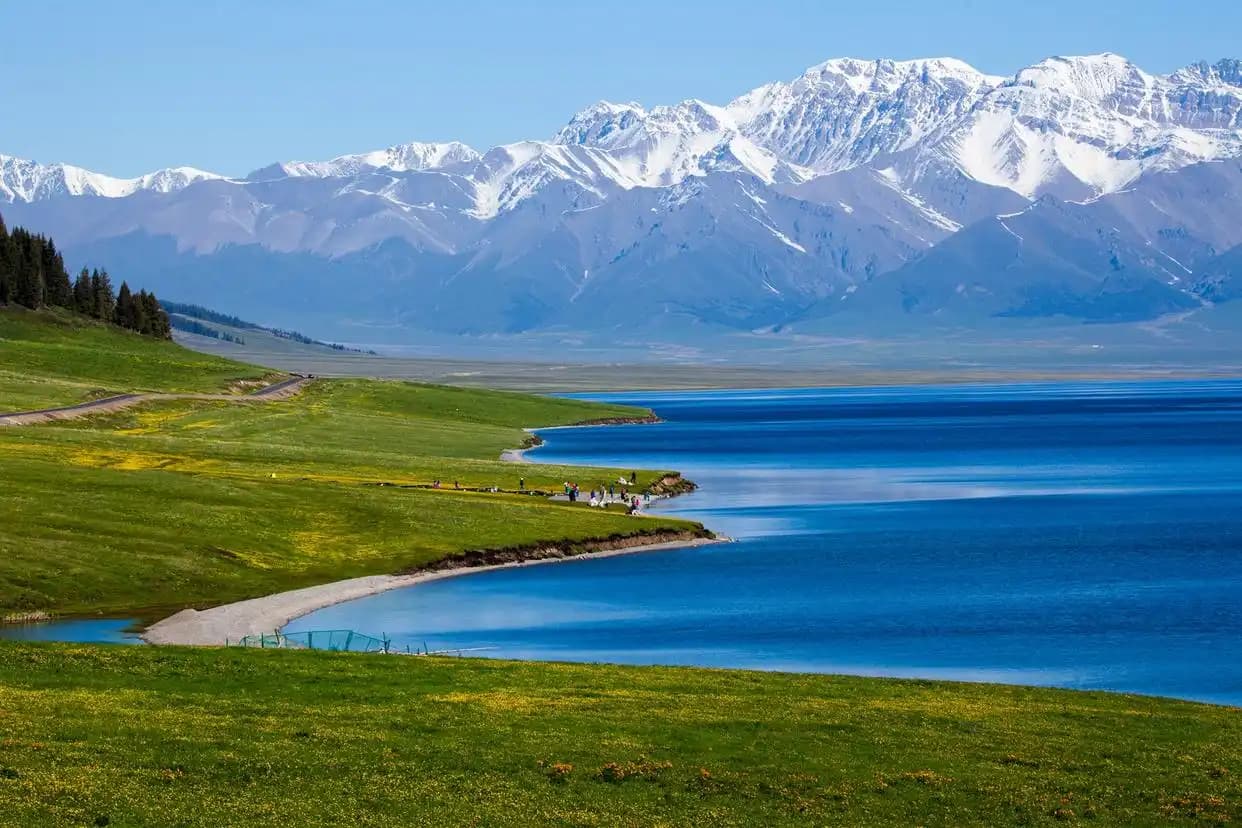
The night I slept in a canvas cabin by a mountain lake, with a real bed and a wood stove, changed how I plan the empty stretches of a Xinjiang drive.
Glamping and fixed camps sit in the gap between a hard tent and a city hotel, and on a Xinjiang self-drive they solve a real problem: you want to be deep in the scenery at dusk, but you also want a clean bed, a warm room, and a working toilet. From lakeside cabins below the Tian Shan to yurt stays on the Ili grasslands and fixed camp sites near the big lakes, these places let you wake inside the landscape instead of two hours down the road. This guide covers what glamping actually means here, how fixed camps differ from wild camping, what a yurt stay gives you, where lakeside cabins sit, what RV camping looks like, how to book and what it costs, and the permits and season windows that keep the night simple.
What glamping means on a Xinjiang drive
On a rough camping trip you carry everything and pitch a tent wherever the light fails, but a fixed camp or glamping site does the heavy lifting for you: a ready bed, a solid roof, and often a shared cookhouse or a stove. In Xinjiang the good sites sit at the edge of the scenery you drove hours to reach, so you trade a little independence for a lot of comfort and a dawn you would otherwise miss. The sites range from simple wooden cabins to insulated canvas tents with real mattresses, and most sit inside or beside a scenic area rather than in a town. Treat glamping as the practical middle of the lodging ladder: cheaper and closer than a resort, warmer and safer than a wild pitch. The difference matters most in the high country, where a heated room at altitude is the line between a great morning and a cold one.
- Ready bed and solid roof.
- Inside or beside the scenic area.
- Cheaper and closer than a resort.
Fixed camps versus wild camping
Rough camping grounds where you carry everything suit the empty desert tracks, but they leave you exposed to wind, cold, and the police checkpoints that dot the region, and many wild pitches are inside protected or controlled zones where a tent is not allowed. A fixed camp removes those worries: the site is legal, the water is managed, and a warden can tell you the gate times. The cost jump is small for the peace of mind, and the camp often sits where the photos are best, near a lake or a grassland. If you want the wild feeling without the risk, pick a fixed site just outside the strict core zone, where you can still hear the river but sleep behind a locked door. The balance is the point: enough nature, not enough exposure.
- Wild pitches can be in controlled zones.
- Fixed camps are legal and managed.
- Choose a site just outside the core.
The yurt stay experience
A yurt stay is the classic steppe night, a felt and wood dome that has sheltered herders for centuries, now fitted with a bed and a stove for the traveler. On the Ili grasslands and around the big lakes you can book a yurt through the camp or a nearby village, and the experience is the sound of wind over grass and a sky full of stars with a warm room behind you. The yurts cluster in small camps, so you are never fully alone, and the host usually brings tea and a simple meal. Book through your car rental firm or the scenic-area desk, because walk-up yurts fill on summer weekends. A yurt stay pairs naturally with a grassland loop, and it is the most memorable bed on the northern route for a reason: it is the landscape, not just a view of it.
- Felt dome with bed and stove.
- Clustered camps, never alone.
- Book via the scenic-area desk.
Lakeside cabins and where they sit
A lakeside cabin puts you at the water before the day-trippers arrive, and the best ones sit below the Tian Shan near Sayram or on the quieter shores of the big northern lakes, where the morning light turns the surface to glass. These cabins are wooden, insulated, and built on the shore a short walk from the parking, so you can roll in at dusk and be on the water at first light. They cost more than a yurt but give you privacy and a real window onto the lake, which is worth it for a photographer or a family. Reserve ahead in July and August, because the shore cabins are the first to sell, and confirm the cabin is inside the legal scenic zone so the warden does not move you at night. A lakeside cabin is the reward for planning the drive around the water rather than the town.
- Wooden, insulated, on the shore.
- Best near Sayram and the north lakes.
- Reserve ahead in peak summer.
RV camping and roof-top tents
RV camping has grown along the northern loop, with a few serviced sites offering power and waste points for motorhomes and roof-top tents near the lake areas and the grassland gates. If you rent a vehicle with a pop-up roof tent, you gain the freedom to stop where the view is good and still sleep off the ground, which suits the long days between county seats. The catch is water and dumping: use the serviced sites, not the roadside, because the region polices litter and greywater closely. Pair the RV plan with a car rental that allows it, and keep a buffer night in a fixed cabin when the weather turns, because a roof tent gets cold fast at altitude. RV camping is the flexible end of glamping, best for travelers who want motion and a bed in one package.
- Serviced sites near lakes and gates.
- Use legal dump points, not roadside.
- Keep a cabin buffer for cold nights.
Booking, cost, permits, and season
Book glamping and fixed camps through the scenic-area desk, your car rental firm, or a domestic travel app, and confirm the site can register a foreign passport, because the warden logs every guest. Costs run from about 150 RMB for a shared yurt to 400 to 900 RMB for a private lakeside cabin in season, with RV sites around 100 to 200 RMB plus hookups. The best time to visit the high sites is June through September, when the passes are open and the grass is green; many lakeside cabins close from November to April for snow. If your camp sits near a border county, carry the border permit the way you carry the passport, because the warden may ask. Book the headline sites two weeks ahead in summer, and you will sleep inside the view instead of chasing it.
- Book via the desk or rental firm.
- 150 to 900 RMB by style and season.
- Carry the permit near border counties.
| Style | Comfort | Cost per night |
|---|---|---|
| Yurt stay | Bed and stove | 150 to 300 RMB |
| Lakeside cabin | Private, heated | 400 to 900 RMB |
| RV site | Self-contained | 100 to 200 RMB |
| Fixed canvas tent | Shared facilities | 200 to 400 RMB |
Practical takeaways
- Pick a fixed camp inside the legal zone, not a random wild pitch.
- Reserve headline lakeside cabins two weeks ahead in summer.
- Carry the border permit if the camp is near a border county.
- Keep a heated cabin buffer when the mountain weather turns.
Frequently Asked Questions
- Is glamping safe for foreign travelers in Xinjiang?
- Yes. Fixed camps and yurt stays are licensed, logged with the warden, and sit inside legal scenic zones. Use the camp desk and keep documents ready.
- Do I need to book ahead?
- In July and August the lakeside cabins and yurts sell out on weekends, so book two weeks ahead through the scenic-area desk or your rental firm.
- Can I wild camp instead?
- Rough camping is allowed only outside protected and controlled zones, and many empty tracks are near checkpoints. A fixed camp is safer and legal.
- What does a yurt stay include?
- A bed, a stove, and usually tea with a simple meal from the host, in a felt dome clustered with others near the grassland or lake.