

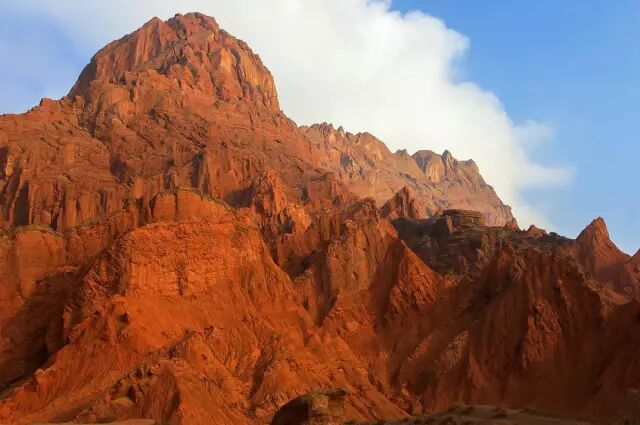
The first time a vendor in a Turpan side street pressed a glass of cold purple mulberry juice into my hand on a forty-degree day, I understood why locals treat it as the drink of the region.
Mulberry juice is the cold fruit drink of a Xinjiang summer, a sweet-tart purple or white pour pressed from the abundant mulberries of the region and sold at street corners, bazaars, and roadside stops from May through August. It is not a packaged soda; it is fresh, often made that morning, and it is the natural answer to the basin heat that flattens a self-driver by noon. This guide covers what mulberry juice actually is, why Xinjiang grows so many mulberries, how it differs from the grape and melon drinks, where to find the honest glass, how it fits halal dining and a road-trip stop, what to pair it with, and the season that makes it worth pulling over for.
What mulberry juice is and how it is made
Mulberry juice here is the fresh press of ripe mulberries, the small sweet berries that ripen across the north and the east of Xinjiang in early summer, blended with a little water and ice and poured cold into a glass or a sealed cup. The white mulberry and the black mulberry both grow in the region, and the black gives the famous deep purple drink while the white makes a pale, honeyed pour, so the color tells you which berry you got. Vendors press it in front of you at the better stalls, which means the glass is fresh rather than from a bottle, and the sugar is low because the fruit is already sweet. For a self-driver the drink is the fast reset on a hot leg, colder and lighter than a soda, and it appears exactly where you need it: at the bazaar, the rest stop, and the corner of a county-seat street.
- Fresh press, not a bottled soda.
- Black berry makes the purple drink.
- Pressed in front of you at good stalls.
Why Xinjiang grows so many mulberries
The reason mulberry juice is everywhere is that Xinjiang grows mulberries at scale, with old trees lining the oasis roads and the orchards of the Ili Valley and the Turpan basin alike, because the dry heat and the long light suit the tree. The fruit reputation of Xinjiang rests on melons and grapes, but the mulberry is the quiet staple of the summer street, harvested in May and June when the temperature peaks and the drink is needed most. Many trees are decades old and untended, so the fruit is cheap and local, which keeps the juice price low at the stall. A self-driver passing through the oasis counties will see the white berries for sale by the bucket, and the juice is the easiest way to taste the harvest without a market search. The tree is part of the roadside scenery, and the drink is its summer gift.
- Dry heat and long light suit the tree.
- Harvest peaks in May and June.
- Old trees make the fruit cheap and local.
Mulberry juice versus grape and melon drinks
Xinjiang is famous for its grape and melon drinks, but mulberry juice holds its own corner because the flavor is lighter and the tart edge cuts the heat better than a sweet grape syrup. Grape juice here is often thicker and wine-adjacent, while melon drinks are mild and cooling, so the mulberry sits between them with a clean sweet-tart line that does not coat the mouth. The drink also carries a little of the texture of the fruit when fresh-pressed, which the clear grape version lacks, and it pairs with the street food of the region without competing. For a traveler the difference matters on a long hot day: a grape drink is a treat, a melon drink is a cooler, and a mulberry juice is the one you keep ordering because it resets you. Try all three at a bazaar and the mulberry will be the repeat.
- Lighter than grape, tarter than melon.
- Carries fruit texture when fresh.
- The repeat order on a hot day.
Where to find the honest glass
The honest glass of mulberry juice is at the stalls that press in front of you, usually near a bazaar entrance, a night-market row, or the fruit section of a county-seat street, because the fresh press is the tell of a real vendor. In Urumqi the evening food streets and the bazaar edges serve it in season, and in Turpan and the Ili Valley the orchard towns pour it from roadside carts. A glass costs about 5 to 15 RMB depending on the city and the cup size, and the sealed cup travels in the car for the next leg. Avoid the stalls that pour from a pre-mixed jug with a dull color, because that is the bottled version, and ask for the fresh press by pointing at the berries. The honest glass is the one you watch being made, and it is everywhere once you look.
- Stalls that press in front of you.
- Urumqi, Turpan, and Ili orchard towns.
- 5 to 15 RMB a glass in season.
Halal kitchens and the road-trip stop
Xinjiang food runs halal by default in the Muslim tradition, and mulberry juice fits that kitchen cleanly because it is fruit and ice with no pork or alcohol concern, so it is safe for every traveler at any stall. The halal norm also means the same vendor often sells it beside the kebab and the naan, which turns a juice stop into a full road-trip meal without a second search. If you keep a special diet, the drink is the easy win, because fruit and water need no adaptation, and the street stall is the most local version you will find. The halal kitchen is why the street food of the region travels well from town to town, and the mulberry juice is the cool proof of it on a summer drive. Drink where the locals queue and the standard does the rest.
- Halal by default, fruit and ice only.
- Sold beside kebab and naan.
- The easy win for a special diet.
Season and what to pair it with
The season for mulberry juice is short and sharp, from May through August, with the peak in June when the berries and the heat arrive together, so time the drive for early summer if the drink is the goal. Outside those months the fresh press disappears and only the bottled version remains, which is a pale stand-in, so plan the taste for the warm window. Pair the juice with a piece of naan or a plate of grapes from the same stall, because the fruit and the bread make a light road meal that resets a hot afternoon without a sit-down. A car rental with a cooler lets you carry a sealed cup to the next viewpoint, which is the trick seasoned travelers use for the basin heat. The drink is the summer signal of Xinjiang fruit, and the short season is the reason to catch it.
- Peak in June with the heat.
- Pair with naan and grapes.
- Carry a sealed cup to the next stop.
| Trait | Note |
|---|---|
| Berry | Black gives purple, white gives pale |
| Season | May through August, peak June |
| Price | 5 to 15 RMB a glass |
| Best | Fresh-pressed at the stall |
Practical takeaways
- Order the fresh press by pointing at the berries, not the jug.
- Catch it in May through August, with June the peak.
- Pair it with naan and grapes for a light road meal.
- Carry a sealed cup in a cooler to the next viewpoint.
Frequently Asked Questions
- Is mulberry juice the same as grape juice?
- No. Mulberry juice is lighter and tarter than the thicker grape version, with a clean sweet-tart line that cuts the heat better on a hot day.
- Is it halal and safe to drink?
- Yes. It is fruit and ice with no pork or alcohol, so it fits the halal street kitchen and is safe for every traveler.
- Where do I find the best glass?
- At stalls that press it in front of you near bazaars, night markets, and orchard-town streets in Urumqi, Turpan, and the Ili Valley.
- When is it in season?
- May through August, with the peak in June when the berries and the heat arrive together; outside that window only the bottled version remains.