

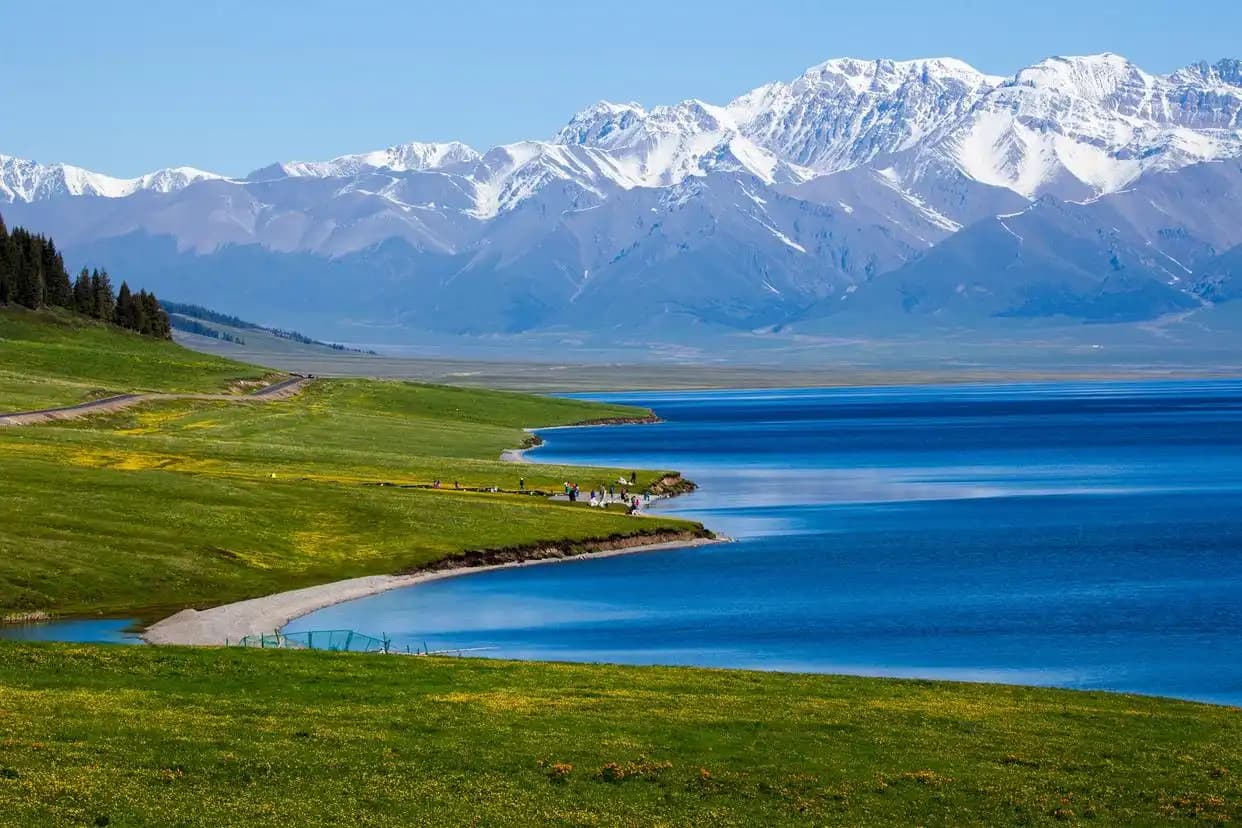
The Duku Highland Highway closes for the snow, but the roads that stay open can ice over without warning, and the drivers who carry chains are the ones still moving when the pass turns white.
Winter driving in Xinjiang runs from roughly November to April across the north and the high passes, and snow chains are the single piece of kit that turns a stranded car into a moving one. Some mountain routes require them by law when snow is down, and even where they are optional, they are the difference between a slow careful climb and a call for a tow. This guide covers when you need chains, the types and sizes, how to fit them at the roadside, how to drive once they are on, and where to buy them in the region before you need them.
Do you really need chains
If your route touches the Tianshan or Pamir passes in winter, yes. The Duku Highland Highway (G217) closes entirely for the season, usually from October to June, but the open roads such as the G30, G7, and even the Karakoram Highway still cross high ground that ices overnight. Checkpoints and weather stations post chain requirements when snow is on the road, and police can turn back vehicles without them. Even confident drivers on all-season tires benefit, because packed snow and black ice remove the margin a tire alone provides. Treat chains as mandatory kit for any winter loop north of Urumqi or west toward the Pamir, and as sensible insurance everywhere else.
- Required on many passes when snow is down
- Duku Highland Highway (G217) closed all winter
- Police can turn back vehicles without them
- Smart insurance even on all-season tires
Chain types and how to size them
The two common types are ladder-pattern chains, cheap and fine for occasional use, and diamond-pattern chains, which grip better and ride smoother on longer drives. For cars and crossovers, a lightweight steel or composite set is enough; for a heavier SUV on a long mountain grade, invest in the diamond pattern. Sizing is by tire, read from the sidewall, for example 205/65R16 or 225/55R19, so match the set to your exact rental or owned tire before buying. A wrong size is useless at the roadside, so check the spare too. Buy the correct size in the city before you leave, because roadside sellers charge more and stock is hit or miss.
- Ladder pattern: cheap, occasional use
- Diamond pattern: better grip, smoother ride
- Size by tire sidewall, e.g. 205/65R16
- Check the spare tire as well
How to fit them at the roadside
Practice once on a dry flat lot before the trip, because doing it cold and gloved at minus fifteen is miserable. Lay the chain beside the tire, drape it over the top, connect the inside fastener first, then the outside, and pull it snug with the tensioners. Drive a few meters, stop, and re-tighten, since chains settle as they turn. Never fit them at speed or on a slope if you can avoid it; pull fully off the lane onto the shoulder. Keep gloves, a mat, and a flashlight in the car, because fitting in the dark on a pass is the normal case, not the exception, on a winter Xinjiang drive.
- Practice on a dry lot first
- Drape, fasten inside, then outside
- Drive a few meters and re-tighten
- Use gloves, mat, and light at the roadside
Driving technique once they are on
Chains are not a license to speed. Keep speed under about 40 km/h, avoid hard braking and sharp turns, and increase your following distance on the ice. On a long descent, use low gear and engine braking rather than riding the brakes, which can lock a chained wheel. Listen for a slapping sound that means a chain has loosened or broken, and stop to fix it before it damages a wheel arch. Remove the chains as soon as you are back on clear pavement, because running them on bare road wears them out and can fling a link. Calm, slow, and steady is the whole technique.
- Stay under about 40 km/h
- Use low gear on descents
- Watch for a loose or broken chain
- Remove on clear pavement
Where to buy in Xinjiang
Urumqi and Yining have the best selection at auto-parts markets and larger tire shops, where you can match the size and get advice in person. County-seat towns along the G30 and G218 often have a shop that stocks the common sizes, but do not count on a perfect match in a small place. Airport car rental return areas sometimes sell basic sets, though at a premium. The safe play is to buy in the departure city, fit and test them in the hotel lot, and carry them the whole trip even on mild days, because a sudden pass closure or snow squall does not wait for your schedule.
- Urumqi and Yining have the best selection
- County towns stock common sizes only
- Buy in the departure city and test early
- Carry them every winter day, mild or not
Safety and the bigger winter plan
Chains are one tool in a winter plan that also includes a full fuel tank, warm layers, water, and a charged phone. Tell someone your route and expected return, because a stuck car on a quiet pass can wait hours for help. Check road conditions on the local hotline or traffic app for closures before setting out, since a closed G217 or a snowbound G314 changes the whole day. Chains get you moving, but judgment keeps you safe, and the experienced Xinjiang winter driver turns back when the weather wins. Pair this kit with a solid winter route plan and the season becomes a quiet, white, unforgettable drive.
- Carry fuel, warm layers, water, charged phone
- Share your route and return time
- Check closures before departure
- Turn back when weather wins
| Situation | Recommended type | Note |
|---|---|---|
| Occasional city-edge snow | Ladder pattern | Cheapest, adequate |
| Long mountain pass | Diamond pattern | Better grip and ride |
| Rental crossover | Lightweight steel set | Match tire size exactly |
| Heavy SUV, steep grade | Diamond composite | Invest for safety |
Practical takeaways
- Match chains to your exact tire size, including the spare.
- Practice fitting once on dry ground before the cold hits.
- Carry gloves, a mat, and a light for roadside fitting.
- Tell someone your winter route and expected return time.
Frequently Asked Questions
- Are snow chains legally required in Xinjiang?
- On certain passes and during active snowfall, checkpoints and police require them and can turn back vehicles without. Even where not mandated, they are strongly advised on the high routes from November to April.
- Can I drive fast with chains on?
- No. Keep speed under about 40 km/h, avoid hard braking, and remove them on clear pavement. Chains are for traction in snow and ice, not for high-speed travel.
- Do I need chains if I have all-season tires?
- On open winter roads they help, but on iced passes they are often the deciding factor. Many routes require them regardless of tire type when snow is down.
- Where should I buy chains before the trip?
- Buy in Urumqi or Yining where selection is best, match the exact tire size, and test-fit in a safe lot. Roadside stock in small towns is unreliable.