

The best meals on a Xinjiang road trip rarely happen in a restaurant with a menu in English. They happen at a plastic table under a grape trellis in Turpan, at a roadside stall where a man in a white cap flips lamb skewers over charcoal, or in a night market where dough is slapped and stretched in front of you. Eating is not a side activity here; it is part of the route. This xinjiang uyghur food road trip guide covers what to order, where to find it, and how to time your meals around long driving days.
 }
}
The dishes you cannot skip
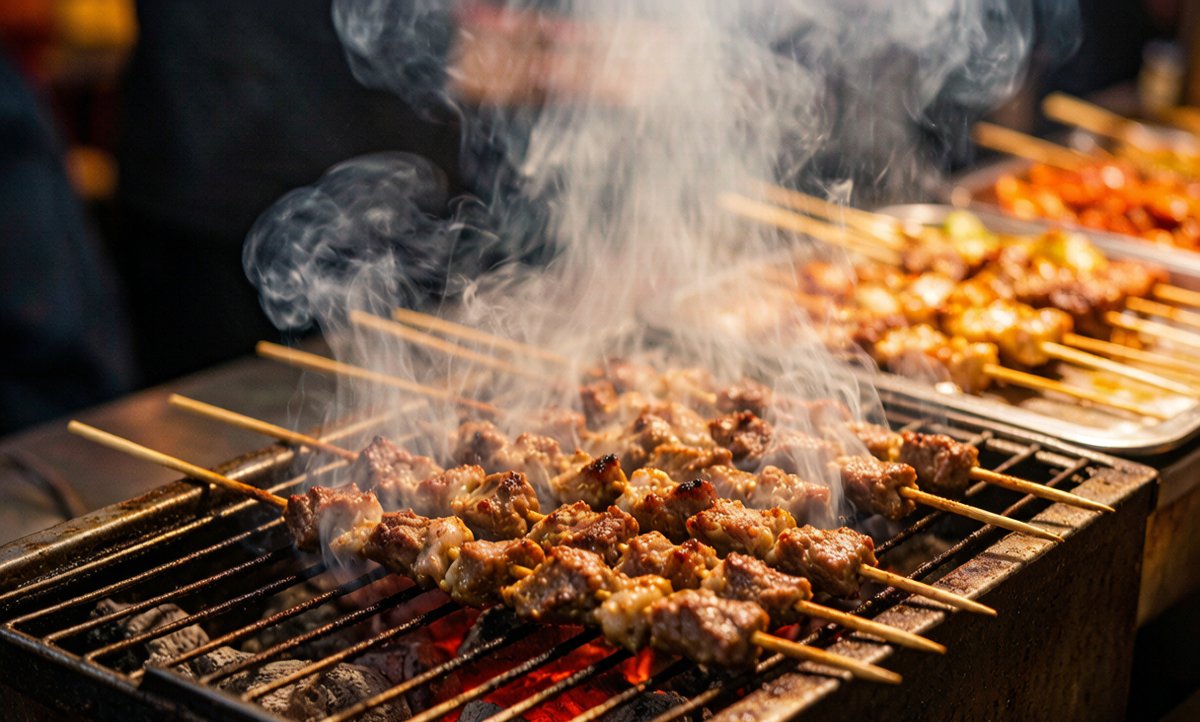
Chuanr (lamb skewers) — Small cubes of lamb, fat, and sometimes liver grilled on metal skewers over charcoal, sprinkled with cumin, chili, and salt. The best ones are fatty, smoky, and slightly charred. Order by the stick, usually 5–10 RMB each.
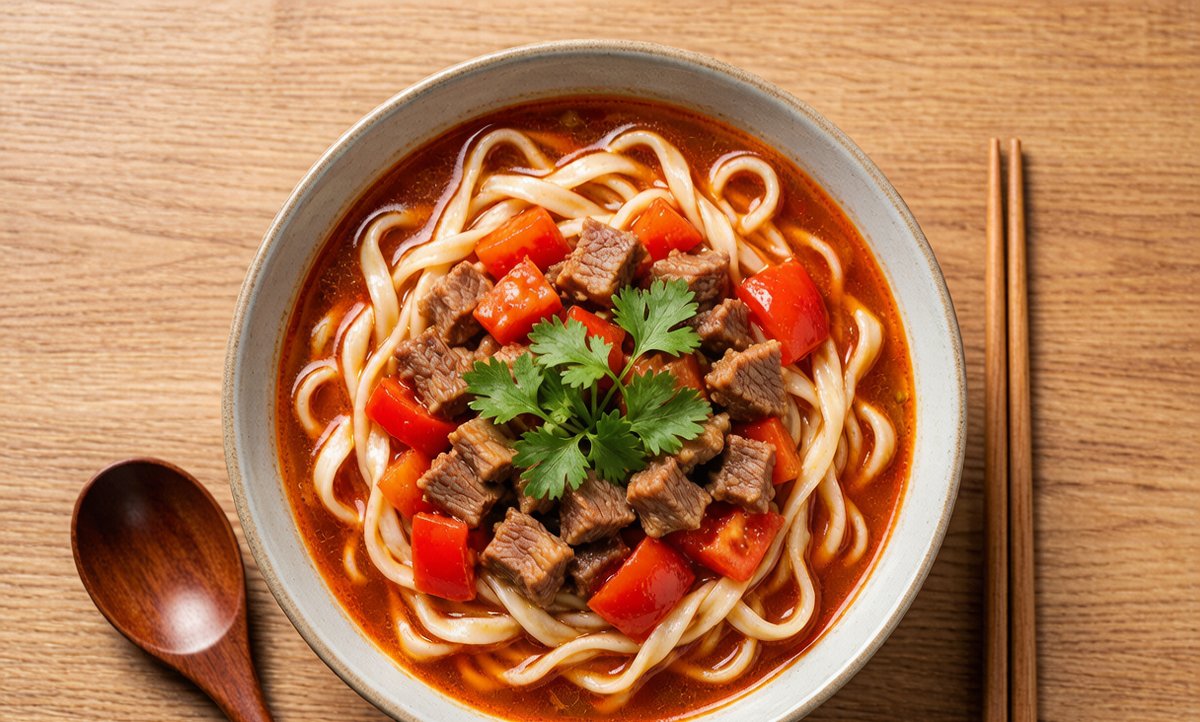
Laghman (hand-pulled noodles) — Thick, chewy noodles pulled by hand and topped with stir-fried lamb, peppers, tomatoes, and onions. Every cook has a slightly different style. A bowl costs 25–45 RMB.
Pilaf (polo /抓饭) — Rice cooked with lamb or beef, carrots, raisins, and sometimes chickpeas. It is rich and filling after a long drive. Many restaurants sell out by early afternoon.
Naan (nang) — A round, stamped flatbread baked in a tandoor oven. It travels well and is the perfect snack for the car. Buy one fresh in the morning and tear pieces off all day.
Hui BanMian — A soupy noodle dish influenced by Hui Muslim cooking, common in northern Xinjiang and the Altai region. It is lighter than laghman and good for cold mornings.
Mutton soup — Often eaten for breakfast, especially in Kashgar and the south. It is hearty, fatty, and comes with bread for dipping.
Grapes and melons — Turpan grapes, Hami melons, and Ili apples are famous for a reason. Stop at a fruit stand on a hot day and you will understand why the Silk Road traders stopped here.
Where to eat by region
Urumqi — The city has the most variety. The Grand Bazaar area is tourist-oriented but decent; locals tend to eat in the Tianshan district or near the South Mosque. Use Dianping to find highly rated neighborhood restaurants.
Turpan — This is the land of grapes and lamb. The Turpan Grape Valley guide area has family restaurants under grape trellises. The lamb is often grilled fresh and the bread is baked in tandoor ovens nearby.
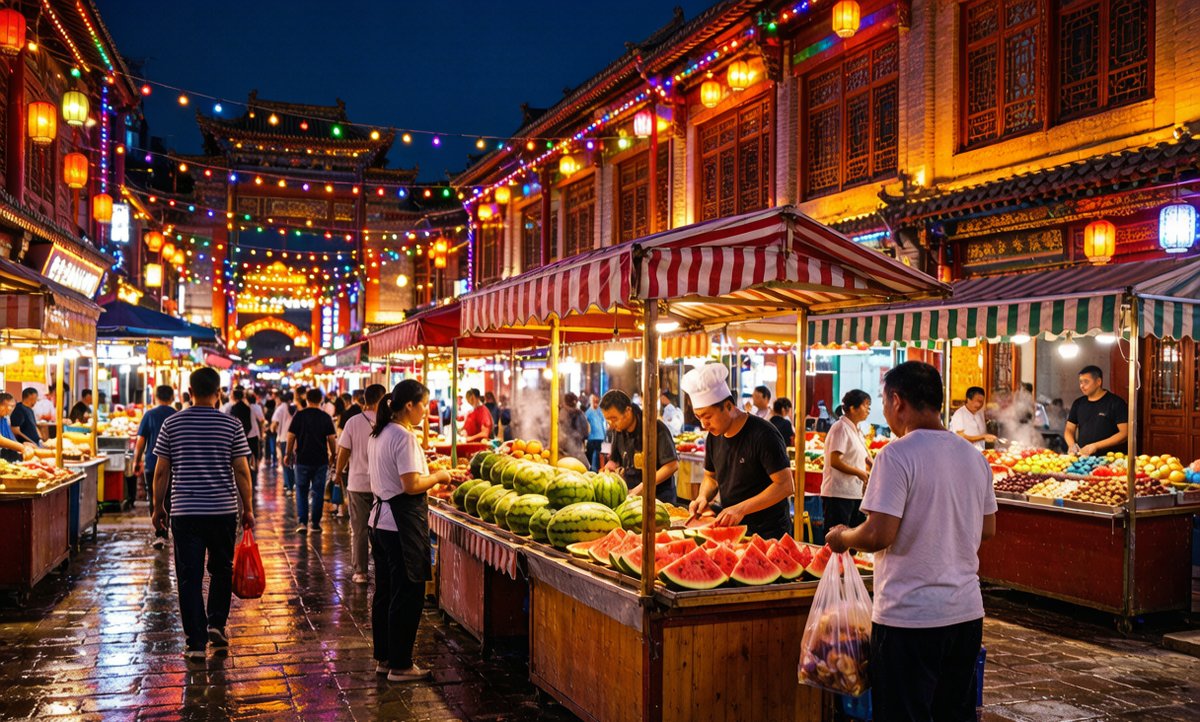
Kashgar — The old city and night market are essential. Eat lamb skewers near the Id Kah Mosque, try the egg-topped nang at a street stall, and have breakfast mutton soup in the old town. Our Kashgar Old Town guide has walking routes.
Ili Valley (Yining) — The influence here is more Kazakh and Russian. Try borscht, horse-milk products in summer, and kebabs. The produce is excellent.
Korla and Kuqa — Good stops for pilaf and roast lamb. These towns are practical overnight points on the southern route.
Roadside stops — Between towns, look for clusters of trucks. Truck drivers know the best cheap food. A restaurant with ten lorries parked outside is almost always a safe bet.
Timing meals around driving
Xinjiang operates on two time systems: official Beijing time and local solar time. Many restaurants in the west open later than the clock suggests. Lunch is often served around 14:00–15:00 local appetite, and dinner can start after 20:00.
For long driving days, my routine is:
- Breakfast: Mutton soup or bread with tea at the hotel or a local cafe.
- Mid-drive snack: Fresh naan, dried fruit, and nuts from a market.
- Lunch: Heavy if you are stopping for a while; light if you need to drive again.
- Dinner: The main meal. Order a spread of skewers, noodles, and salad, then walk it off.
Avoid eating a huge pilaf right before tackling the Duku Highway switchbacks. Trust me on this one.
What to drink
Tea is the default drink, often served in small bowls with your meal. Local beer is available in cities but not everywhere. Fresh fruit juices are common in Turpan and Kashgar in summer. Tap water is not safe to drink; stick to bottled water or boiled tea.
For coffee drinkers, good specialty coffee is increasingly available in Urumqi and Kashgar. Outside the major cities, instant coffee is the realistic option.
Vegetarian and dietary notes
Uyghur cuisine is heavy on lamb and beef, but vegetarian options exist. Eggplant, tomato, and pepper dishes are common, and many laghman shops can make a vegetable version. However, cross-contamination with meat is common in small kitchens. If you have strict dietary requirements, communicate clearly or learn to point to the ingredients.
Dairy appears in many forms, including yogurt and milk tea. Vegan travelers will find Xinjiang challenging outside the biggest cities.
 Xinjiang night market street with food stalls” />
Food safety tips
- Eat where the food is turning over quickly. A busy stall is safer than a quiet one with pre-cooked meat sitting out.
- Watch the grill. If you can see the skewers being cooked fresh, you are in a good place.
- Carry basic medication. Stomach upset is common with rich food and a change in diet. Imodium and oral rehydration salts are useful.
- Ask the price. Most places are honest, but tourist areas near the Grand Bazaar sometimes charge double. Confirm per-skewer prices before ordering a large pile.
FAQ
Is street food safe to eat? Generally yes, if it is cooked fresh in front of you and the stall is busy. Avoid raw salads at roadside stops.
How spicy is Uyghur food? Not very, by default. Cumin is the dominant flavor. Chili is usually added on request or served on the side.
Can I eat pork in Xinjiang? Pork is extremely rare in Uyghur and Muslim areas. You may find it in some Han Chinese restaurants in Urumqi.
Do I need to tip? No. Tipping is not part of the culture. Good service is appreciated with a smile and repeat business.
What is the best meal for a long driving day? Pilaf with tea for breakfast, then laghman or mutton soup at lunch. The calories help, and the noodles sit lighter than you expect.
Final word
Food is one of the best reasons to slow down on a Xinjiang road trip itinerary. The meals are part of the landscape, and the people serving them are often as memorable as the scenery. Eat at the local places, point at what looks good, and do not be afraid to make a mess.
Written by Karl Huang, a Xinjiang-based travel writer. Restaurant hours and prices vary by season and city — use local apps or ask your hotel for current recommendations.