

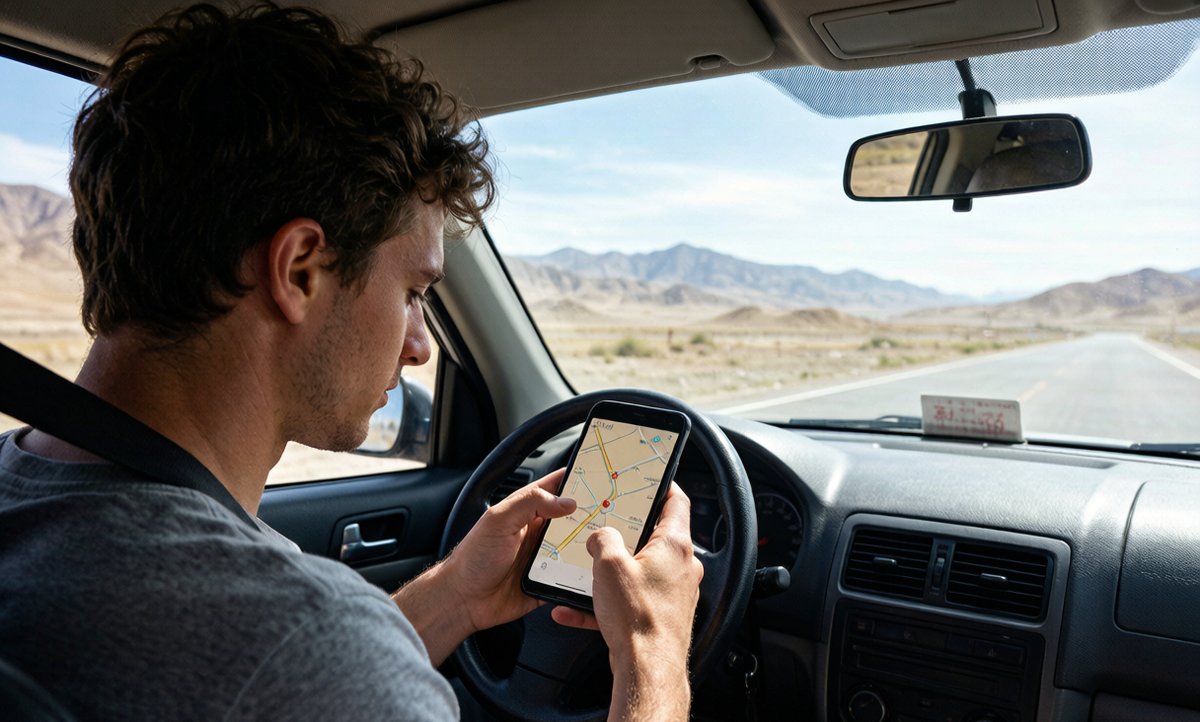
On my first long Xinjiang drive, I lost signal exactly where I expected it least: not on the Duku’s high passes, but on the flat desert highway between Korla and Kuqa. The phone said “No Service,” the car’s dashboard GPS was in Chinese, and the only paper map I had was a souvenir. That evening I made a rule: connectivity in Xinjiang is a tool, not a guarantee. This guide covers the xinjiang foreign driver connectivity setup that actually works.
 }
}
SIM and eSIM options for foreign travelers
The easiest way to get online in China is a local SIM. For short trips, China Mobile, China Unicom, and China Telecom all offer tourist packages at major airports. At Urumqi Diwopu Airport, the China Unicom booth usually has an English-speaking staff member and can set up a plan with 20–30 GB for around 200–300 RMB.
eSIMs are more convenient for some travelers. Providers like Airalo and Holafly offer China eSIMs, but they are data-only and depend on roaming partnerships with local carriers. Coverage is generally good in cities and on main highways, but the speeds can be throttled. I keep an eSIM as a backup, not a primary connection.
If your phone is locked to your home carrier, do not expect local SIMs to work. Bring an unlocked phone, or buy a cheap Android handset in Urumqi.
Offline maps are non-negotiable
No matter which SIM you use, there will be dead zones. The following maps work offline:
- Amap / Gaode Maps — the most accurate for China, including Xinjiang. Download the entire province before you leave Urumqi. The interface has English in some versions; the road data is the best available.
- Maps.me — useful for towns and points of interest, but less reliable for highway exits.
- Google Maps — download offline areas before you enter China, but do not rely on it as your primary driver; coverage is incomplete.
- OsmAnd — open-source, detailed, and works entirely offline. I use it as a backup for the most remote stretches.
Set every important destination as a downloaded offline map before you start the car. You do not want to discover a missing map when you are at 3,000 m with no signal.
The VPN reality
International services like Google, WhatsApp, Instagram, and many foreign news sites are blocked in China. A VPN is useful for messaging home, accessing Gmail, or using your usual apps. ExpressVPN, NordVPN, and Surfshark generally work, though connections can be unstable, especially in remote areas.
Install your VPN before you arrive in China. Downloading a VPN app once you are inside the country is difficult. Also, do not rely on a VPN for navigation: the extra routing can slow an already weak signal.
Mobile payments for foreign drivers
Alipay and WeChat Pay now support foreign credit cards in most cases, but the setup is not always smooth. The best approach is:
- Alipay Tour Pass — designed for short-term visitors. Top up with a foreign card, then pay by QR code at shops, restaurants, and even some charging stations.
- WeChat Pay — increasingly accepts foreign cards, but the verification can be stricter. Some merchants still only accept WeChat.
- Cash — always carry some RMB. Small road-side restaurants, rural fuel stations, and elderly vendors often prefer cash or only accept it.
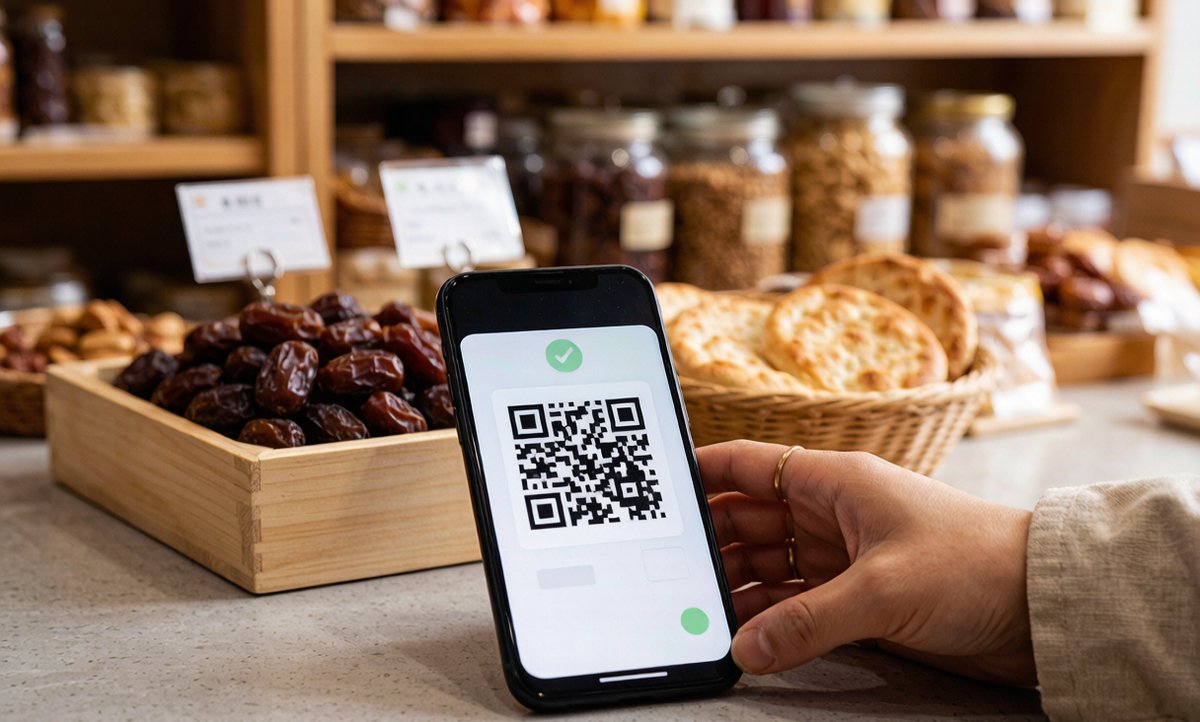
A working payment app is more important than you might expect. Many highway tolls, parking lots, and charging stations are easiest to pay by app.
Signal coverage on the road
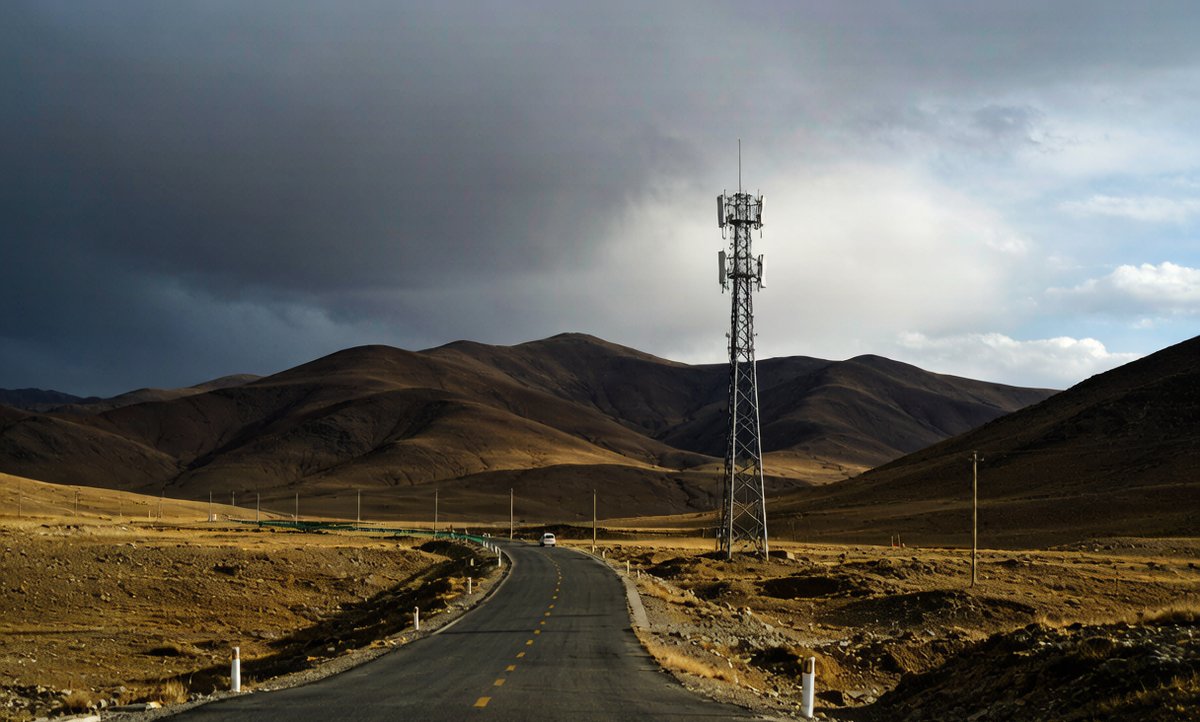
Xinjiang’s signal is a patchwork:
- Highways (G30, G7, G3012, G3015): Usually 4G, sometimes 5G near cities.
- Duku Highway: Spotty in the middle, especially around Hashiligen Pass. Signal returns at Qiao’erma and Bayinbuluke.
- Pamir Highway (Kashgar–Tashkurgan): Intermittent but generally present enough for calls and maps.
- Kanas and Hemu: Weak inside the scenic area; most hotels and cafes have Wi-Fi.
- Taklamakan crossings: Long dead zones. Download maps and music before entering.
For safety, share your rough daily route with someone before you leave. If you are driving alone, the Xinjiang road trip safety guide covers emergency options when signal is lost.
Apps and services to set up before you arrive
- WeChat — essential for messaging, payments, and mini-programs.
- Alipay — payments and some charging apps.
- Amap / Gaode — navigation.
- Translation app — Pleco or Google Translate with offline packs.
- Dianping — restaurant reviews and local services.
- Booking.com / Trip.com — hotel reservations, though many smaller hotels only list on Chinese apps.
What goes in your digital travel kit
Our Xinjiang road trip packing list covers clothing and gear, but your digital kit is just as important. Bring:
- An unlocked phone, plus a cheap backup phone if possible.
- Multiple USB-C and USB-A cables, including a 12 V car charger.
- A power bank with at least 20,000 mAh for long days without charging.
- A SIM ejector tool and a second SIM tray if your phone supports it.
- Offline maps and translation packs downloaded before you arrive.
What to do if your phone dies or your app fails
A dead phone in a remote valley is not a disaster if you have a backup. Carry a paper map of your daily route, write down the names of your hotels in Chinese characters, and keep a physical list of key phone numbers. Many police checkpoints will help a lost driver, but only if you can show them where you are supposed to be. This redundancy is the difference between a story and a stressful day.
FAQ
Can I use my home SIM roaming in Xinjiang? Sometimes, but not reliably. Some international carriers block roaming in Xinjiang due to regional restrictions. Check with your carrier before you travel.
Is Google Maps blocked in Xinjiang? Google Maps is blocked on the open internet, but the offline map data you downloaded earlier will still work if you do not need live traffic.
Do I need a Chinese bank account for Alipay? No. The Tour Pass and foreign card linking work for most short-term visitors, though limits and verification steps vary.
Will my VPN work everywhere? No. VPNs are slower and less stable in remote areas with weak baseline signal. Have offline alternatives for anything critical.
Can I pay tolls with cash? Most tolls accept cash and app payment. Apps are faster, but cash is a reliable fallback.
Final word
Connectivity in Xinjiang is manageable, but it requires setup before you arrive and a backup plan for the dead zones. The best road trips here are the ones where you are not scrambling for signal at every pass. Sort your SIM, download your maps, and carry cash: the rest of the drive is much more enjoyable.
Written by Karl Huang, a Xinjiang-based travel writer. App policies and roaming agreements change frequently — verify current rules with your carrier and payment providers before you travel.