

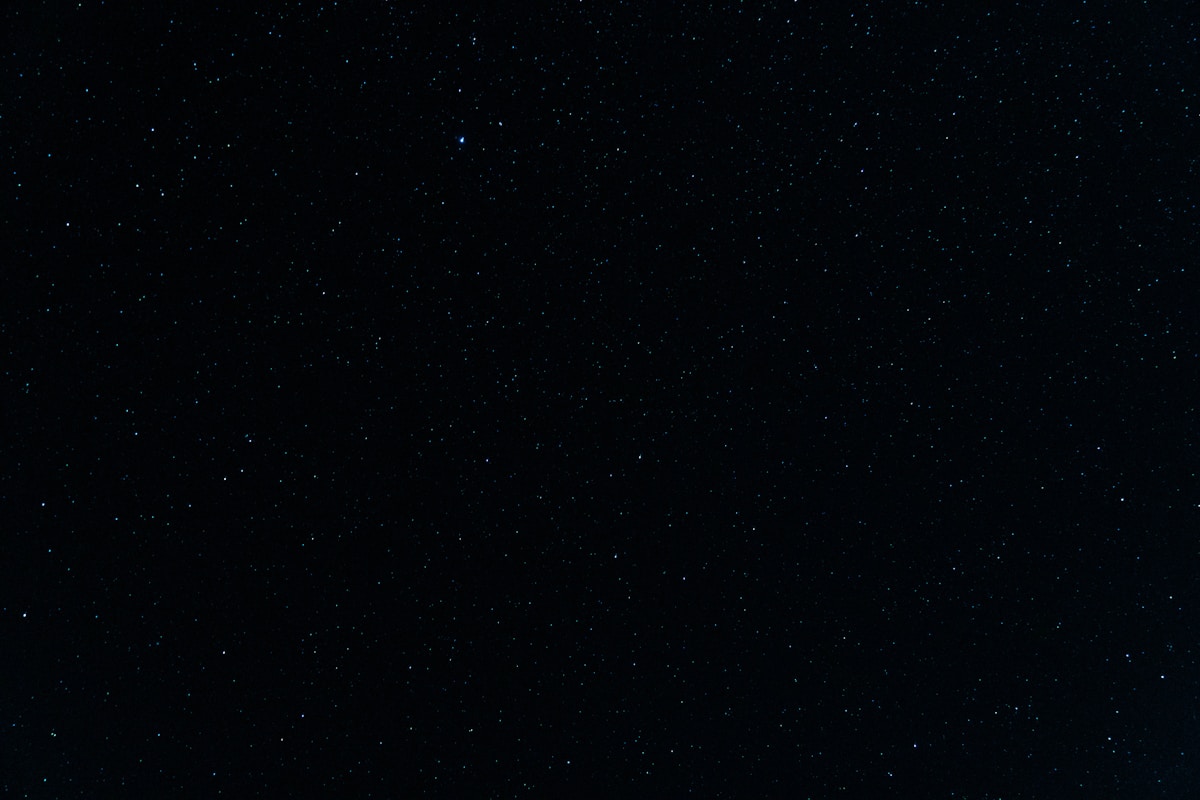
I have stood at the edge of the Taklamakan with no town light for 200 km and watched the Milky Way throw a shadow on the sand — Xinjiang is one of the last easy places on Earth to do that, and you can plan a whole loop around it.
Xinjiang has some of the darkest skies left in Asia: vast deserts with no towns, high plateaus far from city glow, and dry air that keeps the atmosphere clear. A stargazing itinerary is really a route-planning exercise — you put the dark places between the sights you already want, camp or stay where the horizon is open, and time it to a new moon. This plan strings the Taklamakan loop and the southern desert with the open grasslands and a high-lake night, so you get both the road and the sky. It assumes a self-drive with a cooler, a warm layer, and downloaded offline maps for the empty legs.
Why Xinjiang is a dark-sky destination
Light pollution follows people, and most of Xinjiang has none. The Tarim Basin towns are oases surrounded by hundreds of kilometres of desert; the Tian Shan and Pamir are thinly populated; the Gobi edges are empty. Combine that with low humidity — Xinjiang averages under 200 mm of rain a year in the basins — and you get clear, steady skies. The Southern Xinjiang route in particular keeps you in or near desert most nights, which is exactly what a stargazer wants. I time trips to the new moon and to the dry seasons (spring and autumn) when dust storms are fewer. The sky here is not a bonus; on this loop it is the headline.
- Desert = no light pollution for hundreds of km
- Dry air (basin <200 mm/yr) = clear skies
- Time to new moon, spring or autumn
The route: desert south, grassland north, lake high
A balanced stargazing loop runs south first, then north. Start Urumqi → Turpan → Kokya, then take the Taklamakan loop across the desert highway (G3012) to Hotan, with a night at a desert edge campsite between the towns where the horizon is flat and black. From Hotan go up to Kashgar, then the G314 toward Tashkurgan with a night at Karakul Lake under the Pamir. Loop back north via the Tian Shan to say a night by Sayram Lake at 2,070 m, then close at Urumqi. That is roughly 3,000 km over 9–11 days, with a dark sky built into most nights. The desert crossing is the centrepiece; the lake and the plateau are the variety.
- Urumqi→Turpan→desert highway→Hotan→Kashgar
- Pamir night at Karakul Lake (G314)
- Close north via Sayram Lake and the Tian Shan
Desert driving by day, sky by night
The desert driving is the daytime cost of the night sky, and it is its own reward if you respect it. The Taklamakan crossing is long, straight and empty — fuel and water before you start, offline maps on, and a plan for the one or two service areas. You arrive at a desert-edge town by late afternoon, eat, then drive a few km out of the glow (or use a marked campsite) and wait for astronomical dark, about 90 minutes after sunset. The Milky Way core is best from March to October. I keep the car pointed away from any town so the headlights do not ruin my eyes, and I kill every light before I look up.
- Fuel + water before the crossing; maps on
- Arrive town by afternoon, drive out for dark
- Milky Way core best March–October
Gear and the cold that sneaks up
Desert nights swing hard — a 35°C day can hit 5°C by midnight, and the Pamir and Sayram drop near freezing even in summer. A warm layer, a hat, and a thermos are not optional. For shooting, a phone on a small tripod does a credible job now; a real camera wants a wide lens and a remote. The wind is the enemy of long exposures, so weight the tripod and check the surface is calm before you set up. Red headlamp preserves night vision. None of this is heavy, and all of it separates a good night from a cold, shaky one. The dark is free; the comfort is what you pack.
- Nights swing 30°C; pack a warm layer
- Phone + small tripod shoots the core
- Red light, weighted tripod, wind check
Driving distances and timing the dark
Plan the day around when it gets dark, not just the sights. From Turpan to the first desert-edge camp is about 300 km; from Hotan to the Kashgar leg is a full day; the Karakul night is 190 km past Kashgar. Build each day so you reach the dark spot with daylight to spare for setup, then a short hop to a real bed. The driving distances are long but the roads are good; the risk is arriving at 21:00 with no plan for where to pull over. I pick the pull-over at breakfast, not at dusk. That habit is the difference between a stargazing trip and a tired guess in the dark.
- Turpan→desert camp ~300 km
- Hotan→Kashgar = full day
- Pick the pull-over at breakfast, not dusk
Safety and permits on a sky loop
The same rules as any southern loop apply, with the dark adding caution. Tell someone your plan and expected arrival; a missed check-in in the desert means something. On the Pamir you need the Kashgar border permit and must stay on the listed route. Keep the car within reach at a campsite — you are far from help. A basic first-aid kit and extra water are the floor, not the ceiling. The sky is the draw, but the desert is the reality; respect both and a stargazing loop is one of the safest, quietest trips in China. Most travellers never see a sky like this; you can, on a route you already wanted to drive.
- Tell someone the plan; desert help is far
- Pamir permit from Kashgar; stay on route
- Car within reach; water + first aid minimum
| Leg | Distance | Dark spot | Note |
|---|---|---|---|
| Urumqi→Turpan→desert | ~300 km | Desert-edge camp | Flat horizon |
| Desert highway→Hotan | ~520 km | Town edge | Fuel before start |
| Hotan→Kashgar→Karakul | ~520 km | Karakul Lake | Pamir permit |
| North via Sayram→Urumqi | ~700 km | Sayram shore | 2,070 m, cold |
Practical takeaways
- Time the loop to a new moon in spring or autumn.
- Pick each night’s pull-over at breakfast, not dusk.
- Pack a warm layer; desert nights swing 30°C.
- Get the Pamir border permit in Kashgar first.
Frequently Asked Questions
- Is Xinjiang good for stargazing?
- Yes — its deserts and high plateaus have almost no light pollution and dry, clear air, making it one of Asia’s best dark-sky regions.
- What is the best time of year?
- New-moon nights in spring and autumn, when dust is low and the Milky Way core is visible (roughly March–October).
- Do I need a permit for this loop?
- Only for the Pamir leg (Kashgar to Tashkurgan); get the border permit in Kashgar and stay on the listed route.
- How cold does it get at night?
- A 35°C desert day can fall to 5°C by midnight; the Pamir and Sayram near freezing even in summer — pack a warm layer.