

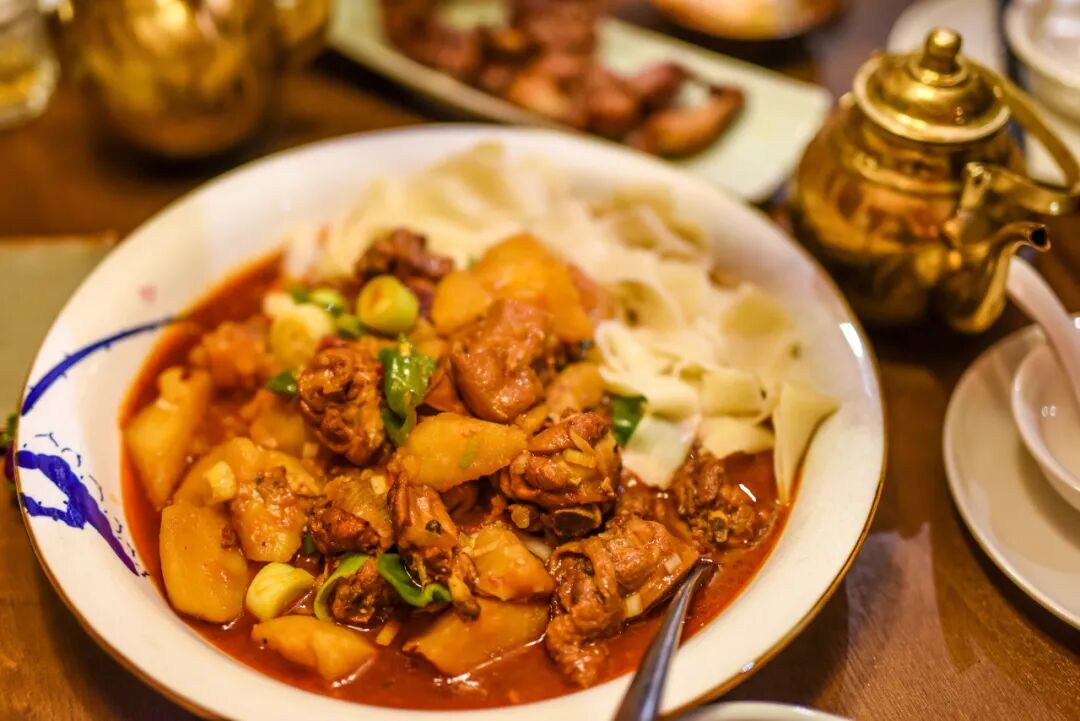
The first hotel breakfast on a Xinjiang road trip taught me more about the region than any guidebook: a long table of warm dishes, a pot of Xinjiang milk tea, and a row of drivers who had already been on the road for hours.
Hotel breakfast is the quiet key to a good self-drive day in Xinjiang. Unlike a quick continental bite, a Xinjiang hotel breakfast is a sit-down spread built around the local rhythm of tea, bread and hot food. Knowing what to expect, what is halal, and how to eat for a long driving day helps you start early and stay full until the next town. This guide covers what a typical hotel breakfast includes, how it changes by region and hotel class, the halal norm every traveler should know, and how to turn breakfast into a fuel stop before a mountain pass.
What a Xinjiang hotel breakfast looks like
Most hotels lay out a buffet that mixes Chinese and Uyghur staples. You will find warm milk tea, stacks of naan and steamed buns, congee, boiled eggs, sliced tomatoes and cucumbers, and often a tray of mantou. In summer a plate of watermelon or melon appears, and in the north a pot of black or milk tea sits at every table. Upscale city hotels add live noodle or egg stations and coffee, but the core stays the same: bread, tea and something hot. The meal is unhurried, which is a relief after a late arrival, and it is built so you can load up before a long empty road. Treat it as the first fuel stop of the day, not an afterthought.
- Warm Xinjiang milk tea and tea at every table.
- Naan, steamed buns and congee as the base.
- Eggs, vegetables and seasonal fruit on the side.
The halal baseline you can rely on
Almost every hotel dining room in Xinjiang serves halal food by default. That means no pork on the buffet, separate cutting boards and oil for meat and vegetables, and staff who are used to the rule. For a foreign driver this is good news: you can eat freely without asking at every plate, and the kitchen hygiene around meat is consistent. The trade-off is that you will not find bacon or ham, so the protein comes from eggs, chicken, beef or lamb instead. When you book hotels in Xinjiang, the halal norm is part of what you are buying, and it keeps the whole trip simpler. If you keep to the hotel breakfast you rarely need to think about it.
- No pork; meat and vegetables use separate boards and oil.
- Eggs, chicken, beef and lamb cover the protein.
- Halal is the default, so eating is low-stress.
North and south, a different spread
The regional cuisine of Xinjiang splits along the Tian Shan. In the north, around Urumqi, Yining and the Ili valley, dairy is king: milk tea, yogurt and cheese sit next to the bread. In the south, around Kashgar and Khotan, you see more polo, flat bread and sweeter tea, with lamb taking the lead at the hot tray. Turpan and Hami lean toward grapes, melon and dried fruit even at breakfast. None of this is fixed – big city hotels blend both – but knowing the lean helps you read a buffet fast. The split is the same one you taste at lunch, so breakfast is a free preview of the region’s food.
- North: milk tea, yogurt and cheese with the bread.
- South: polo, flat bread and lamb at the hot tray.
- Turpan and Hami add grapes, melon and dried fruit.
Hotel class and what actually changes
A budget county hotel gives you the real local breakfast: tea, naan, eggs and maybe a hot dish, served early and without fuss. A mid-range city hotel adds more choice and a cleaner buffet line. An upscale hotel or a resort adds live stations, coffee, fresh juice and a wider cold spread. The core halal staples do not change much, so you are not paying for the food so much as the comfort and the early hour. When you compare booking hotels in Xinjiang, weigh the breakfast window as much as the bed, because on a pass day the early spread is what gets you moving. A good hotel breakfast is worth more than a fancy lobby.
- Budget: tea, naan, eggs, one hot dish.
- Mid-range: more choice, cleaner line.
- Upscale: live stations, coffee, juice.
Turning breakfast into a driving tool
Breakfast is the cheapest performance boost on a driving day. Eat a full meal before a pass, fill a thermos with Xinjiang milk tea for the car, and pocket a piece of fruit or naan for the mid-morning gap. Road safety starts with a fed, alert driver, so do not skip it to chase an early start. In summer the fruit plate is a free hydration top-up; in winter the hot tea keeps you warm at the first cold viewpoint. A calm, early breakfast also beats a roadside stop where the only option is a truck-stop bun. Used this way, the hotel buffet is part of the route plan, not a hotel perk.
- Eat full before a pass; fill a tea thermos.
- Take fruit or naan for the mid-morning gap.
- A fed driver is a safer driver.
Timing and the early start
Most hotels serve breakfast from about 07:00 to 09:30, with upscale places opening a touch earlier. On a Duku or Pamir day you want to be on the road by first light, so aim to eat by 06:30 if the hotel allows an early plate – ask the night before. The best time to visit Xinjiang for empty roads is the warm season from May to October, and an early breakfast fits that plan. In winter the sun is late, so a 08:00 start is fine and the hot tea matters more. Either way, know the close time and do not roll in at 09:25 expecting a full tray. Build the meal into the day’s first hour so the driving stays relaxed.
- Served roughly 07:00 to 09:30.
- Ask for an early plate before a pass day.
- Know the close time; do not arrive late.
| Class | Typical spread | Early open | Good for |
|---|---|---|---|
| Budget county | Tea, naan, eggs | From 07:00 | Quick fuel stop |
| Mid-range city | Wider buffet | From 07:00 | Comfortable start |
| Upscale resort | Live stations, coffee | From 06:30 | Long pass day |
Practical takeaways
- Ask for an early plate the night before a pass day.
- Fill a thermos with Xinjiang milk tea for the car.
- Take a piece of fruit or naan for the road, not a full plate.
- Use the breakfast window as the day’s first fuel stop.
Frequently Asked Questions
- Is breakfast included in the room price?
- Almost always. Xinjiang hotels bundle breakfast into the rate, especially mid-range and up. Confirm at check-in if the booking was made through a third party, because a few discount rates drop it.
- Is hotel breakfast halal?
- Yes, virtually everywhere. The halal norm is the default across the region, so you can eat without checking each dish. You will not find pork on the buffet.
- Can I take food for the road?
- Taking a piece of fruit or a bun for the car is normal and expected. Loading a full plate into a bag is poor form, so keep it to a snack for the mid-morning gap.
- What if I do not eat the local staples?
- City hotels have egg, bread and fruit that travel with any diet, and coffee is common upscale. If you need something specific, buy it the night before in a city supermarket and keep it in the room.