

Winter driving in Xinjiang is a different sport from the summer road trip everyone posts about. The same Duku Highway that hums with camper vans in July becomes a frozen ledge patrolled by snowplows in January, and the vast Taklamakan skirt roads turn slick before sunrise. If you respect the cold, carry the right gear, and know when to chain up, a winter driving Xinjiang adventure is one of the most beautiful and quiet trips you can take. This guide covers snow-driving technique, tire chains, and how to handle the big mountain passes safely.
 }
}
Why winter changes everything
Xinjiang winters are long and serious. Northern basins like Urumqi, Yining, and Altay regularly see −20°C to −30°C, and passes can drop further. Daylight is short — around 9 hours in deep winter — which means less margin for a late start or a breakdown. Snow lingers on northern and western routes for months, and ice hides under fresh powder on shaded corners.
The upside is real: empty roads, frozen lakes you can walk on, and a stillness you never get in peak season. But the margin for error is thin, so preparation is not optional.
Snow tires first, chains second
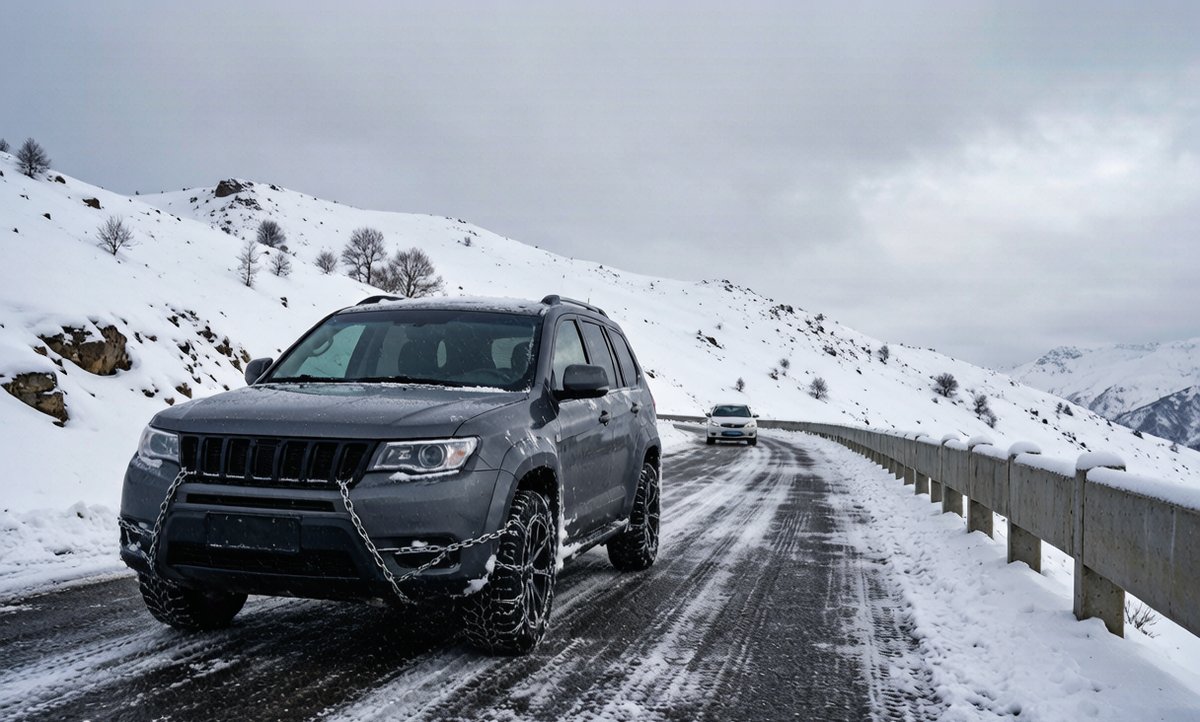
If you are driving between November and March, do not rely on all-season tires. Winter tires (or the local studded variety) are the baseline, and many rental desks now fit them by default for the season. Even with winter tires, carry tire chains Xinjiang style — the kind that wrap quickly without jacking the car — because some passes and checkpoint approaches require chains on by law during heavy snow.
Practice fitting chains once in a dry lot before your trip. Doing it for the first time at −25°C with numb fingers on the shoulder of a pass is how people get stuck.
How to drive on snow and ice
The rules are old but easy to forget under pressure:
- Slow before the corner, not in it. Brake in a straight line, then ease into the turn.
- Double your following distance. Ice triples stopping distance.
- Use engine braking. Drop a gear on descents instead of riding the brakes, which can glaze the rotors.
- Smooth inputs only. No slam acceleration, no hard steering. The car goes where the tires can grip.
- If you slide, look where you want to go and steer there gently; do not stab the brakes.
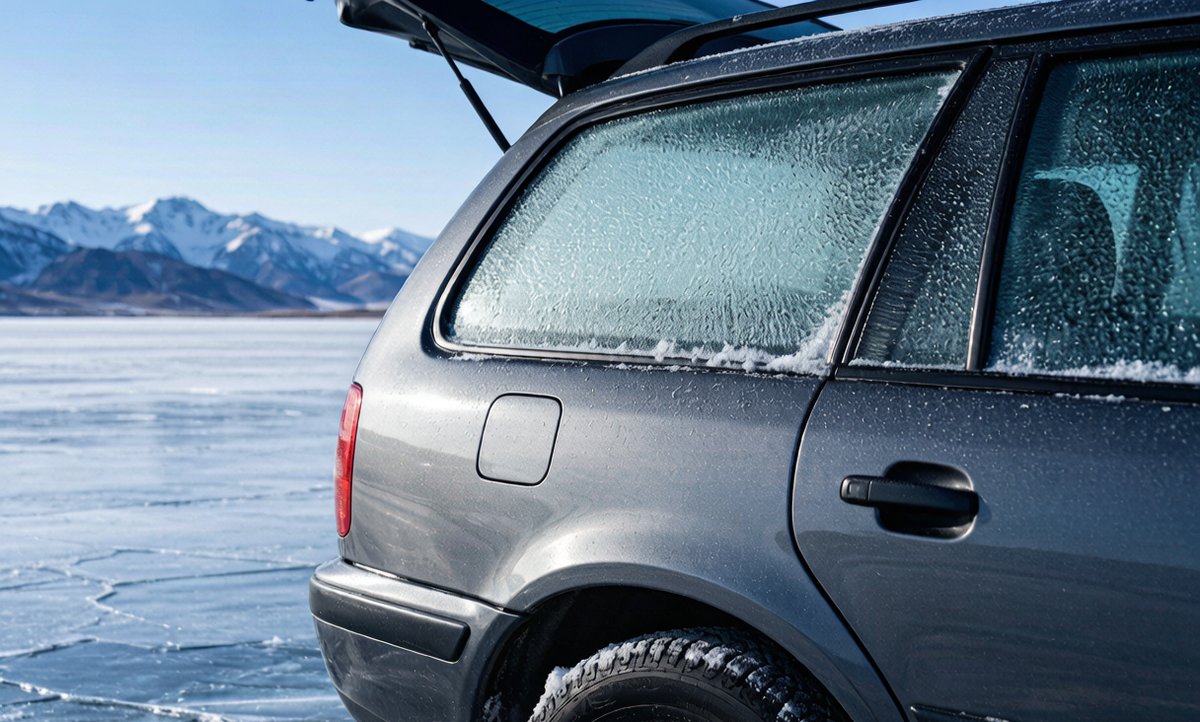
On a divided highway like the G30, ice forms first on bridges and overpasses because cold air hits both sides. Treat every bridge as a potential skid.
Driving Duku in winter
A common question is whether driving Duku in winter is possible. The honest answer: the high central section (the Tianshan crossing between Dushanzi and Toksun) is normally closed from late October to early June. You cannot legally or safely cross the summit in winter. What stays open is the lower northern approach toward Qiaerma and the southern stretches, but conditions change daily.
If you want a Duku experience in winter, drive the accessible lower segments, enjoy the snow walls and frozen waterfalls from a safe pull-off, and never attempt to bypass a closed-gate checkpoint. The gate is there because the road beyond is not maintained.
Pass-specific cautions
- Tianshan passes: High, exposed, whiteout-prone. Chain up before the climb if snow is falling.
- Pamir approaches (south): Cold and thin air; check the winter road closures notice before any southern plan.
- Altai / Hemu tracks: Gorgeous but unplowed village spurs; a 4WD with chains is the minimum, and locals often know the safe line better than any map.
- Gobi and Tarim edges: Less snow but brutal wind that drifts powder across the lane and drops visibility fast.
Daily habits that prevent trouble
- Start at first light. You want to be parked before dark.
- Keep the tank above half in remote areas; fuel gels and pumps freeze in extreme cold, and a station may be closed for the season.
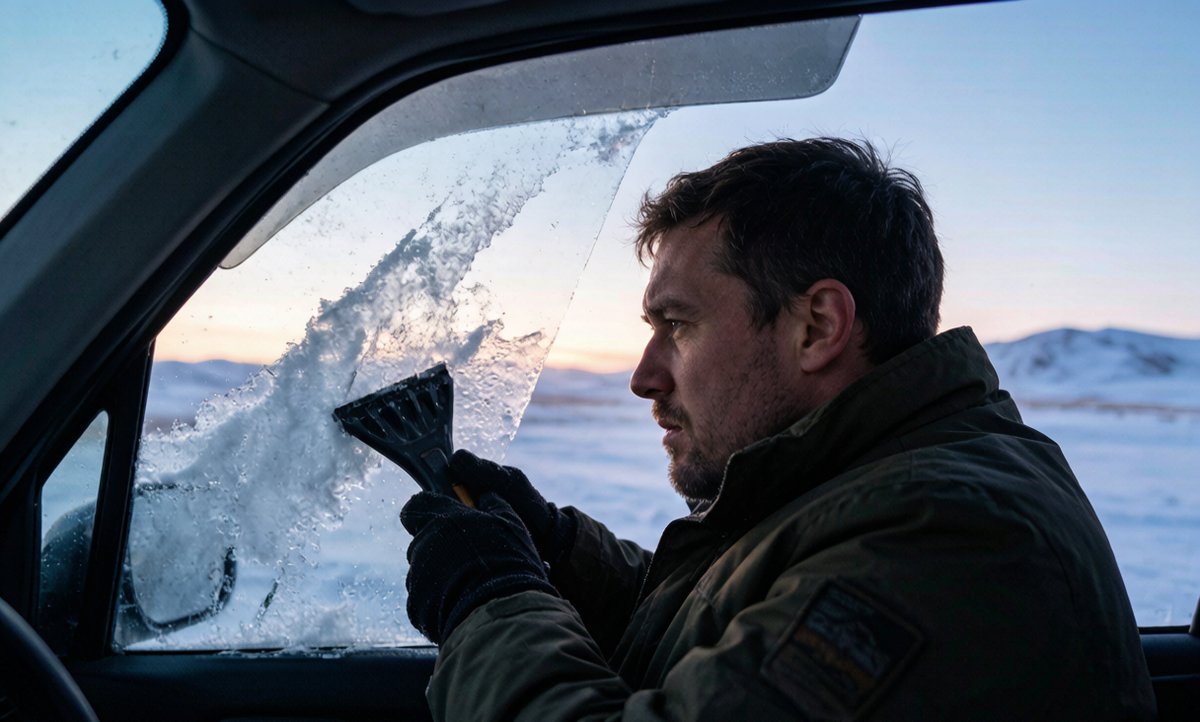
- Carry a real emergency kit: blanket, food, water, phone power bank, shovel, tow strap, and a window scraper.
- Tell someone your route and expected arrival, especially on passes with no signal.
- Watch the forecast every morning; Xinjiang weather can flip a pass from clear to impassable in hours.
Vehicle prep before you leave
Beyond tires and chains, winter demands a healthy battery (cold kills weak ones), winter-grade washer fluid that will not freeze, and a full coolant check. Idle the car a minute before driving off in extreme cold, and never let the fuel level sit low overnight in case you need to run the heater while waiting for help.
If you are renting, confirm winter equipment explicitly — see the Xinjiang winter road trip planning notes for what to ask the desk and which routes stay open.
If you get stuck or slide off
Even careful drivers meet a snowbank. The right response keeps a nuisance from becoming a night in the cold. If you feel the car leave the lane, steer gently into the slide and ease off the gas — do not brake hard or yank the wheel. If you slide into a drift, stop and assess before spinning the tires, which only digs you deeper.
Carry a folding shovel and a sack of sand or kitty litter for traction under the driven wheels. Rock the car slowly between forward and reverse with light throttle to walk it out. If that fails, deploy the tow strap with another vehicle, or call for help and stay with the car where it is warm and visible rather than walking into a whiteout.
A dead battery is the other common winter failure. Keep jumper cables or a portable jump pack, and avoid draining the battery with the heater and lights while stranded. Running the engine for warmth is fine, but clear snow from the exhaust first so fumes cannot build up inside.
FAQ
Do I need chains if I have winter tires? On maintained highways, winter tires may be enough, but carry chains anyway. Certain passes and checkpoints require them during snowfall, and you do not want to be turned back.
Is the Duku Highway open in winter? The high central crossing is typically closed late October to early June. Lower sections may stay open but conditions vary daily — never bypass a closed gate.
What is the biggest winter risk? Short daylight plus cold-related breakdowns. Start early, keep the tank up, and carry an emergency kit so a delay never becomes a danger.
Can I self-drive or should I hire a driver? Confident winter drivers with the right vehicle can self-drive the open routes. For passes, the Pamir, or if you are unsure on ice, a local driver is the safer call.
Final word
Winter driving in Xinjiang rewards preparation and punishes shortcuts. Fit proper tires, carry chains, start early, and respect every closed gate — do that and you get silent snow roads and frozen landscapes most travelers never see.
Written by Karl Huang, who has planned winter self-drive routes across Xinjiang for travelers who want the quiet season done right.