

If you drove Xinjiang in 2023 and are returning in 2026, expect a few things to have shifted. This Xinjiang travel updates 2026 roundup covers the changes that actually matter to a self-driver: road openings, border permit handling, visa-free transit, and reservation tweaks. Treat specific numbers as planning estimates and confirm at the gate, because remote-region rules move.
Roads: new pavement, faster links
The big story is connectivity. The G0711 Urumqi–Ruoqiang desert expressway has pushed the southern Xinjiang loop closer to a sealed high-speed arc, and several mountain passes that were seasonal are now maintained longer into the shoulder seasons. The new highways 2026 map is worth a look before routing, because a road that was “under construction” last year may be open now — or may still be a gravel detour.
Practical effect: Urumqi to Korla, and the northern Yili belt, are quicker and smoother than ever. The far south and the Pamir remain the places where you still plan around gaps.
Border permits: slowly going digital
The much-feared border permit process for the Pamir and frontier zones is being digitized in pockets. Some counties now accept online pre-application, though you often still collect the physical permit in person with passport and license. Our Xinjiang border crossing policy 2026 guide tracks the current step-by-step, because the exact office and document set change by county.
Visa-free transit
China’s extended 240-hour visa-free transit continues to apply at major entry points, and it can cover a Xinjiang itinerary if your inbound and outbound flights bookend the region correctly. The visa-free transit update explains the routing rule that trips up first-timers: you must exit through a designated city, not necessarily the one you entered.
Scenic-area reservations
Kanas, and several other headline scenic areas, have tightened timed-entry and advance reservation. The 2026 season update carries the current windows. The takeaway for drivers: book the gate slot before you leave the last town with signal, and do not assume you can roll up at noon in October.
Signage and information
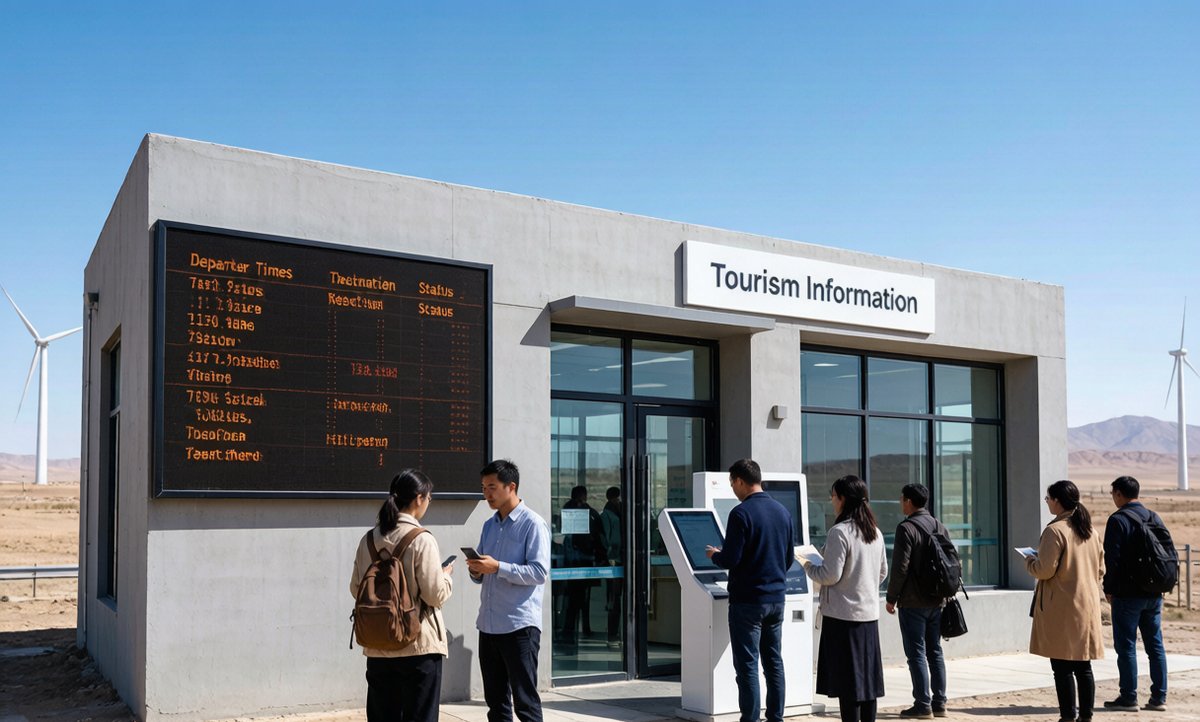
Multilingual signage and digital info boards are appearing at more service areas and gateways, which helps self-drivers who do not read Chinese. Pair that with offline maps and you are in better shape than visitors a few years ago.
What has not changed
Checkpoints, the need for a license translation, and the basic rule of topping up fuel early in the south and west are all still in force. The Xinjiang road trip safety fundamentals are stable even as the paperwork modernizes.
Fuel and EV charging updates
For combustion rentals, fuel stations continue to spread along the G30 and northern belt, with card and app payment now standard at most. EV drivers see the fastest change: DC fast chargers are appearing at more prefecture cities and highway service areas, though the south and west remain thin. If you are in an EV, plan legs around the northern and eastern corridors and treat the Pamir and Taklamakan as fuel-only for now.
Crowd management and what to book early
The headline change for 2026 is tighter timed entry at the famous scenic areas. Kanas, and similar headline sites, now cap daily vehicles and require advance slots in peak weeks. Book the gate before you leave the last town with signal, and build flexibility into the route so a sold-out day does not break the plan. Shoulder-season (April–May, September) avoids most of the crunch.
Common 2026 planning mistakes
Travelers still trip on three things: assuming the IDP works (it does not), arriving at a scenic gate without a reservation in October, and underestimating how far apart fuel and signal are in the south. None are hard to fix with a little advance reading — which is exactly why this update exists.
Tourism numbers and infrastructure
Visitor numbers to Xinjiang have kept climbing, and with them the infrastructure: more graded lots, more multilingual signs, and more ranger presence at major sites. The practical upside for self-drivers is better information and safer pull-offs; the downside is that the famous spots are busier, which is precisely why the quiet roads in our other guides matter more than ever.
Safety and checkpoints in 2026
The security posture in Xinjiang remains visible but routine for travelers. Expect passport checks at major intersections, hotel registrations tied to your passport, and the occasional roadside scan. None of this should disrupt a well-documented trip; keep your passport, license translation, and permit together, answer politely, and you will move through in minutes. The 2026 trend is toward smoother, faster processing, not more of it.
How to verify any rule before you go
Remote-region rules change, so build a 48-hour confirmation habit: re-check the specific county’s permit office, the scenic-area reservation page, and road status from a reliable source before you leave the last city with good signal. What was true in a forum post from last year may have shifted. Treat this article as a planning map, not a guarantee, and the live confirmation as the lock.
What this means for your 2026 route
Practically, build your 2026 plan around three habits: book headline scenic gates early, confirm frontier permits a few days out, and keep fuel and signal top of mind in the south and west. The network is better, not bulletproof. Travelers who plan for the famous spots to be busy and the quiet roads to be the reward will have the smoothest trip. Xinjiang in 2026 rewards the prepared driver more than ever.
Staying flexible pays off
The single best planning habit for 2026 is a loose skeleton, not a locked day-by-day. Hold your headline gate bookings, but keep mid-route nights swappable so a closed pass or a sold-out site just slides your plan, not breaks it. Travelers who treat the route as a menu rather than a contract consistently report the smoothest trips — and Xinjiang rewards exactly that adaptability.
One more practical note
None of these changes are reasons to delay a trip — quite the opposite. The network is more capable in 2026 than it has ever been, and the paperwork is trending toward easier, not harder. Plan with the live rules in mind, and the year’s improvements will work for you rather than against you.
FAQ
Do I still need a border permit for the Pamir? Yes, but the application is partly online in some counties. Confirm the current office before you go.
Are the new highways fully open? Many are; a few desert segments are still finishing. Check the live map before routing.
Can visa-free transit cover a Xinjiang loop? Potentially, if your flights in and out follow the designated-city rule. Verify the routing.
When should I book Kanas? As early as the system allows, especially for October golden-week dates.
Final word
Xinjiang in 2026 is easier to drive than it was, not harder — the roads are better and the permits are slowly modernizing. The smart move is to confirm the live rule for your specific county a few days out, then enjoy the smoother network.
Written by Karl Huang, tracking Xinjiang’s road and permit changes each season for self-drive travelers.