

Most people picture Xinjiang in summer green or autumn gold. But a xinjiang winter self drive is something else entirely — a silent, frozen, snow-laced version of the region with empty roads and hotels at a third of the price. I drove Urumqi to Tianchi and across to the Ili Valley one January, and the solitude was the trip. The trade-off is real: half the roads close, and the ones that stay open demand respect.
Winter here means serious cold. Urumqi drops to -15°C or lower; the Ili Valley sits around -10 to -20°C; Turpan is the mild exception at roughly -5 to -10°C by day. The reward is blue skies, frozen lakes you can walk near, and ice-and-snow festivals that summer travelers never see.
 }
}
Which roads stay open
The golden rule: mountain passes close, lowlands stay open.
- Closed in winter: The Duku Highway (typically shut from late October to early June), the Ahei Highway, and most Pamir access beyond a point — snow and ice make them impossible. Don’t plan a winter Duku; it simply isn’t there.
- Open: Urumqi–Turpan (about 180 km, good highway), Urumqi–Yining across the Ili Valley (roughly 700 km, plowed but watch for snow), and the lowland Taklamakan-edge routes. The G30 corridor is kept clear.
- Conditional: Heavenly Lake (Tianchi) road is open but the lake is frozen and spectacular; check the Heavenly Lake guide for winter access and the cable car status.
Always confirm the day before with a local or your hotel — a snowfall can shut a pass for 24 hours.
Snow chains and winter tires
This is non-negotiable. On any open mountain or plateau road in winter you need winter tires at minimum, and snow chains in the trunk for sudden snow. I carry chains even on plowed highways because a shaded valley stretch can be pure ice while the rest is dry. Practice fitting them once in a parking lot before you need to do it at -18°C in the dark — trust me on that one.
Rental companies in winter usually supply winter tires; confirm it explicitly when you book, and read best car for a Xinjiang road trip for vehicle choice. AWD helps but is no substitute for grip.
What you’ll see (and why it’s worth it)
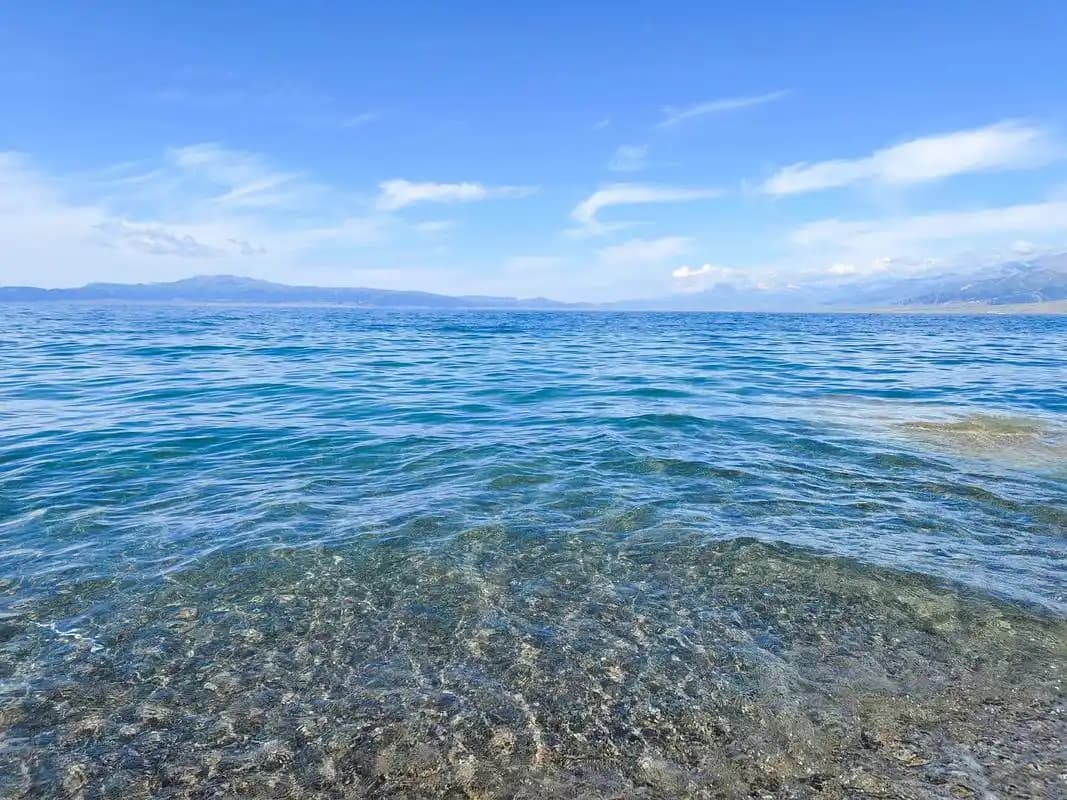
- Frozen Sayram Lake: The “last drop of the Atlantic” ices over into a vast white plain ringed by snow peaks. Eerie and beautiful; wind is brutal, dress for -20°C.
- Tianchi (Heavenly Lake): A frozen alpine lake beneath Bogda Peak — postcard stuff, and far quieter than summer.
- Ice-and-snow festivals: Urumqi and some towns host winter events with ice sculptures and skiing; Turpan’s warmth makes it a comfortable base.
- Empty roads: You may drive an hour and pass three cars. For photographers and peace-seekers, that alone justifies the cold.
The seasonal windows within winter
Not all winter is equal. December–January is the deep freeze — Urumqi and the Ili Valley can hit -20 to -30°C, and daylight is scarce (sunset before 6 p.m.), but this is peak season for ice festivals and frozen-lake photography. February–early March starts to soften, with more sun and the Ili apricot blossom hint at month’s end. Late March–April is the shoulder: snow patchy, some mountain roads still closed, but hotel prices lowest and the first green in the south. I would not drive the Urumqi–Yining leg in a heavy January storm without chains and a buffer day; build one rest day into any winter plan so a closure does not cascade.
Fuel, warmth and the half-tank rule in cold
Cold changes the rules. A petrol engine drinks more on cold starts, so budget roughly 10–15% extra fuel over summer for the same distance. Keep the tank above half everywhere — on the Urumqi–Yining run stations are frequent, but a stall at -20°C turns a minor issue into an emergency within the hour. Keep an insulated water can (don’t let it freeze), an emergency blanket, and a day of extra food in the car at all times. I also idle the engine periodically on long stops rather than fully shutting down in extreme cold, to protect the battery. The road trip safety tips piece covers the breakdown protocol in detail.
Hotels, sights and the closure reality
Major city hotels in Urumqi, Turpan, Yining and Kashgar stay open and are cheap in winter — often a third of July rates. But remote scenic areas limit or close access: Kanas geopark largely shuts its inner roads, Sayram’s lakeside cabins may close, and the Pamir is effectively off-limits. Heavenly Lake (Tianchi) stays open and is the reliable winter headline sight. Always call ahead — a “open” park can still have its cable car or shuttle stopped for ice. Book your hotel for the night you actually arrive and keep the next night flexible; a pass closure may force a reroute.
Risks to plan for
Winter driving here is about discipline, not bravery.
- Black ice: Shaded bridges and valley floors freeze first. Slow down, no sudden steering or braking.
- Fuel: Keep the tank above half — a stalled car in -20°C is an emergency fast. The road trip safety tips and fuel guide cover the half-tank rule.
- Isolation: Tell someone your route and ETA; download offline maps; carry an emergency blanket, extra food and a full water can (don’t let it freeze — insulated).
- Daylight: The sun sets before 6 p.m. in December. Plan drives for daylight and have a warm layer and light ready.
Winter driving technique
Cold changes how the car behaves, and the technique is different from summer. Brake gently and early — threshold braking on ice just locks the wheels; pump or let ABS do its job. Increase following distance to three or four seconds, because stops take far longer on snow. Accelerate smoothly to avoid wheelspin, and climb hills with enough momentum to not stall mid-slope. On a shaded bridge or a valley floor at dusk, assume black ice and lift off the throttle. I keep the headlights on all day in snowfall and never use cruise control on slick roads — your foot needs to be ready to react.
What to do if stranded
If you slide off or the car dies in the cold, the rule is stay with the vehicle. It is shelter, it is visible, and it is far easier to find than a person on foot. Run the engine 10 minutes each hour for heat (clear the exhaust of snow first to avoid carbon monoxide), keep the fuel above half so you can, and burn a candle inside only with a window cracked. Lay out the reflective triangles, stay hydrated from your insulated water can, and use the roadside number or the last checkpoint. A buffer night in your plan means a closure never becomes an overnight on the highway.
Winter festivals and the quiet sights
The cold buys you experiences the summer crowds miss. Urumqi and several northern towns host ice-and-snow festivals with lit sculptures and nearby skiing; Turpan’s mild winter makes it a comfortable base for the Jiaohe ruins without the 45°C misery. The Ili Valley under snow is silent and photographic, and Tianchi (Heavenly Lake) frozen beneath Bogda Peak is the reliable headline sight. Just confirm each park’s winter opening and shuttle status before you drive out — a “open” sign at the gate does not always mean the cable car or the inner road is running.
Chains, tires and the law
Winter-tire and chain rules are not suggestions here. Rental companies in season usually fit winter tires, but confirm it explicitly and have it written on the agreement — a “all-season” tire is not the same thing at -20°C. Carry chains even on plowed roads; a shaded valley can be pure ice while the rest is dry, and local police sometimes require chains on a closed pass before they let you through. Practice fitting them once in a lit parking lot before you need to do it in the dark at -18°C. And keep the fuel can full and the washer fluid winter-grade — plain fluid freezes on the glass and blinds you at the worst moment.
FAQ
Can you drive the Duku Highway in winter? No. It closes around late October and reopens in early June. Plan lowland routes instead.
Do I need snow chains? Yes, carried at minimum, and winter tires are essential on open winter roads. Fit them in a safe lot if snow starts.
Is winter a good time to visit Xinjiang? For solitude, frozen-lake beauty and low prices, yes. For maximum scenery variety and open mountain roads, no — go June–September.
Which areas are best in winter? Urumqi, Turpan (mild), Tianchi, the Ili Valley and frozen Sayram. Skip the Pamir and Duku.
How cold does it get? Urumqi around -15°C, Ili -10 to -20°C, Turpan milder near -5 to -10°C by day. Nights are colder.
Are hotels and sights open? Major city hotels yes; some remote scenic areas limit winter access or close. Book ahead and confirm opening hours locally.
Final word
Winter in Xinjiang isn’t for everyone, but for the right traveler it’s the cheapest, quietest, most photogenic version of the region. Respect the cold, chain up, and the empty white roads are yours.
Written by Karl Huang, a Xinjiang-based travel writer. Seasonal road closures, chain laws and scenic-area winter opening hours change year to year — check with local transport and scenic-area authorities before any winter departure.