

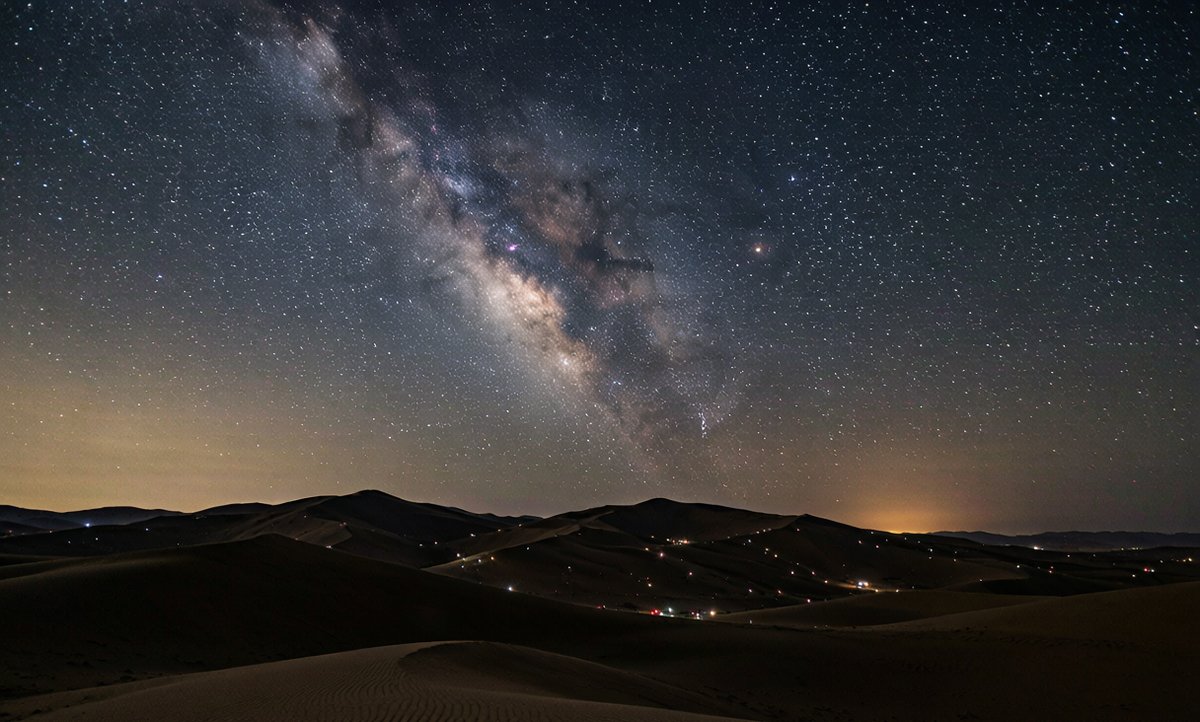
Stargazing in Xinjiang is the kind of experience that ruins city skies for you forever. Vast, dry, and far from major light pollution, the region holds some of the darkest best stars Xinjiang has to offer — the Milky Way rises sharp enough to cast a faint shadow, and the Gobi horizon goes perfectly black. This guide points you to the best dark-sky spots and gives practical astrophotography and planning tips for a road trip built around the night.
 }
}
Why Xinjiang is a dark-sky paradise
Three things line up here: extreme aridity (few clouds), enormous open space (hundreds of kilometers from big-city glow), and high elevation on the plateau fringes (thinner, clearer air). The result is consistently transparent nights from spring through autumn, with the summer Milky Way at its most dramatic.
The Taklamakan and Gobi margins, the northern grasslands, and the Pamir foothills are all exceptional. The catch is that the best spots are remote, so a car is not a luxury — it is the only way to reach true darkness and get back safely.
Top dark-sky spots
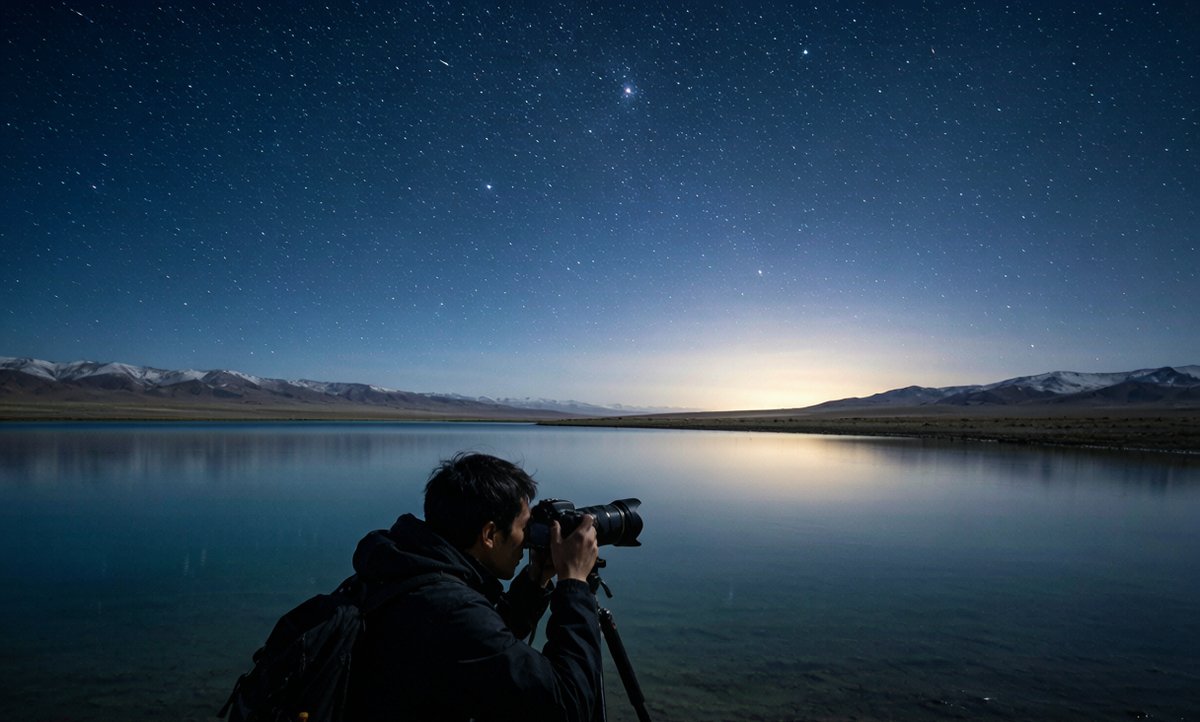
- Sayram Lake: High, ringed by mountains, and far from towns. The reflecting water doubles the sky. Plan a lakeside night with the Sayram Lake route in mind.
- Koktokay and the Altai fringe: Crisp northern air and long summer twilights that give way to deep darkness. The Koktokay geopark area is a strong base.
- Gobi and Tarim desert edges: Utter blackness and a low, clean horizon — ideal for the galactic core and wide-angle compositions.
- Kanas and the northern forests: Dark and quiet, though trees limit the horizon; pick open lakeshores.
- Pamir foothills: Thin air and altitude make for steady, brilliant stars on clear nights.
When to go
- Summer (June–August): The Milky Way core is high and bright, but it is also peak travel season and the warmest, most comfortable camping window.
- Spring and autumn: Excellent transparency and fewer crowds; bring warm layers as nights get cold fast.
- Avoid full-moon weeks if you want the galactic core. A new moon or a thin crescent gives the darkest skies. Check the lunar calendar against your route.
Astrophotography basics
You do not need pro gear to get a great shot, but a few rules matter:
- A sturdy tripod is non-negotiable; any wobble ruins a long exposure.
- Wide fast lens (f/2.8 or faster) captures more light; a 14–24mm range is the sweet spot for the core.
- Manual focus on a bright star, zoomed in on live view, then lock it.
- Shoot raw so you can pull noise and color later.
- Stack if you can: several exposures blended reduce noise dramatically.
- Red headlamp only to protect your night vision and your companions’ eyes.
If you want to level up your shooting on the road, the Xinjiang photography guide covers gear and light more broadly.
Plan the trip around the night
- Drive in daylight, shoot after dark. Never hunt for a remote spot at night for the first time.
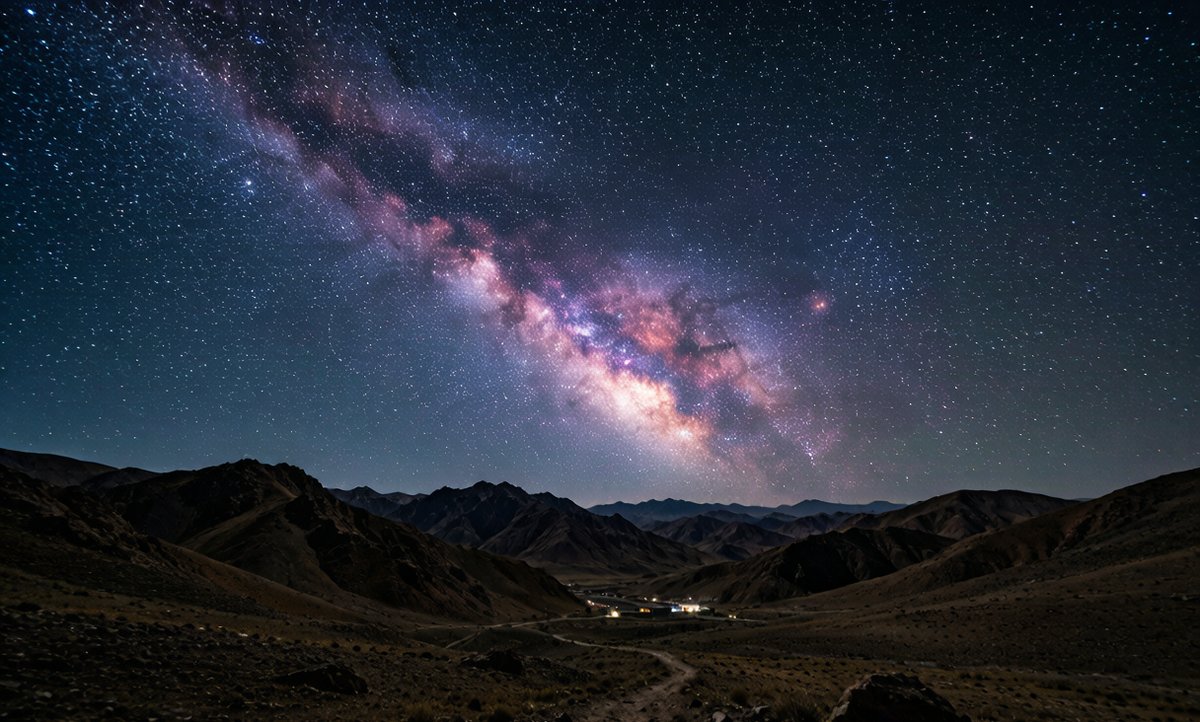
- Aim for the darkest hours. The sky is richest from true night (an hour or two after twilight) until astronomical dawn. The galactic core sits highest in the small hours of summer, so a late start often pays off more than an early one.
- Give your eyes time. Full adaptation takes about twenty minutes; avoid looking at phone screens at full brightness, which resets the process.
- Sleep near your spot. A lakeside yurt, a desert campsite, or a roadside pull-off you scouted by day.
- Watch the weather, not just the moon. A clear forecast beats a dark moon under clouds.
- Bring real warmth. Desert and plateau nights drop fast even in summer; layers, a thermos, and a hand-warmer for the lens help.
- Power and storage. Cold drains batteries; carry spares and enough memory for hundreds of frames.
Safety and respect
Remote dark sites mean no light, no signal, and sometimes no other people. Tell someone your plan, keep the tank up, and never wander far from the car in total darkness. Respect local grazing land and private approaches — ask before setting up on obviously used ground.
What you will actually see
The sky changes through the year, and knowing what is up helps you plan. In summer the galactic core — the bright, dusty heart of the Milky Way — rides high after dark, the headline sight most people come for. Spring and autumn show the broader band and the brighter planets, with steadier, cooler air. Winter has the longest, darkest nights and the crispest stars, though it is brutally cold for standing around with a tripod.
Beyond the Milky Way, a dark Xinjiang sky gives you the zodiacal light near the equinoxes, countless meteors on a shower night, and the slow arc of satellites if you watch long enough. The key is patience: give your eyes twenty minutes to fully adapt and the sky grows visibly richer.
A simple gear checklist
- Camera with manual mode and raw capture
- Wide, fast lens (f/2.8 or brighter)
- Sturdy tripod
- Spare batteries kept warm in a pocket
- Headlamp with a red mode
- Intervalometer or a wired release
- Microfiber cloth for condensation and frost on the front element
You do not need the most expensive body. A modest DSLR or mirrorless on a good tripod, shot well, beats a flagship phone struggling in the dark.
Dark-sky etiquette
Keep light discipline: no white lights once you are set up, and shield any screen you must use. If you share a spot with other photographers, agree on red-only lighting so everyone keeps their night vision. Pack out every wrapper and battery, and leave the pull-off as quiet as you found it — the darkness is the resource, and careless light or litter degrades it for the next traveler.
FAQ
Do I need a special permit to stargaze near the border? If you are in a border management zone (the Pamir, Tashkurgan), yes, the standard border permit applies. Well away from frontiers, no permit is needed for normal public land.
What is the single best month? July and August for the bright summer core, provided you pick a new-moon window. May and September are close behind with fewer crowds.
Can I do this without a car? Barely. The best skies are far from towns, so a self-drive or a driver is strongly recommended.
Is it cold even in summer? Yes at altitude and in the desert after midnight. Pack as if for a cold night regardless of the daytime heat.
Final word
Xinjiang turns a casual interest in the stars into an obsession. Pick a new-moon window, drive to a dark shore or a quiet desert, and let the Milky Way do the rest — just bring a warm jacket and a full battery.
Written by Karl Huang, who has chased clear nights across the Xinjiang plateau and deserts with a tripod and a thermos.