

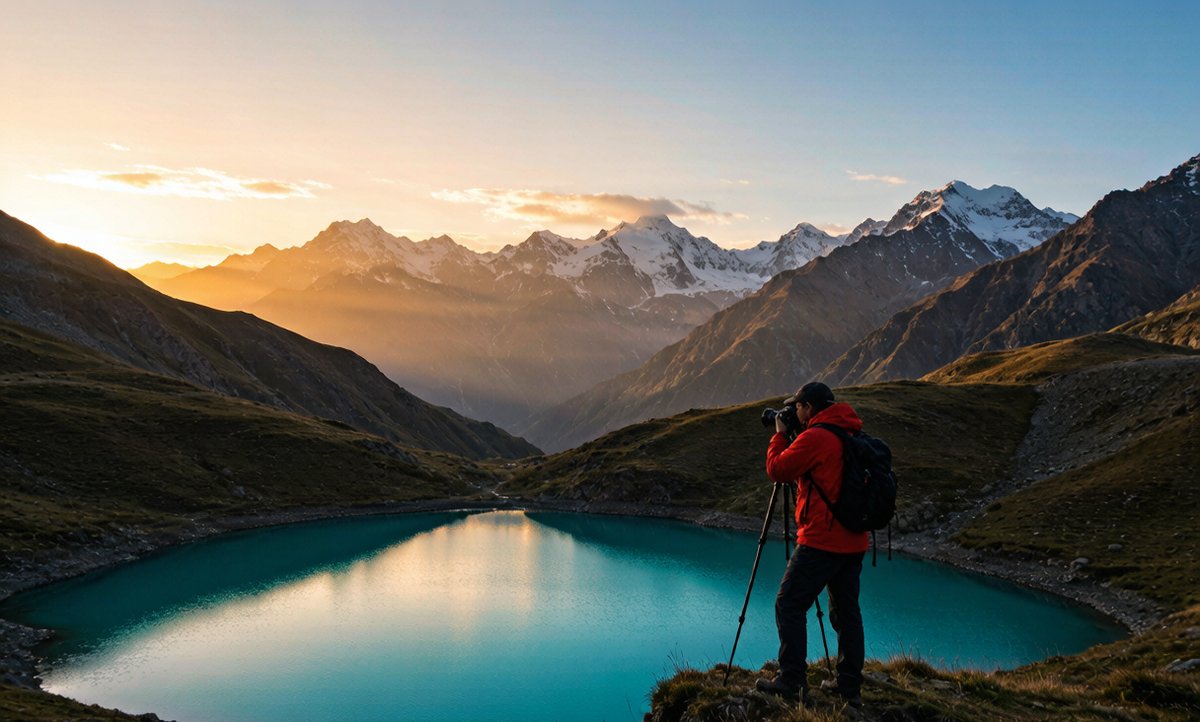
Xinjiang is the kind of place that makes you wish you had more memory cards. Over a single week you can shoot snow peaks, red canyons, alpine lakes, desert dunes, grassland yurts, and ancient Silk Road cities. But the light is harsh, the distances are huge, and the rules around drones and permits are stricter than most travelers expect. A xinjiang photography road trip succeeds when you plan the shots, not just the route.
 }
}
Where to shoot: the standout locations
After dozens of drives across the region, these are the locations that consistently deliver:
Kanas Lake — The classic golden autumn shot is here: birch forest, mist, and a glacial lake. It is crowded in October, so arrive at the lakeshore viewpoint before sunrise. The Kanas Lake guide covers access details.
Sayram Lake — Best in late June or early July when the wildflowers bloom around the shore. The light is cleanest in the hour after sunrise and the hour before sunset. Shoot from the southwest shore for the snow-capped backdrop.
Duku Highway — This is a moving portfolio. Highlights include the red canyon near Dushanzi, the spruce forests above Qiao’erma, Hashiligen Pass snow banks, and the Bayinbuluke grasslands. The Duku Highway self-drive guide has the driving logistics.
Pamir Highway (Kashgar to Tashkurgan) — Karakul Lake with Muztagh Ata behind is one of the most dramatic 7,500 m peak backdrops in Asia. Best light is early morning; afternoon light can be flat and hazy.
Taklamakan Desert edges — Around Niya, Minfeng, and Alar, the dunes create strong shadow lines at sunrise and sunset. Avoid midday; the sand blows out to white.
Tianchi (Heavenly Lake) — Easy to access from Urumqi, but crowded. Go on a weekday and hike above the main boardwalk for cleaner compositions.
Best seasons for photography
- Late June–July: Green grasslands, wildflowers at Sayram, lavender around Ili. Skies are generally clear.
- September–early October: The famous autumn colors at Kanas and Hemu. Expect crowds and cold mornings.
- Late April–May: Snow still on the high peaks, desert sites are warm but not brutal, and tourist numbers are lower.
- Winter: Spectacular but difficult. Roads close, temperatures drop below -20 °C, and some scenic areas shut down. Only for experienced cold-weather photographers.
Golden hours and light quality
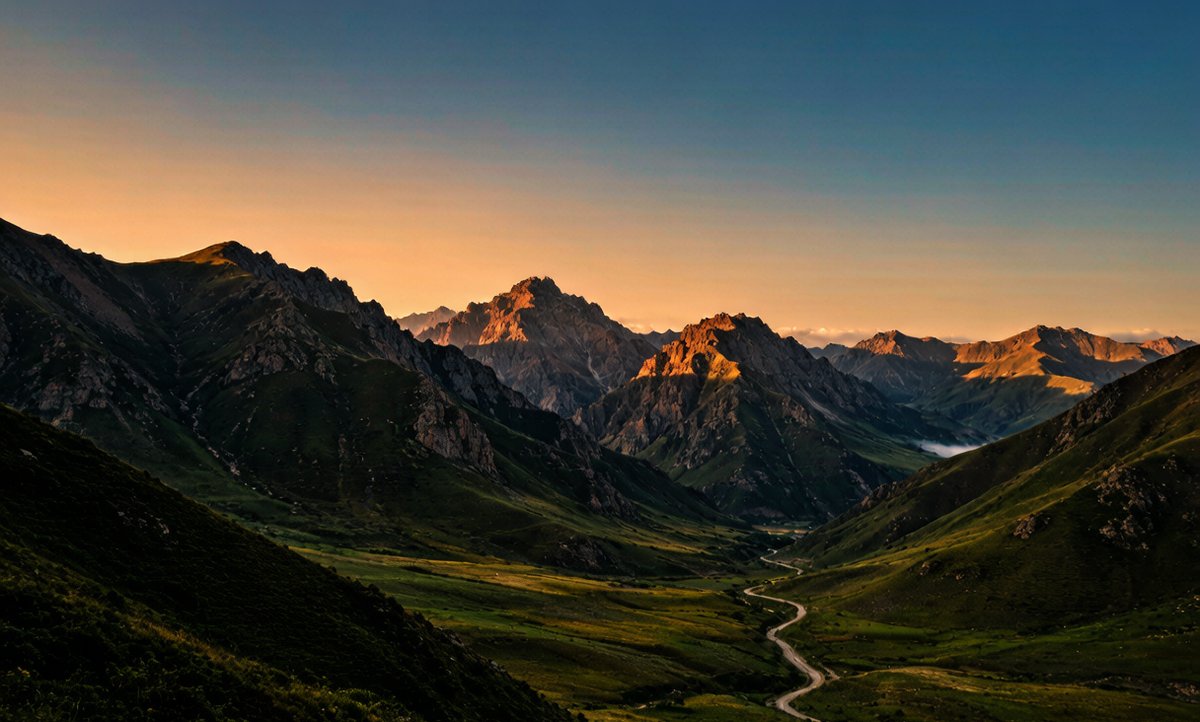
Xinjiang runs on China Standard Time (UTC+8), but its western geography means solar time is roughly two hours behind Beijing. Summer sunrise can be as early as 06:30 local time, and sunset after 22:00. This gives long evenings but also means you need to adjust your schedule.
The best light is usually:
- Sunrise: 06:30–08:30 in summer, 08:00–10:00 in autumn.
- Sunset: 19:30–21:30 in summer, 17:30–19:30 in autumn.
Midday light is harsh almost everywhere. Use that time for driving, eating, or sleeping.
Drone rules in Xinjiang
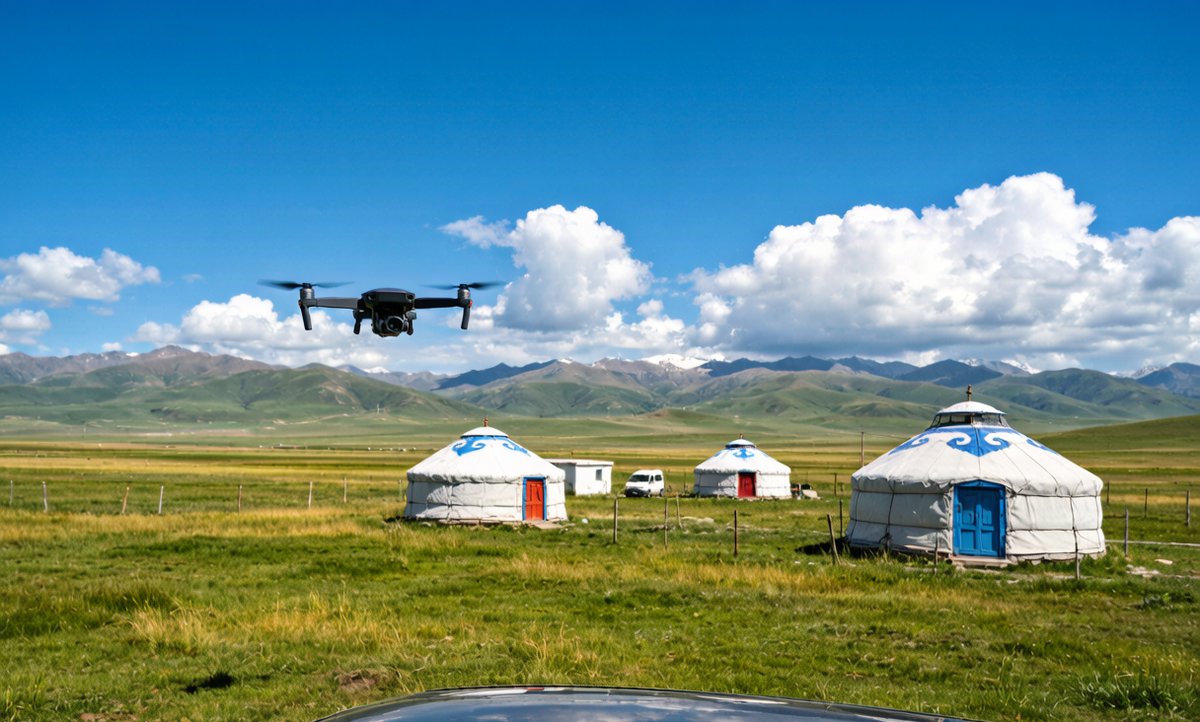
This is the topic that causes the most problems. Xinjiang is a politically sensitive region, and drone rules are stricter than in eastern China. The rules change, but as of 2026:
- Do not fly in cities, near airports, military installations, border zones, or scenic areas that post drone bans. Kanas and Hemu often restrict drones; expect signs at the gate.
- Register your drone with the Civil Aviation Administration of China (CAAC) if required. Many foreign drones are not easily registered without a Chinese phone number and ID.
- Ask locally. A hotel owner, park ranger, or police officer may tell you the current rule for a specific spot. Do not assume that because you saw a drone video online, it is legal.
- Carry your drone in your hand luggage, not checked baggage. Batteries must follow airline rules.
In practice, many foreign travelers leave the drone at home and shoot with a camera or smartphone. The risk of confiscation or fines is real, especially near borders.
Gear recommendations
- Camera and lenses: A wide-angle (16–35 mm) for landscapes and a telephoto (70–200 mm) for compressed mountain layers and candid portraits. A polarizing filter is useful for lakes and sky.
- Tripod: Essential for sunrise, sunset, and astrophotography. Wind can be strong; bring a sturdy one.
- Memory and power: Two spare batteries minimum. Cold mornings drain batteries quickly. A 256 GB card fills faster than you expect.
- Cleaning kit: Dust is everywhere. Sensor swabs, a blower, and lens cloths are necessary.
- Phone gimbal: Useful for smooth video on bumpy roads and at scenic stops.
Respecting people and places
Always ask before photographing people, especially in ethnic minority villages and at markets. Some Uyghur, Kazakh, and Kyrgyz communities are welcoming; others prefer not to be photographed. A smile and a gesture toward the camera is usually enough. If someone declines, respect it immediately.
Inside mosques and some historic sites, photography may be restricted. Watch for signs or ask the caretaker.
Practical shooting tips
- Scout the night before. Google the location, then check it on Amap. Drive past the spot in daylight to choose your sunrise composition.
- Layer your clothing. Pre-dawn at Kanas or Sayram can be near freezing even in summer.
- Carry a headlamp. Many best shots require hiking in the dark.
- Back up daily. Copy files to a second drive or cloud storage when you have Wi-Fi.
- Be flexible. Weather in the mountains changes fast. A cloudy morning can turn into dramatic light by afternoon.
Backing up your work every night
Memory cards fail, hard drives break, and phones get dropped. After each shooting day, copy your best images to a second card or a portable SSD. When you reach a hotel with Wi-Fi, upload a backup to cloud storage if your VPN allows it. The images you cannot replace are the ones you have not backed up.
FAQ
Do I need a permit to photograph in Xinjiang? Not for normal tourism photography. Commercial shoots, drones, and photography near military or border zones may require permission.
Can I photograph inside mosques? Usually not, or only with permission. Always ask.
Is it safe to carry expensive camera gear? Yes, generally. Petty theft is rare compared to major global cities, but use common sense in crowded markets.
What is the best single lens for Xinjiang? A 24–105 mm zoom is the most versatile. Pair it with a 70–200 mm for mountain compression.
Can I use a smartphone for good shots? Absolutely. Modern phones handle the dynamic range well, especially at sunrise and sunset. A small clip-on polarizer helps.
Final word
A Xinjiang photography road trip is one of the most rewarding ways to see the region. Plan for the light, respect the drone rules, and bring more storage than you think you need. The worst mistake is trying to shoot everything; pick your locations and give each one time.
Written by Karl Huang, a Xinjiang-based travel writer. Drone and photography rules change by season and location — confirm current regulations with local authorities before you shoot.