

Most people describe the Duku Highway as one epic day from Dushanzi to Kuqa. But if you have the time, the north section deserves to be its own slow trip. From the red-canyon country near Dushanzi, up through spruce forest and the Qiao’erma pass, and out into the Tangbula meadows, this half of the road is the most scenic, the most beginner-friendly, and the best place to actually stay rather than just transit.
This guide focuses on that northern stretch — the part you can drive even if you don’t have a full day for the whole crossing.
Why the north section stands alone
The full Duku Highway self-drive is 561 km and a serious commitment. The north section — roughly Dushanzi to Qiao’erma, and on toward the Tangbula grasslands — packs the road’s signature variety into a shorter, gentler distance. You get the red canyons, the forest climbs, the high pass, and the meadows without committing to the long southern descent into Kuqa.
It’s also the section most suited to families and nervous drivers: the road is well maintained, services are closer together, and the views come in waves rather than one long alpine push.
The route, Dushanzi northward
1. Dushanzi. The northern trailhead. An industrial city at the foot of the Tianshan with fuel, hotels, and the last easy supplies. Fill up and start early.
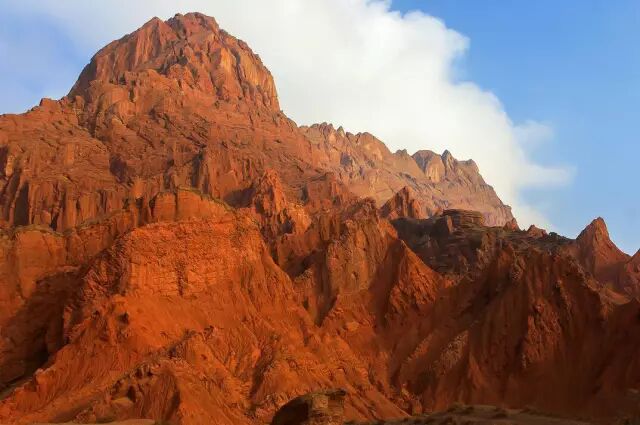
2. The red canyon. Just north of town the road enters dramatic red-earth canyon walls — the “Dushanzi Grand Canyon” country. This is the warm, Martian-looking opening act, and a favorite for sunrise photography.
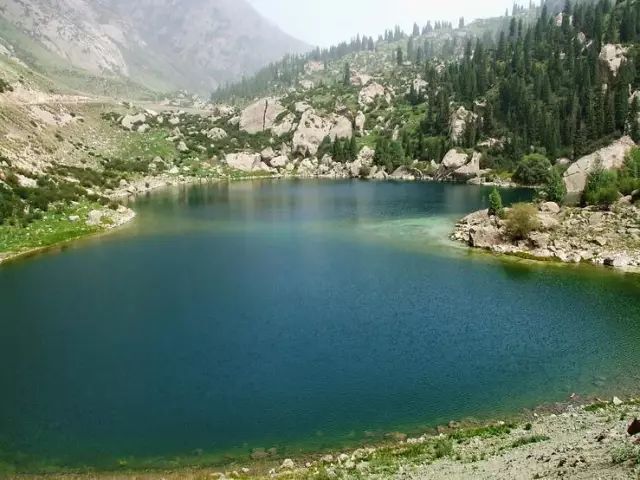
3. Hashiligen Pass approach. The climb begins in earnest through spruce forest. Switchbacks stack up; pull-offs appear where the forest opens. This is the part of the Duku people photograph most.
4. Qiao’erma. A supply settlement at the pass, and the site of the Duku Highway memorial — a monument to the army engineers who died building the road across a decade. It’s a moving stop and, practically, the last reliable fuel for a while. Many travelers treat Qiao’erma as the turnaround if they’re not continuing south.
Continuing to Tangbula
If you push a little past Qiao’erma, the road descends toward the Tangbula grasslands — rolling green meadows watered by the Kaidu River system, dotted with herds and distant snow peaks. Tangbula is a quieter alternative to the famous Bayinbuluke meadows and far less crowded. It’s an excellent overnight if you’re building a northern Xinjiang road trip loop.
Driving and season
- Season: same as the whole Duku — opens roughly early June, closes late September to mid-October with first snow. The best time for a Xinjiang road trip is July–August for this section.
- Fuel: Dushanzi and Qiao’erma are your anchors. Don’t run low between them.
- Speed: enforced limits drop hard on the curves. The forest section has blind crests — slow, stay right.
- Weather: the pass can be 15°C colder than Dushanzi and may carry roadside snow even in July. A layer in the car, always.
- Checkpoints: routine ID/passport checks. Foreign drivers carry their temporary driving permit. The Duku itself needs no border permit.
- No drones near some sections close to sensitive areas.
Where to stop overnight
- Qiao’erma: basic but adequate; good if you want the memorial and an early start on the pass.
- Tangbula meadows: guesthouses and yurts in season; peaceful and photogenic.
- Bayinbuluke: if you continue a bit further, the famous midway town with the swan lake (see our Bayinbuluke guide) — but that pushes you toward the full southern crossing.
FAQ
Can I drive only the north section? Yes. Many travelers do Dushanzi–Qiao’erma–Tangbula as a standalone trip and return the same way.
How long is the north section? Dushanzi to Qiao’erma is roughly 2.5–3.5 hours of driving with stops; add time for Tangbula.
Is it less crowded than the south? Moderately, but July–August is busy everywhere on the Duku. Start early.
Do I need a 4WD? No — paved two-lane throughout, suitable for any car in season.
Is the memorial worth stopping for? Yes. It reframes the whole road as a human achievement, not just a scenic drive.
Final word
The north section is the Duku at its most enjoyable pace. Skip the rush to “do the whole thing” and give this half a day, a night, and a clear morning — you’ll remember the red canyon and the spruce pass long after the long southern descent has blurred.
Written by Karl Huang, a Xinjiang-based travel writer. Opening dates and checkpoint rules change yearly — confirm with local traffic authorities before you go.